


By Bosun Obafemi
The United States has intensified military and economic pressure on Iran, launching fresh airstrikes, tightening its naval blockade of Iranian ports, and warning of further attacks on civilian infrastructure as tensions between the two countries continue to escalate.
The latest developments have heightened concerns over security in the strategically vital Strait of Hormuz, through which roughly one-fifth of the world’s oil supply passes, sending global oil and U.S. gasoline prices higher.
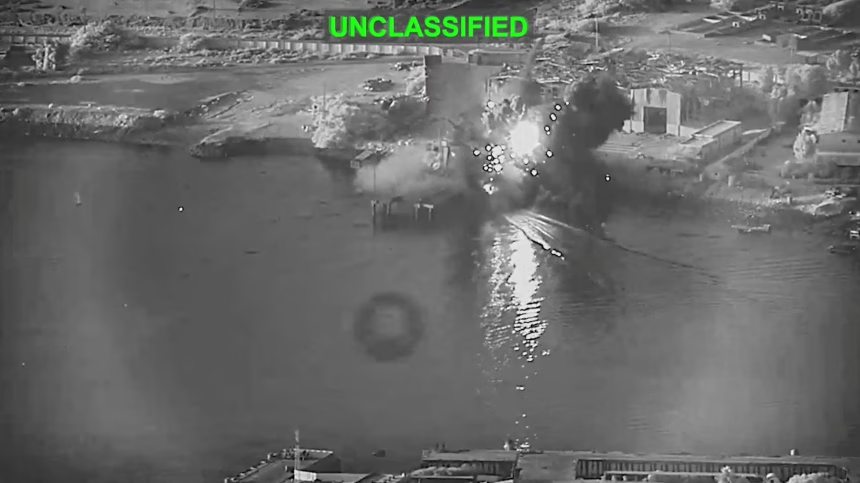
The U.S. Central Command (CENTCOM) said Wednesday that its forces carried out a 90-minute series of strikes on targets inside Iran earlier in the day, following overnight attacks that Iranian authorities said killed at least seven military personnel in the country’s southeast.
In a separate announcement, CENTCOM confirmed that it had intercepted and redirected two commercial vessels attempting to enter or leave Iranian ports after Washington reinstated its naval blockade.
“Since restarting the naval blockade against Iranian ports 17 hours ago, U.S. forces have redirected two commercial vessels attempting to run the blockade,” CENTCOM said in a statement posted on social media. “The U.S. military remains vigilant and prepared to ensure full compliance.”
The renewed blockade took effect at approximately 4 p.m. Eastern Time on Tuesday. Washington had previously imposed a similar blockade between April and June as part of efforts to increase pressure on Tehran.
The U.S. military has also accused Iran of attacking seven commercial vessels over the past week, leaving nearly a dozen crew members dead, missing, or injured. Separately, at least eight merchant ships have reportedly come under attack while transiting the Strait of Hormuz since June 17, despite an earlier understanding between Washington and Tehran intended to guarantee the safe passage of commercial shipping.
Five of those incidents occurred before U.S. President Donald Trump declared on July 10 that a previously negotiated ceasefire had effectively collapsed.
President Trump on Wednesday renewed his warning that the United States could target Iranian civilian infrastructure unless Tehran returns to the negotiating table, signaling a further hardening of Washington’s position.
The escalating confrontation has unsettled global energy markets, with oil prices climbing amid fears that continued hostilities could disrupt one of the world’s most important maritime trade routes.
Meanwhile, Iran’s Health Ministry said more than 260 people have been injured in recent U.S. airstrikes, though it did not provide a breakdown of civilian and military casualties.
On the diplomatic front, Iranian Foreign Minister Abbas Araghchi traveled to Doha on Wednesday to attend a memorial ceremony honoring Qatar’s former Emir, Sheikh Hamad bin Khalifa Al Thani, according to Iran’s semi-official Mehr News Agency.
The former Qatari ruler died on Sunday at the age of 74, Qatar’s Amiri Diwan announced.
Araghchi’s visit comes despite weeks of heightened tensions between Iran and Qatar. Tehran has repeatedly launched missile and drone attacks targeting Al Udeid Air Base in Qatar in retaliation for U.S. military operations, including strikes carried out on the day of the former emir’s death.
Qatar had played a central mediating role in indirect negotiations between Washington and Tehran, helping broker the Memorandum of Understanding reached in June. However, the agreement now appears to be rapidly unraveling as military hostilities intensify.
It remains unclear whether Araghchi’s visit to Doha will include discussions aimed at reviving diplomatic efforts or restoring the collapsed ceasefire.
With military operations expanding, commercial shipping under increasing threat, and diplomatic channels under severe strain, the confrontation between the United States and Iran, The Impact Newspaper was told, appears to be entering a more dangerous phase, raising fresh concerns about regional stability and the security of global energy supplies.