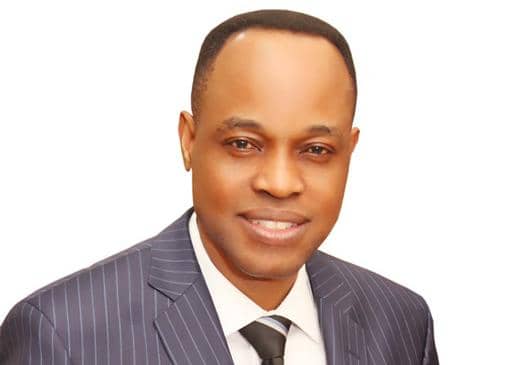
Odesola JF., PhD
I am a religious person, and many of you already know that. I am a Christian, a minister of the Gospel, and someone who believes deeply in the place of faith, spiritual leadership, and the Church in society. But beyond my religious convictions, I am also a human being who believes that decency, compassion, and respect should remain the foundation of our interactions, even when we disagree.
And let me make something clear from the outset: What is good is good, and what is wrong is wrong, regardless of who is involved.
I do not believe that being a pastor automatically makes someone immune to criticism. Religious leaders are human beings. They can make mistakes, express opinions that deserve examination, interpret issues differently, and sometimes communicate ideas that others may find difficult to accept. They should be questioned when necessary, challenged when their arguments are weak, and held accountable when their conduct warrants it.
But there is a line between criticism and cruelty. There is a difference between challenging a person’s ideas and ridiculing their physical condition. There is a difference between holding someone accountable and deliberately humiliating them.
And in my considered opinion, VeryDarkMan crossed that line in his recent criticism of Apostle Arome Osayi.
The controversy surrounding Apostle Arome’s comments about Nigeria’s spiritual calling and national development has generated legitimate public debate. VeryDarkMan challenged the preacher’s message and questioned whether emphasis on prayer and revival adequately addresses the country’s need for innovation, technology, and practical development. Reports also documented his mockery of the apostle’s facial condition during the criticism.
My concern is not that VDM disagreed with a pastor. My concern is how he chose to express that disagreement.
Because when a critic begins to make another person’s physical condition the subject of ridicule, the conversation has moved away from accountability and entered the territory of insensitivity.
And that is a dangerous place for any society that still values human dignity.
- Criticise the Message, Not the Man’s Condition
Let us separate the issues properly.
If Apostle Arome says Nigeria has a spiritual assignment to the nations, VDM is entitled to ask questions. If he believes the message places too much emphasis on prayer at the expense of technological advancement, he can make that argument. If he disagrees with the theology, he can present his interpretation of Scripture and explain why he thinks the apostle is mistaken.
That is legitimate public discourse.
He could have asked:
- Can Nigeria pursue spiritual revival and technological advancement simultaneously?
- Does a nation’s spiritual identity excuse its failure to invest in science, education, healthcare, and industrialisation?
- How should Christians balance prayer with practical responsibility?
- Is the interpretation of Nigeria’s spiritual calling being communicated in a way that encourages national development?
These are serious questions. They deserve serious answers.
But what does a person’s facial condition have to do with the validity of his theological argument?
Does a physical disability invalidate someone’s reasoning? Does a medical condition make a person’s opinion less worthy of examination? Does an unusual facial appearance give anyone permission to turn another human being into an object of public entertainment?
Certainly not.
A person’s argument can be wrong without their humanity becoming a target.
The strength of a critic is demonstrated by the quality of the argument, not the cruelty of the insult.
- Apostle Arome Is a Human Being Before He Is a Public Figure
One aspect of this controversy that deserves particular reflection is the fact that Apostle Arome Osayi has publicly discussed his experience with facial palsy.
In a resurfaced testimony reported during the controversy, he described receiving a medical diagnosis and speaking about his personal experience of prayer and living with the condition.
Whatever anyone thinks about his spiritual interpretation of that experience, the condition itself is a human reality, not a public invitation to ridicule.
Imagine a young person living with a facial difference watching that video.
Imagine a child who has been bullied at school because of a physical condition, seeing a popular public personality use a similar condition as material for mockery.
Imagine a parent whose child lives with a disability having to explain why someone with a large platform considers such a condition appropriate entertainment.
What message are we sending?
That physical differences are acceptable targets when the person involved is controversial?
That a person’s public visibility removes their right to dignity?
That once someone becomes a pastor, politician, celebrity, or social commentator, their physical vulnerability becomes fair game?
We must be careful.
The person being mocked may have developed the emotional strength to withstand the insult. But there are thousands of others with similar conditions who may not possess that same resilience.
A public figure’s words do not end with the person being addressed. They travel into homes, schools, workplaces, and the minds of people who may already be struggling with their self-esteem.
That is why responsible communication matters.
- Freedom of Expression Is Not Freedom from Responsibility
I strongly believe in freedom of expression. A society where people cannot question religious leaders, challenge public figures, or express disagreement is not a healthy society.
However, freedom of expression must coexist with responsibility.
We cannot build a decent society by insisting that everyone has the right to speak while ignoring the consequences of how they speak.
The fact that a statement is permissible does not automatically make it wise, fair, or humane.
A person can speak without insulting. A critic can be courageous without being cruel. A social activist can be outspoken without abandoning empathy.
Indeed, the more influence a person has, the greater the responsibility to use that influence thoughtfully.
VDM has built a substantial public following through his outspoken commentary and advocacy. His interventions on matters of public concern have attracted support from Nigerians who appreciate his willingness to challenge perceived injustice. That public profile makes the present controversy an opportunity to reflect on the responsibilities that accompany influence.
People who admire him should be able to say, “We appreciate your advocacy, but we disagree with this particular conduct.”
That is not betrayal.
It is the kind of honest feedback that helps public figures maintain credibility.
We should not become so emotionally attached to personalities that we excuse everything they do.
- The Danger of Selective Morality
One of the troubling features of social media culture is the tendency to defend behaviour based on who is involved rather than on the principle at stake.
When someone we dislike is insulted, we celebrate the insult. When someone we admire is insulted, we suddenly demand civility.
That is not consistency. It is selective morality.
If mocking a person’s physical condition is wrong when directed at our family member, it should also be wrong when directed at someone whose opinions we dislike.
If we condemn bullying in our schools, we should not celebrate it on social media simply because the target is a controversial pastor.
If we teach our children to respect people living with disabilities, we should not applaud a public figure for making physical differences the subject of ridicule.
The test of character is not how respectfully we treat people who agree with us. It is how we treat those with whom we strongly disagree.
This is not a religious argument alone. It is a question of basic human decency.
And I would say the same thing if the person being mocked were a politician, an activist, a traditional ruler, a Muslim cleric, or an ordinary citizen.
Human dignity should not depend on religious affiliation, social status, popularity, or personal agreement.
- The Church Must Also Be Open to Honest Criticism
Let me address my fellow Christians and ministers.
We must not interpret every criticism of a pastor as persecution of the Church.
The Church is not above scrutiny. Ministers should be willing to explain their teachings, clarify controversial statements, acknowledge errors, and respond to sincere questions.
When a preacher makes a statement about national development, the public has every right to examine its implications.
We should not use spiritual authority to silence reasonable questions.
However, the responsibility to engage honestly belongs to both sides.
Critics should challenge the message accurately. Ministers should respond without arrogance. Supporters should avoid turning every disagreement into an unnecessary battle between believers and unbelievers.
We must create room for disagreement without destroying mutual respect.
It is possible to say, “I disagree with your interpretation,” without saying, “You are worthless.”
It is possible to challenge a sermon without mocking the preacher’s body.
It is possible to demand accountability without denying another person’s humanity.
That is the standard we should encourage.
- There Is a Difference Between Satire and Humiliation
Some may argue that VDM was merely using satire or mimicry to make a point.
But satire is not automatically justified simply because it is humorous or provocative.
Satire can expose hypocrisy, challenge powerful institutions, and illuminate contradictions. It can be an effective tool for public commentary.
Yet the question remains: What exactly is the subject of the satire?
When the humour depends on a person’s physical condition, the focus shifts from the argument to the body of the individual.
And when that happens, the audience may remember the mockery more vividly than the issue being discussed.
A critic who wants to expose an inconsistency in a pastor’s message should be able to do so without reproducing the pastor’s physical characteristics for comic effect.
The argument should stand on its own.
If the criticism is strong, it does not need the assistance of humiliation.
Indeed, the most powerful public arguments are often those that expose an error while preserving the dignity of the person who made it.
- What Would We Tell Our Children?
Sometimes, the simplest way to evaluate our public conduct is to imagine explaining it to a child.
Suppose your son comes home from school and tells you that his classmates mocked another child because of a facial condition.
What would you tell him?
Would you say, “That is acceptable as long as the child has said something you disagree with”?
Would you encourage him to imitate the condition because the other child is unpopular?
Of course not.
We would teach him empathy. We would tell him that people should not be ridiculed for circumstances beyond their control. We would explain that disagreement must never become an excuse for cruelty.
Why, then, should the standards we teach our children disappear when we enter the social media arena?
The internet has made it possible for millions of people to witness our conduct. It has also made it easy to forget that the person on the receiving end of our comments is not merely a character on a screen.
He is a human being.
He has feelings. He has family. He has a history. He has vulnerabilities.
And he deserves the same fundamental respect we expect for ourselves.
- VDM Can Still Make His Point Without Losing His Humanity
My message to VeryDarkMan is not that he should stop criticising pastors.
Far from it.
If he believes a religious leader’s message is harmful, he should explain why. If he believes a public statement is contradictory, he should present the contradiction. If he has evidence of wrongdoing, he should provide it responsibly.
Nigeria needs citizens who are willing to ask difficult questions of people in positions of influence.
But we also need critics who understand that the pursuit of truth should not require the abandonment of compassion.
A public critic must be able to distinguish between courage and aggression, between accountability and humiliation, between satire and cruelty.
The fact that someone has a large audience does not mean every reaction deserves applause.
Sometimes, the most courageous thing a public figure can do is acknowledge that a particular approach was wrong.
An apology is not a defeat. It is an indication that a person is willing to place principle above ego.
I believe VDM can acknowledge that the criticism of Apostle Arome’s message could have been made without making his physical condition part of the conversation.
That would not require him to withdraw his disagreement with the apostle’s views.
It would simply demonstrate that he recognises the difference between challenging an argument and humiliating a person.
- A Word to Nigerians: Let Us Recover Our Sense of Decency
Our country is already dealing with enough division, hardship, insecurity, and frustration.
We do not need to make public humiliation another accepted feature of our national conversation.
We can disagree politically without dehumanising opponents. We can challenge religious leaders without ridiculing their physical conditions. We can question celebrities without turning their vulnerabilities into entertainment.
A decent society is not one where everybody agrees. It is one where people can disagree without losing their humanity.
Let us stop confusing insults with intelligence, aggression with courage, and mockery with accountability.
A person does not become more truthful because he is more insulting. A statement does not become more accurate because it is delivered with contempt.
And a critic does not become more courageous by targeting what another person cannot easily change about himself.
The ability to wound someone is not proof of the ability to enlighten society.
Conclusion: Let Us Be Better Than the Behaviour We Condemn
I remain a religious person, and I make no apology for that. But my objection to this conduct is not limited to my Christian convictions.
It is rooted in a simple principle: every human being deserves dignity.
Apostle Arome Osayi may be challenged. His teachings may be questioned. His interpretation of Nigeria’s spiritual assignment may be debated. His public statements may be examined critically.
But his physical condition should not become a weapon in the hands of anyone seeking to win an argument.
The same standard should apply to all of us.
If we want a society where public figures are accountable, let us also build one where critics are responsible.
If we want religious leaders to communicate wisely, let us expect the same wisdom from those who challenge them.
And if we want our children to grow up respecting people with physical differences, let us demonstrate that respect in our own public conduct.
My appeal to VeryDarkMan is simple: Continue to question, continue to challenge, continue to speak up for Nigerians—but please, do not lose your humanity in the process.
You can disagree with a man without degrading him.
You can expose what you consider an error without mocking his condition.
You can be a fearless critic and still be a decent human being.
Because, at the end of the day, the real test of our character is not how loudly we condemn what others do wrong, but whether we are willing to uphold the same standards in our own conduct.
Attack the message. Challenge the argument. Question the actions. But never make another person’s physical condition the price of your criticism.
That is not weakness.
That is humanity.