

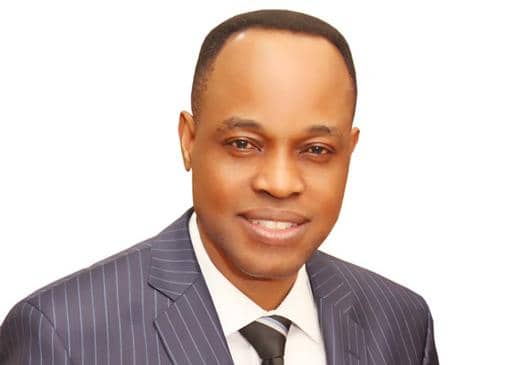
By Prof. Odesola JF
An Economy Cannot Be Declared Successful When the People It Is Meant to Serve Are Struggling to Survive.
There is something deeply disturbing about a country where people are gradually becoming accustomed to hardship and are even being told that their suffering is evidence that the economy is being reformed.
A graphic currently making the rounds on social media captures this frustration in a rather provocative way. It lists hunger, poverty, rising taxes, increasing fuel prices, a depreciating naira, expensive electricity, constant borrowing, declining purchasing power, high transportation costs, multiple budgets and widespread insecurity as conditions that some Nigerians have come to associate with economic reforms.
Its concluding statement is particularly striking: It is only in Nigeria that hardship is called reforms.
Perhaps the statement is exaggerated, but the frustration behind it is real. It reflects a growing feeling among ordinary Nigerians that almost every economic difficulty is now being explained away as a necessary sacrifice for a better tomorrow.
Whenever citizens complain about the cost of living, they are reminded that reforms take time. When food prices increase, they are told that the economy is adjusting. When businesses struggle, the explanation is that the old economic structure must first be dismantled. When families can no longer cope with their expenses, they are encouraged to be patient.
But for how long must people remain patient? And how much hardship should a population endure before government begins to demonstrate that things are actually getting better?
Let us be clear: Nigeria needs economic reforms. Nobody seriously disputes that. The country has struggled for decades with poor economic management, wasteful expenditure, corruption, weak institutions, inadequate infrastructure, excessive dependence on imports and an unhealthy reliance on borrowing.
Something had to change.
However, the fact that reforms are necessary does not mean every policy introduced in their name is automatically right. Neither does it mean that citizens should accept every hardship without asking questions.
The purpose of economic reform is to improve the economy and, more importantly, improve the lives of the people. It is not to turn their suffering into a national achievement.
THE DIFFERENCE BETWEEN REFORM AND SUFFERING
There is a fundamental difference between making difficult economic decisions and celebrating the difficulties those decisions create.
Sometimes, a government must take unpopular steps to correct longstanding economic problems. Such decisions may involve temporary sacrifices. But responsible leadership must ensure that those sacrifices are justified, fairly distributed and accompanied by measures to protect vulnerable citizens.
Reforms must have a destination.
People should be able to see where the country is heading, understand why sacrifices are necessary and identify the benefits that will eventually come from those sacrifices.
Unfortunately, many Nigerians are beginning to wonder whether the destination is becoming increasingly distant.
The ordinary citizen does not experience economic reforms through government presentations, policy documents or impressive economic statistics. He experiences them at the market, at the filling station, on the road, in the hospital, in the classroom and at home.
He knows when the price of rice has increased. He knows when his salary can no longer take him through the month. He knows when the money he previously used to feed his family, pay school fees and meet other household responsibilities is no longer sufficient.
These are the realities against which economic policies must be judged.
WHEN FEEDING A FAMILY BECOMES A DAILY STRUGGLE
Perhaps nothing explains the present economic frustration better than the difficulty many Nigerian families now experience in providing food.
There was a time when a modest-income family could reasonably plan its meals for the week. Today, many households go to the market with a limited amount of money and return home with far less than they intended to buy.
Parents now make painful choices about what to remove from their shopping lists. Some have reduced the number of meals they provide daily. Others have abandoned food items that were once ordinary necessities.
Imagine a father returning home after a difficult day’s work, only to discover that the money he brought cannot adequately provide for his family.
Imagine a mother trying to explain to her children why the food they enjoyed a few months ago is no longer available at home.
These are not economic theories. They are human experiences.
Hunger does not understand monetary policy. A hungry child does not understand fiscal consolidation. A family struggling to afford food cannot be comforted by the announcement that certain economic indicators are improving.
Government must understand that the success of an economy should ultimately be reflected in the ability of its people to live reasonably well.
No country should become so preoccupied with economic adjustments that it loses sight of the human beings those adjustments are supposed to benefit.
THE SALARY IS THE SAME, BUT EVERYTHING ELSE HAS CHANGED
One of the most painful aspects of the present situation is the widening gap between people’s earnings and the cost of living.
Consider the civil servant whose salary has barely changed while the cost of transportation, food, electricity, accommodation and children’s education continues to rise.
Consider the pensioner who receives a fixed monthly payment and must somehow manage food, medication and other basic needs.
Consider the young graduate who has secured a job but discovers that his salary is barely enough to cover transportation and feeding.
What exactly is the meaning of economic progress to these people if their standard of living continues to decline?
It is easy to talk about economic growth in a conference hall. It is another thing to explain that growth to a family that can no longer afford its usual standard of living.
The government must appreciate that inflation is not just a percentage announced by a statistical agency. It is the difference between what a household could afford yesterday and what it can afford today.
When income remains relatively stagnant but the cost of nearly everything increases, purchasing power disappears. People become poorer even when they continue to work as hard as before.
This is why economic reforms must be measured not only by improvements in macroeconomic indicators but also by their impact on household incomes and living standards.
FUEL PRICES: THE PAIN DOES NOT END AT THE PETROL STATION
The argument for removing fuel subsidies has always included important economic considerations. Government has maintained that subsidy reform would reduce public expenditure, eliminate opportunities for abuse, encourage investment and free resources for development.
These are legitimate objectives.
But there is another side of the story that government cannot afford to ignore.
Fuel is connected to almost every aspect of Nigerian economic life. When its price increases, transportation becomes more expensive. When transportation becomes expensive, the cost of moving food from farms to markets increases. Manufacturers face higher production costs, while small businesses spend more money powering generators.
Eventually, the burden reaches the ordinary consumer.
A trader in Lagos, for example, does not need to attend an economic conference to understand the consequences of higher fuel prices. He sees it in the cost of transporting goods from the market. He sees it in the price of restocking his shop. He also sees it in the declining purchasing power of customers who can no longer afford to buy as much as they used to.
This is the chain reaction government must address.
If subsidy removal is intended to create a more efficient economy, then affordable transportation, reliable electricity, improved public infrastructure and targeted support for vulnerable citizens must form part of the same reform programme.
It is not enough to remove a subsidy and leave millions of people struggling to cope with the consequences.
SMALL BUSINESSES CANNOT SURVIVE ON GOVERNMENT PROMISES
Another area of serious concern is the condition of small and medium-sized businesses.
These businesses are the backbone of everyday economic activity. They employ people, support families, provide essential services and keep communities economically active.
Think about the woman who operates a small restaurant, the young man running a printing business, the mechanic who employs two apprentices, the neighbourhood shop owner or the manufacturer trying to keep a small factory running.
They are not asking government for special treatment. They simply want an environment in which they can operate without being overwhelmed by costs.
Today, many of them face increasing electricity expenses, expensive transportation, high rents, costly raw materials, multiple levies and declining customer demand.
Some have reduced their staff. Others have increased their prices. A number have closed their businesses altogether.
And when a small business closes, it is not just the owner who suffers. Employees lose their jobs, families lose their sources of income and the local economy loses another source of productivity.
Government must therefore be careful not to introduce policies that make it increasingly difficult for businesses to survive.
Taxation is necessary for national development, but it must be reasonable and predictable. A government that wants to generate more revenue must also create an environment in which businesses can grow, employ more people and contribute sustainably to the economy.
You cannot continually squeeze the productive sector and expect it to become the engine of economic recovery.
BORROWING MUST COME WITH ACCOUNTABILITY
Nigerians are also entitled to ask serious questions about the country’s continuing dependence on borrowing.
Borrowing is not necessarily a bad economic practice. Countries borrow to finance infrastructure, support development and meet important national obligations.
But the real issue is what the borrowed money is being used for and whether the country is receiving value for the financial commitments it is making.
When government borrows, citizens should be able to identify the projects being financed, understand the expected benefits and see evidence that the funds are being properly utilised.
Are the loans improving roads, electricity, healthcare, education and agricultural productivity? Are they creating employment? Are they strengthening the economy’s capacity to generate revenue?
These are reasonable questions.
A country cannot borrow indefinitely without explaining how those loans will translate into better living conditions for its people.
The next generation should not inherit enormous financial obligations without inheriting the infrastructure, opportunities and economic benefits that ought to accompany them.
Borrowing must therefore be accompanied by transparency, accountability and measurable results.
INSECURITY IS NOT SEPARATE FROM ECONOMIC DEVELOPMENT
There is another issue that should never be pushed to the background whenever economic reforms are discussed: insecurity.
How can a country expect to develop economically when farmers cannot confidently access their farms, traders are worried about travelling with their goods, communities live under the threat of attacks and businesses struggle to operate in an atmosphere of uncertainty?
Security and economic development are inseparable.
When farmers abandon their farms because of insecurity, agricultural production suffers. When transportation routes become dangerous, the cost of moving goods increases. When businesses are attacked, employment opportunities disappear.
The consequences eventually affect food prices, investment, productivity and the general cost of living.
Government cannot continually talk about economic recovery without addressing the security challenges that undermine the very foundations of economic activity.
Protecting lives and property is not a luxury that can wait until the economy improves. It is one of the fundamental responsibilities of government.
Nigerians deserve to live, work, travel, farm and conduct their businesses without constant fear.
WHY MUST EVERY CRITICISM BE TREATED AS OPPOSITION?
Perhaps one of the most unfortunate developments in our public conversation is the tendency to dismiss people who question economic policies.
If someone complains about the cost of living, he is accused of being impatient. If a business owner speaks about rising operating costs, he is told that he does not understand economic reforms. If citizens demand better results, they are sometimes labelled political opponents.
This attitude does not help the country.
Democracy is not built on unquestioning acceptance of government policies. It thrives on constructive criticism, public accountability and the willingness to examine decisions honestly.
No government has a monopoly on wisdom. Even well-intentioned policies can produce unintended consequences. When that happens, responsible leadership should be willing to listen, make adjustments and correct mistakes.
Criticism is not necessarily opposition. Sometimes, it is the most sincere expression of concern for the country.
Indeed, those who raise questions about the economy are not automatically enemies of reform. Many of them simply want the reforms to work.
They want to see a country where hard work is rewarded, businesses can survive, families can afford basic necessities and young people have a genuine opportunity to build a future.
These are not unreasonable expectations.
WHAT SHOULD GOVERNMENT BE DOING?
The answer is not necessarily to abandon every reform or return to the economic practices that contributed to Nigeria’s longstanding difficulties.
The answer is to make reforms more humane, more transparent and more responsive to the realities of the people.
Government must pay greater attention to food production and food affordability. Farmers need security, affordable inputs, access to financing, storage facilities and good roads to transport their produce.
Electricity must become more reliable and affordable. Businesses cannot remain competitive when they spend an unreasonable proportion of their income generating their own power.
The tax system must encourage productivity rather than discourage enterprise. Small businesses should be supported to grow instead of being overwhelmed by multiple financial demands.
Public borrowing must be properly explained and linked to projects that produce measurable benefits.
Security must receive the urgency it deserves, particularly in communities where farming, transportation and commercial activities have been disrupted.
Most importantly, vulnerable Nigerians need effective social protection. Government should not assume that everyone has the financial capacity to absorb the consequences of economic adjustments.
There must also be honesty in communication. Nigerians deserve to know what government is trying to achieve, what has gone wrong, what is being done to correct it and what measurable improvements they should expect.
People can make sacrifices when they believe their leaders are sincere, responsible and equally conscious of the burden those sacrifices impose.
CONCLUSION: NIGERIANS ARE NOT ASKING FOR MIRACLES, JUST A BETTER LIFE
At the heart of this debate is a simple but important question: What is the purpose of government if not to improve the welfare and security of the people?
The ordinary Nigerian is not demanding a luxurious lifestyle from government. People simply want to eat without struggling, travel without spending a fortune, access affordable healthcare, educate their children, find decent employment and operate businesses without being suffocated by the cost of doing so.
They want to work hard and see the reward for their labour.
They want to grow old without becoming a financial burden to their children. They want their children to have a better future than they did.
These are basic human expectations, not unreasonable demands.
Nigeria certainly needs economic reforms, but reforms must never become an excuse for insensitive governance. Government must not hide behind economic terminology while millions of citizens struggle with the practical realities of everyday survival.
The people must remain at the centre of every economic decision.
A reform that reduces government expenditure but leaves families unable to afford food must be examined. A policy that attracts investment but makes it impossible for small businesses to survive must be reassessed. An economy that records improvements in selected indicators while ordinary citizens continue to experience declining living standards must invite honest questions.
We cannot continue to measure economic success by the number of difficult decisions announced or the amount of hardship citizens are expected to endure.
The real test is what has changed in the lives of the people.
Government must remember that the economy exists to serve the people. The people do not exist to serve the economy.
And perhaps this is the most important question that should guide our national conversation:
After all the sacrifices, all the policy adjustments, all the explanations and all the promises, is the ordinary Nigerian living better?
If the answer remains uncertain, then government must do more than tell the people to be patient. It must demonstrate, through practical action, that their patience and sacrifices are not in vain.
REFORMS FOR WHOM? PROSPERITY FOR WHEN? AND AT WHAT COST TO THE PEOPLE?
These are not questions of political hostility. They are questions of responsible citizenship, democratic accountability and genuine concern for Nigeria.
A country cannot build a prosperous future by making survival increasingly difficult for the people who are supposed to enjoy that future.
The ultimate evidence of successful reform is not how much suffering a nation can endure, but how much better its people are able to live.