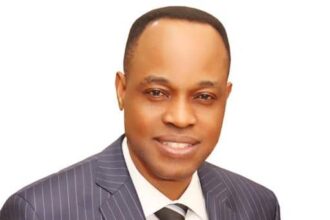


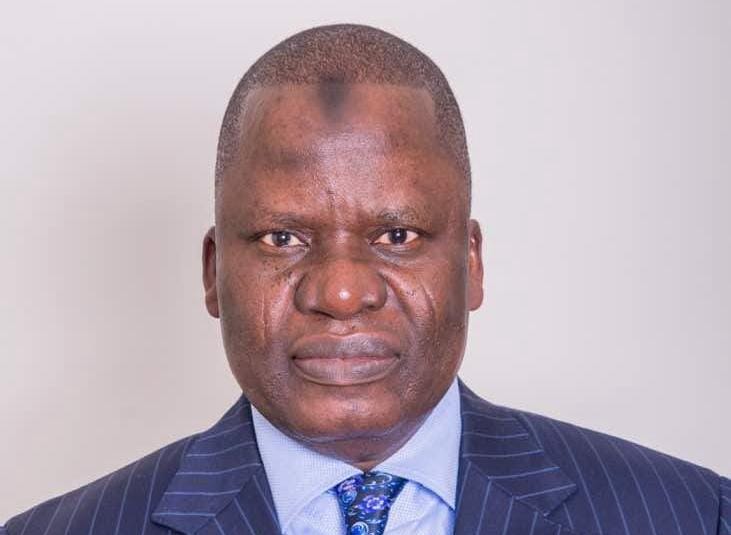
By S. A. Ndanusa, PhD, OON
The political season is gathering momentum again.
Consultations are taking place. Alliances are being assembled. Old friendships are being revived, and old disagreements are being quietly downgraded from matters of principle to minor misunderstandings. Politicians are changing platforms, parties are recalculating their chances, and Nigerians are once again being told that the next election will be the most important in our history.
Every Nigerian election is apparently the most important in our history. At this rate, even history must be feeling the pressure.
As the familiar contest develops, public attention will naturally concentrate on the candidates. Who should become President? Which party can rescue the country? Who possesses the experience, temperament and capacity to lead Nigeria through its present difficulties?
These are important questions. Leadership matters.
But as a citizen who has lived through different chapters of Nigeria’s political journey, I find myself asking another question beyond who wins; what will the winner do with the system inherited?
Perhaps we have spent too much time discussing the driver and too little examining the vehicle. We change drivers, repaint the vehicle, compose a new slogan for the journey and then express surprise when we encounter familiar problems on the same road.
Nigeria has already experimented with the two major systems now competing for our constitutional affection.
At independence, we operated a parliamentary system. The Prime Minister led the government while the Head of State performed largely ceremonial functions. Ministers were drawn principally from Parliament, where they were expected to defend government policies. The regions possessed considerable political and economic authority and competed in agriculture, education, infrastructure and industrial development.
That period is now remembered with understandable admiration. But memory can sometimes improve the quality of the past.
The First Republic was not a constitutional paradise. It became troubled by regional rivalry, disputed elections, minority anxieties, political violence and a dangerous collapse of public confidence. Parliamentarianism did not prevent these failures. By January 1966, the military had overthrown the civilian government.
When Nigeria returned to democratic rule in 1979, it chose an American style presidential system. The decision was not irrational. A nationally elected President was expected to rise above regional politics, provide stable leadership and become a symbol of national unity. Fixed tenure would prevent governments from falling whenever parliamentary alliances changed. The separation of powers would allow the legislature to check the executive.
The Second Republic nevertheless collapsed in 1983.
Nigeria therefore has the unusual distinction of having experienced democratic failure under both parliamentary and presidential systems. This should make us humble whenever anyone presents either arrangement as a guaranteed cure for our political ailments.
We returned to presidential government in 1999, and this time democracy has survived for more than a quarter of a century. That is a significant achievement. Nigeria has held successive elections, witnessed changes of government and transferred power between political parties without returning to military rule.
Our democratic system may frequently test our patience, but constitutional government has endured.
Yet survival is not the same thing as satisfactory performance.
The presidential system we operate has gradually produced an extraordinarily powerful federal centre. The President is Head of State, Head of Government and Commander-in-Chief. He appoints ministers and the leadership of numerous public institutions. The office exercises enormous influence over security, economic policy, public finance, appointments and the direction of the governing party.
Around the presidency has developed a vast political economy of access, patronage and expectation.
This helps to explain why every presidential election feels like a struggle for national ownership. The winner gains control of an enormous political prize. The loser may spend the next four years issuing statements, attending coalition meetings and waiting for another opportunity.
As elections approach, former adversaries rediscover their compatibility. Politicians move between parties with luggage so light that one suspects principles were not included. Alliances are often negotiated around who will receive what after victory, while manifestos arrive later to provide respectable literature for the arrangement.
The problem is larger than the conduct of individual politicians. Our constitutional structure has made control of the centre exceptionally valuable. When one office possesses enormous authority and influence over national resources, the struggle to capture it will inevitably become desperate, expensive and divisive.
This is why some Nigerians now advocate a return to parliamentary government.
The attraction is understandable. A Prime Minister would emerge from Parliament and remain accountable to it. Ministers would normally be elected legislators. Government policies would face regular questioning. A Prime Minister who lost parliamentary confidence could be replaced without waiting four years or dragging the country through the complicated politics of impeachment.
Parliamentary government might also soften the winner takes all character of presidential elections. Political parties could form coalitions based on their strength in Parliament. Smaller parties and minority interests might participate in government rather than becoming spectators after the presidential result is declared.
The legislature and executive would be more closely connected. Lawmakers belonging to the governing coalition could no longer approve policies in the morning and condemn the same government on television in the evening as though they had arrived from another country.
But Nigeria must not romanticise parliamentarianism.
We have travelled that road before. The constitutional structure of the First Republic was broadly similar to what some reform advocates now propose: a ceremonial President, an executive Prime Minister, ministers drawn from Parliament, a bicameral legislature and a federal arrangement containing powerful regions.
The honest question is therefore not simply whether Nigeria should “return” to parliamentary government. It is what would prevent a second experiment from reproducing the weaknesses of the first.
A parliamentary system operating within our present political culture could create fresh difficulties. Prime Ministers might spend more time preserving legislative coalitions than implementing national programmes. Votes of no confidence could become opportunities for political trading. Coalition negotiations might revolve less around policy than around ministries, appointments and access to public resources.
Instead of one powerful President, Nigeria might produce several powerful party proprietors negotiating government behind closed doors.
Supporters of the presidential system consequently have a strong argument. If parliamentary government can succeed only with credible elections, disciplined parties, independent courts, stronger institutions and genuine federalism, why not apply those same reforms to the presidential system we already operate?
Why demolish the structure if its defects can be repaired?
A substantially reformed presidential system could retain the stability of fixed tenure and the legitimacy of a nationally elected leader while reducing the excessive powers of the office. More responsibilities and resources could be transferred to the states. The number of political appointments could be reduced. The legislature could be strengthened, oversight made more effective and public institutions protected from executive interference.
If the federal centre controlled less, capturing the presidency would become less profitable and possibly less desperate. The President would remain important without being expected to serve simultaneously as the chief problem solver for matters properly belonging to states, local governments and independent institutions.
This is the real constitutional conversation Nigeria should have.
It should not be conducted as a contest between admirers of Westminster and defenders of Washington. Countries have prospered and failed under both systems. Nigeria itself has experienced the collapse of both.
Our persistent difficulties have survived every constitutional arrangement: disputed elections, excessive concentration of power, weak institutions, undisciplined political parties, poor accountability and the conversion of public office into an instrument of private opportunity.
The next government should therefore initiate an inclusive constitutional and political audit. Its purpose should not be to announce a predetermined return to parliamentarianism or to declare presidentialism permanently beyond question. It should study our experience and present Nigerians with clear, practical alternatives.
The first option would be substantially reformed presidentialism: a less powerful presidency, a smaller federal government, stronger legislative oversight, greater autonomy for states and more independent public institutions.
The second would be safeguarded parliamentarianism: a Prime Minister answerable to Parliament, a ceremonial President, transparent coalition agreements, disciplined political parties and a constructive vote of no confidence under which a government could be removed only when Parliament had simultaneously chosen a successor.
A third option might be a carefully designed Nigerian hybrid. But hybrids require caution. Nigeria should not create two competing centres of executive authority and then spend its time debating whether the President or Prime Minister has the constitutional right to receive a visiting head of government at the airport.
Whatever arrangement we choose, the location of executive authority must be clear.
Each option should be tested against practical questions. Would it reduce the cost of government? Would it make political leaders more accountable between elections? Would it preserve stability? Would it accommodate Nigeria’s diversity? Would it strengthen the states? Would it reduce the desperation surrounding presidential elections? Would it bring government closer to citizens?
Most importantly, would it improve the life of the Nigerian who has no political appointment, no access to the corridors of power and no interest in constitutional terminology beyond whether government works?
The conversation must also address federalism. Before arguing endlessly about who should control the centre, we should decide how much power the centre truly needs.
Perhaps Nigeria’s problem is not merely that it has a powerful President. Perhaps too much of Nigeria is waiting upon the President.
A governor who depends almost entirely on monthly federal allocations cannot claim much economic autonomy. A state that must await Abuja’s permission or intervention in areas it should manage is not operating within a fully functional federation. A local government whose finances and leadership remain uncertain cannot provide meaningful accountability at the level closest to the people.
Changing a President into a Prime Minister without redistributing power would therefore be cosmetic reform. It would change the title on the office door while leaving the contents of the room untouched.
Electoral reform is equally indispensable. Neither presidentialism nor parliamentarianism can produce legitimate government from elections that citizens do not trust. Political parties must also become institutions rather than temporary vehicles hired by ambitious individuals for each electoral journey.
A parliamentary system cannot function where legislators change parties whenever the political weather changes. A presidential system cannot deliver proper checks and balances where lawmakers consider oversight an inconvenience to cordial relations with the executive.
The proposed reform process must be genuinely inclusive. It should involve federal and state governments, political parties, civil society, professional organisations, traditional institutions, women, young people and citizens from every part of the country.
Its conclusions must be presented in language ordinary Nigerians can understand. Constitutional reform is too important to be left entirely to lawyers, politicians and professors. The farmer, teacher, trader, entrepreneur and pensioner may not use expressions such as “constructive vote of no confidence,” but they understand expensive government, distant leadership and promises that disappear after elections.
The process must also produce action, not merely another report.
Nigeria already possesses an impressive collection of conference reports, reform recommendations and committee findings. Some have enjoyed colourful public presentations before proceeding quietly into government archives. We have become rather accomplished at diagnosing the country and considerably less enthusiastic about administering the treatment.
The next government should establish a defined route from national consultation to constitutional amendment and, where appropriate, a referendum. The process should have a realistic timetable and clear safeguards against manipulation.
It must not become an instrument for extending anyone’s tenure, shortening an opponent’s tenure or creating a comfortable new office for a politician temporarily without employment. Constitutional reform must serve future generations, not the immediate calculations of those preparing for the next election.
As a citizen watching political activity gather momentum, I remain interested in the people seeking to lead Nigeria. Character, competence, experience and policy matter greatly. But I am equally interested in the system within which the eventual winner will operate.
A good President may exercise enormous power responsibly. A less restrained successor may not. Constitutions should not assume that only good people will govern. They must restrain the bad, guide the average and remind even the well intentioned that no individual is indispensable to the nation.
The next election will answer one question of who has received the mandate to govern?
The next government should help Nigeria answer the larger question of how should power be distributed, exercised and held accountable?
We may ultimately retain and reform presidentialism. We may conclude that safeguarded parliamentarianism offers a better future. We may design an arrangement drawing carefully from both. The purpose of the conversation is not to prejudge the destination but to ensure that Nigeria no longer continues with the present system merely because changing it appears difficult.
Whoever wins, the Constitution will determine the powers available to the winner, the institutions capable of restraining those powers and the ability of citizens to demand accountability.
That is why, whoever wins, reforming the system must become one of the important assignments of Nigeria’s next government.
Suleyman A. Ndanusa, PhD, OON, is an economist, lawyer, strategic studies scholar, and public policy thinker and practitioner with extensive experience in financial markets, regulation, governance, national Security and development.