


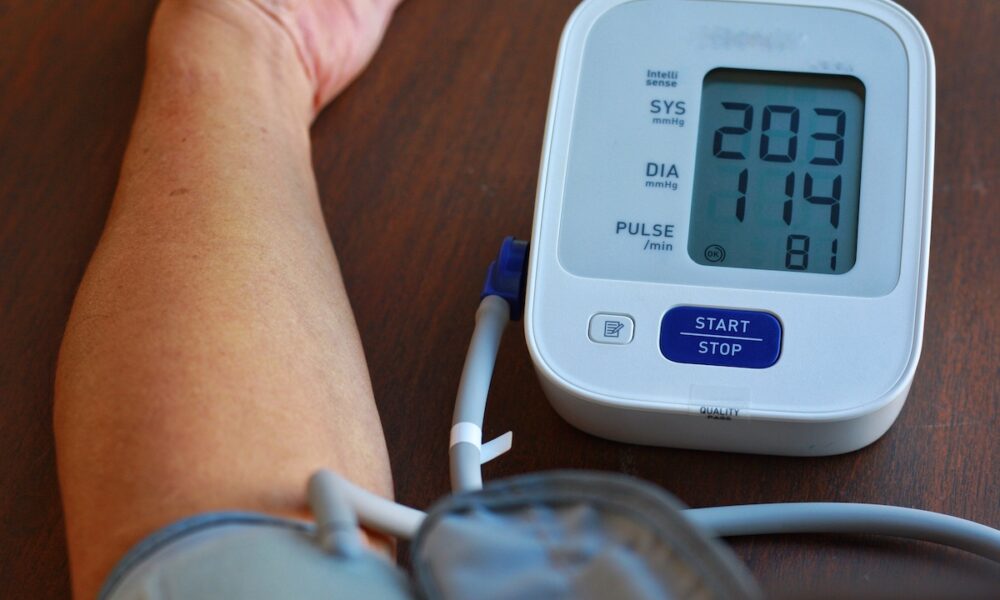
“It all started while he was bathing after returning from a social gathering. From the bathroom, he made a loud scream that called the attention of everyone in the apartment.
“As he used his two hands to hold his head, indicating serious pains on the head, he was rushed to a hospital, where it was observed that his systolic BP readings was over 200 mm Hg.
“At the hospital, efforts were made to save him, but, unfortunately, he now lives with a partial stroke, leaving me to cater for the family.”
Also, a Lagos-based businessman, Mr Jude Madukwe, recounted how his brother-in-law, Alex Obiora, had a heart attack and died in the course of watching a football match.
He disclosed that Obiora, aged 39, slumped in 2024 while watching the semi-final match between the Super Eagles of Nigeria and Bafana Bafana of South Africa in the Africa Cup of Nations (AFCON) held in Cote d’Ivoire.
“If Obiora had shown some symptoms of sickness or was hospitalised prior to his death, it would have given a little relief to the shock of his death.
“But, he went to watch a football match, slumped and died while watching the match.
“The demise of Obiora left a big vacuum in our family, as his wife has yet to recover from the shock,” he narrated.
According to reports, in spite of concerted efforts, including partnerships to stamp out High Blood Pressure (BP) in Nigeria, stakeholders are worried it still kills thousands of people, particularly young adults.
A report from the World Health Organisation (WHO) shows that no fewer than 1.3 billion adults globally live with hypertension, with nearly half unaware of their condition and only one in five achieving controlled blood pressure.
In Nigeria, the situation is dire, with studies showing that approximately 25 per cent of emergency hospital admissions in urban areas stem from hypertension-related complications such as stroke, kidney failure, and heart attacks.
Both stories of Osadebe and Obiora are just two among thousands in Nigeria where hypertension remains a leading cause of death in spite of being preventable and treatable.
Nevertheless, medical professionals say hypertension is treatable and can be put under control given appropriate medicine and lifestyle changes.
Nigeria, the most populous country in Africa with a population exceeding 200 million, has an estimated hypertension prevalence of 38 per cent, which is a major contributor to the burden of hypertension-related disease in Africa.
Dr Adisa Adams, a consultant cardiologist, with the Lagos University Teaching Hospital (LUTH), provides insights.
He decried the increasing number of Nigerians in their 30s being diagnosed with hypertension, describing the situation as a threat to their lives and future.
Adams, who described hypertension as a silent killer, lamented that it is now common among young people unlike before when old people of 50 years and above were seen with hypertension.
According to him, the death of most young Nigerian adults can be linked to heart-related challenges caused by undetected and unmanaged hypertension.
“There have been instances of young Nigerians dying with cardiovascular/heart-related disease.
“In my earlier years of practice, high blood pressure was mostly an issue of the mature and old folk starting from 50 years, but now, we see 28 to 35-year-old hypertensive patients,” he disclosed.
Adams, decrying the rate of sudden deaths among Nigerian young adults, blamed the development on young life mentality syndrome and lack of preventive measures among the younger people.
“The first issue with the younger generation is the false and unwise belief that they are young and thus, do not need to regularly check themselves.
“The second is the fact that they are not taking preventive measures, as well as lack of public information and sensitisation about the dangers associated with hypertension and even low blood pressure,” he said.