

By Olatunbosun Obafemi
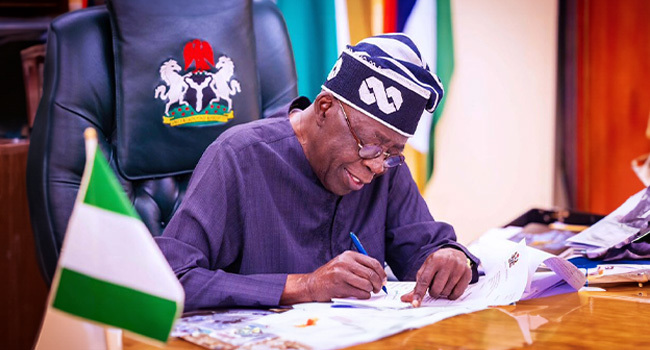
President Bola Tinubu has formally submitted a ₦1.481 trillion Appropriation Bill for Rivers State to the National Assembly for approval, following the declaration of a state of emergency and the suspension of the state’s elected officials, including Governor Siminalayi Fubara.
In a letter addressed to Senate President Godswill Akpabio, President Tinubu urged the upper chamber to expedite consideration of the proposed budget, which prioritizes infrastructure, healthcare, education, and agriculture. The Senate has since referred the bill to its Ad-hoc Committee on Emergency Rule, tasked with reviewing the document and reporting back to the plenary.
The budget proposal, which comes in the wake of a political crisis in Rivers State, allocates ₦324 billion to infrastructure development, making it the most heavily funded sector. The health sector is earmarked to receive ₦106 billion, including ₦5 billion specifically designated for the provision of free malaria drugs. Education is set to benefit from ₦75.6 billion in funding, while ₦31.4 billion has been proposed for agricultural development. The Tinubu administration anticipates that these investments will generate approximately 6,000 new jobs in the state.
President Tinubu also transmitted the budget to the House of Representatives, noting that the Supreme Court had previously nullified the 2025 budget presented by the now-suspended Governor Fubara. The President’s intervention is rooted in the protracted political standoff between Governor Fubara and members of the Rivers State House of Assembly, many of whom are aligned with Nyesom Wike, the Minister of the Federal Capital Territory and former governor of the state.
Citing escalating tensions and a breakdown of governance in Rivers, Tinubu declared a state of emergency on March 18, 2025. In a nationwide address, the President announced the suspension of Governor Fubara, his deputy Dr. Ngozi Odu, and all members of the Rivers State House of Assembly for a period of six months. He based his action on the provisions of Section 305 of the 1999 Constitution, stating that it was necessary to preserve law and order in the oil-rich state.
In their place, Tinubu appointed retired Vice Admiral Ibok-Ete Ibas as interim administrator to oversee the state’s affairs during the emergency period. Ibas has since assumed full control of the state’s administration, including budgetary planning and implementation.
The decision to suspend elected officials and impose federal control has sparked widespread debate. Civil society organizations, constitutional lawyers, and political activists have condemned the move as an overreach of executive power and a threat to democratic governance. Protests have erupted across the state, with both supporters and opponents of the emergency rule taking to the streets, most notably women-led demonstrations demanding the reinstatement of elected leaders.
Despite the mounting criticism, the federal government remains steadfast in its course, insisting that the emergency measures are necessary to stabilize the state and restore effective governance.
As the National Assembly begins deliberations on the proposed budget, all eyes remain on Rivers State, where the outcome of this intervention could set a precedent for federal involvement in state affairs under similar political crises.