By Desire Emmanuel
As Nigeria joins the rest of the world to mark the 2026 International Mother Language Day, linguists, cultural experts and parents have expressed concerns over the gradual erosion of Nigerian indigenous languages as younger generations abandon them for English and Pidgin English.
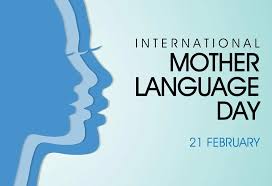
The International Mother Language Day is observed on February.21 every year as part of United Nations Education, Scientific and Cultural Organisation (UNESCO) broader initiative to promote the preservation and protection of all languages used by people across the world.
According to those who spoke about the erosion of mother tongues, it is increasingly common, especially in urban centres, to find children and youths who cannot speak their parents’ native languages.
They lamented that this cultural shift has resulted in young people growing up with limited knowledge of their culture, creating a generational disconnect.
They noted that the erosion of these languages, if left unchecked, poses danger not only to cultural identity, but also to Nigeria’s rich cultural heritage and history.
Dr Immanuel Ugwu, an educationist and culture enthusiast, said the problem could be traced to inadequacies of modern parenting.
According to him, a child’s mother tongue is supposed to be the first tool of understanding, shaping early cognition and identity before formal schooling begins.
He, however, noted that many modern families prefer to communicate in English and Pidgin English at home, and schools often discourage the use of local languages, branding them as ‘vernacular.’
“Imagine situations where parents take pride in their children being unable to speak their languages, thinking that this shows their children’s elite upbringing.
“There are even many instances where parents intentionally speak only English to their children at home, fearing that introducing them to local languages would hinder their mastery of good English,” he said.
Ugwu added that English remains a dominant language of instruction in schools across Nigeria, noting that major indigenous languages such as Yoruba, Igbo and Hausa were often taught merely as academic subjects.
According to him, the recent decision of the Federal Government to scrap the 2022 National Language Policy which had mandated using indigenous languages as the medium of instruction in early childhood and primary education needs to be reconsidered.
Mr Adams Yakubu, a linguist and media consultant, identified the ‘vernacular stigma’ in schools and elite circles as a critical part of the problem.
According to him, the inability to speak local languages is not merely a preference, but also a survival strategy in a system that rewards English.
He said young persons who were not fluent in English but spoke local languages very well were considered ‘local’ or ‘primitive’, noting that while the development boosts English proficiency, it threatened the survival of indigenous languages.
“Imagine a child being punished for speaking mother tongue in school in the name of vernacular, that was how it used to be in the primary and secondary schools I attended.
“How do you expect someone who grew up with that orientation to be proud to speak his mother tongue even in the larger society?
“Today, many young Nigerians cannot hold conversations in their mother tongue.
“Even in formal sectors such as banking, technology and government, indigenous languages are not given the right place, which further reduces their perceived relevance among younger generations,” he said.
Mrs. Gloria Oguchi, a parent and businesswoman, said many younger Nigerians were unable to speak their mother tongues because their parents chose to raise them with English in urban environments.
According to her, many parents, particularly in urban areas, opt to speak only English to their children believing that proficiency in the language guarantees better opportunities.
“I would say that parents caused it because they say everything in life starts with the foundation, and from my own experience, I have that problem.
“We have not been able to start from day one to teach these children our languages and they will just grow with it, and now it is a very serious case.
“My children cannot speak Igbo, even though they have Igbo parents, and I don’t see them teaching their children how to speak it as well,” she said.
Miss Adeoye Ebunoluwa, a corps member serving in the FCT, said: “I cannot speak my mother tongue and the first problem was that my parents did not speak the language to me when I was growing up.
“It would be encouraging for parents to raise their children with their language because it is always difficult to learn when you are grown.”
Mr Michael Adejoh, an ICT expert and cultural advocate, said the loss of an age-long indigenous language was more than just the loss of words; but an extinction of traditional wisdom and folklores
According to him, when a language dies, the unique history of that culture often dies with it, leading to a cultural erosion that leaves the younger generation without a sense of identity.
He therefore called on policy makers, parents and educators to take appropriate actions, adding that without deliberate intervention, several languages may disappear within a generation.
“It is important for us to realise that language is not just a medium of communication; it is a vehicle for transmitting cultural values and traditions across generations.
“So when a language dies, it also carries with it the stories, wisdom and identities of its speakers, which can never be fully recovered,” he said.