


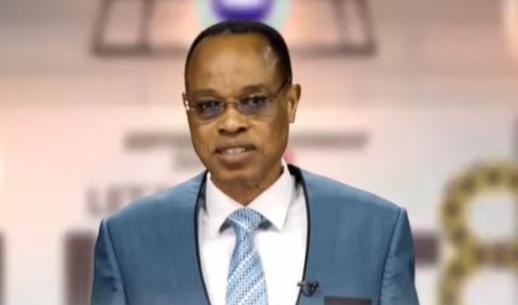
Odesola JF., PhD
Sometimes, compassion does not arrive with a loud announcement.
Sometimes, it comes quietly—as an airline ticket.
For a Nigerian stranded thousands of kilometres away from home, that ticket may mean much more than a seat on an aircraft. It may mean safety. It may mean freedom from fear. It may mean seeing one’s family again. It may mean sleeping peacefully after weeks of uncertainty.
For 500 distressed Nigerians in South Africa, help has come in precisely that form.
The Federal Government of Nigeria, through the Federal Ministry of Foreign Affairs, has commended the Redeemed Christian Church of God (RCCG), under the leadership of Pastor Enoch Adeboye, for donating $265,854 to purchase 500 air tickets for the evacuation of Nigerians facing distress in South Africa.
It is easy to read that figure and move on.
But behind the $265,854 are 500 human beings.
Behind those 500 people are mothers, fathers, children, brothers, sisters, friends, business owners, students and workers.
Behind every ticket is a story.
And behind this intervention is a simple but powerful message:
“You are not alone. Someone cares about what happens to you.”
When Home Suddenly Becomes a Place You Need to Return To
South Africa has long been home to many Nigerians who travelled there in search of opportunity.
They built businesses.
They worked.
They raised families.
They contributed to local communities.
They dreamed, as millions of people do, of making a better life for themselves and their loved ones.
But recent xenophobic and Afrophobic attacks have created fear and uncertainty for some Nigerians living in the country.
According to the Federal Ministry of Foreign Affairs, some Nigerians have faced attacks from South African citizens who targeted their shops and demanded that they leave the country.
For people who have invested years of their lives building businesses and communities, being suddenly confronted with hostility can be devastating.
Imagine waking up one morning and wondering whether your shop will still be standing by evening.
Imagine having to choose between protecting your livelihood and protecting your life.
Imagine having to tell your children that you may have to leave the place they have called home.
That is the human reality behind the statistics.
The Federal Government says that at least 1,640 Nigerians have already been airlifted back to Nigeria, while others remain in need of evacuation.
And that is where the intervention of RCCG becomes particularly significant.
RCCG Steps Forward
When people are in distress, words of sympathy are important—but practical help can make all the difference.
RCCG chose to act.
The church donated $265,854, specifically to support the purchase of 500 tickets to evacuate distressed Nigerians.
The Federal Ministry of Foreign Affairs publicly acknowledged and appreciated the gesture, describing it as a significant demonstration of the church’s compassion, solidarity and genuine commitment to providing succour to Nigerians facing xenophobia and Afrophobia.
The ministry also expressed its gratitude for the partnership and its intention to work with the church’s leadership in South Africa as the donation is deployed for the evacuation of the 500 Nigerians.
This is an important moment.
It shows that the Church can do more than preach about compassion.
It can put compassion into motion.
It can identify people in pain and ask, “What can we do?”
It can move from the pulpit to the street.
From prayer to action.
From sympathy to sacrifice.
And sometimes, the difference between desperation and hope is simply somebody deciding to help.
Pastor Enoch Adeboye: More Than a Pastor, A Global Influence
At the heart of RCCG’s global ministry is Pastor Enoch Adeboye, a man whose influence has extended far beyond the boundaries of a traditional church congregation.
To millions of Christians, he is a pastor, teacher, preacher and spiritual father.
But over the decades, his leadership has also demonstrated another dimension of ministry—the responsibility to use influence for the good of humanity.
Under his leadership, RCCG has grown into a global Christian family with a presence in many nations.
But numbers alone do not explain influence.
Influence is not simply about how many people listen when you speak.
Influence is about what happens because you spoke, served and acted.
It is about whether people are lifted.
Whether lives are changed.
Whether the vulnerable are remembered.
Whether those who have fallen find someone willing to help them stand again.
The intervention for distressed Nigerians in South Africa reflects this broader understanding of leadership.
Pastor Adeboye’s influence has helped cultivate an organisational culture in which spiritual ministry and practical service can exist side by side.
The message is simple: faith must have hands and feet.
The Gospel Beyond the Pulpit
There is a tendency sometimes to think of Christianity only in terms of sermons, church services, prayers and worship.
But the Bible presents a much wider picture.
Jesus preached to crowds, but He also fed the hungry.
He taught people, but He also healed the sick.
He spoke about the Kingdom, but He also responded to human suffering.
In Matthew 25, Jesus identifies Himself with the hungry, the stranger, the sick and those in need.
James 2:15–16 similarly challenges believers who see someone in need but offer only words without practical assistance.
That is why the RCCG intervention carries such significance.
An air ticket may look like a simple object.
But to someone who has been stranded, it can become an instrument of rescue.
It can become the difference between “I don’t know how I will get home” and “I am going home.”
That is Christianity expressed in practical terms.
The Face Behind the Ticket
We should pause for a moment and think about one of those 500 tickets.
Perhaps it belongs to a father who has not been able to sleep properly because he is worried about his family.
Perhaps it belongs to a young woman who has watched the environment around her become increasingly hostile.
Perhaps it belongs to a trader whose shop was attacked and whose livelihood disappeared almost overnight.
Perhaps it belongs to someone who simply wants to get back to Nigeria alive.
The ticket does not erase the pain.
It does not rebuild a destroyed business.
It does not recover lost property.
It does not automatically heal emotional wounds.
But it provides something desperately needed in a crisis:
a way out.
And sometimes, providing a way out is the first step toward rebuilding a life.
More Than a Church Building
One of the most powerful lessons from this episode is that the Church is not merely a building where people gather every Sunday.
The Church is a community of people called to serve God and humanity.
Its influence should be felt when people are celebrating, but also when people are grieving.
It should be visible when people are succeeding, but also when people are struggling.
It should respond when society is hurting.
RCCG’s intervention in South Africa demonstrates this broader understanding of church responsibility.
It also demonstrates the value of partnerships.
Government has the diplomatic responsibility.
Embassies and consular authorities have their responsibilities.
Community leaders have their roles.
Faith-based organisations have their own capacities.
When these different strengths come together, vulnerable people benefit.
This is not about government versus church.
It is about government and church working together to help people.
A Nigerian Abroad Is Still a Nigerian
There is another powerful message here.
A Nigerian does not stop being Nigerian simply because he or she crosses a border.
The Nigerian diaspora is an important part of the nation’s story.
Across the world, Nigerians are building businesses, working in professions, studying, raising families and contributing to their host communities.
But with international migration also comes vulnerability.
People can suddenly find themselves caught in circumstances beyond their control.
That is why solidarity matters.
When Nigerians are distressed abroad, they need to know that they have not been forgotten.
The RCCG intervention communicates precisely that.
It says:
We see you.
We know you are hurting.
We care.
And we will do what we can to help.
The Meaning of Leadership
Pastor Adeboye’s story also invites us to reconsider what leadership really means.
Leadership is not merely a title.
It is not the size of one’s office.
It is not the number of people who stand when one enters a room.
Leadership is responsibility.
It is the ability to see beyond oneself.
It is the willingness to deploy resources when people are in need.
It is the courage to respond when others are still discussing the problem.
And it is the humility to understand that influence is ultimately a trust.
This is one reason Pastor Enoch Adeboye’s influence has become global.
His ministry has touched people across continents, but the enduring value of that influence is seen whenever it is translated into service.
The RCCG donation is one such expression.
When Faith Becomes Practical
There is something beautiful about faith becoming practical.
A prayer can encourage someone.
A sermon can inspire someone.
A word of prophecy can give someone hope.
But sometimes, a person also needs an airline ticket.
They need food.
They need shelter.
They need medical attention.
They need someone to stand beside them.
They need help getting home.
That is where compassion becomes tangible.
And that is what makes the RCCG intervention worth celebrating.
The church did not merely say, “We are praying for you.”
It effectively said:
“We are praying—and we are also helping.”
That combination is powerful.
A Gesture That Should Inspire More
The Federal Government’s commendation should not only be received as praise for RCCG.
It should also become an invitation to others.
There are Nigerians in different parts of the world facing hardship.
There are displaced families.
There are victims of violence.
There are people who have lost their livelihoods.
There are young people who need opportunities.
There are communities waiting for someone to notice them.
The lesson is not that every organisation must donate $265,854.
The lesson is that every institution and every individual should ask what they can do with what they have.
One person may provide money.
Another may provide food.
Another may provide transportation.
Another may offer accommodation.
Another may use influence to open a door.
Another may simply refuse to abandon someone in their darkest hour.
Compassion does not always require extraordinary resources.
Sometimes it requires an ordinary person to care enough to act.
The Legacy That Matters
Pastor Enoch Adeboye’s legacy will be discussed for generations.
People will talk about his preaching.
They will talk about his leadership.
They will talk about the expansion of RCCG across nations.
They will talk about his influence on Christian ministry.
But perhaps one of the most important questions about any leader is this:
What did your influence do for people?
Did it make the world a little better?
Did it give hope to someone who had none?
Did it help the vulnerable?
Did it inspire others to serve?
Did it make faith more credible by making love visible?
In South Africa, 500 distressed Nigerians may have a very simple answer.
Their answer may not be expressed in theological language.
It may simply be:
“Someone helped us get home.”
And sometimes, that is enough.
More Than a Pastor
Pastor Enoch Adeboye is, first and foremost, a servant of God and a pastor.
But the reach of his leadership has demonstrated that pastoral influence can have consequences far beyond the walls of a church.
It can inspire humanitarian action.
It can mobilise resources.
It can build institutions.
It can encourage people to serve.
It can bring hope across borders.
That is why the description “More Than a Pastor, A Global Influence” resonates.
Not because a pastor should become a politician, businessman or government official, but because genuine spiritual leadership should touch the whole of human life.
The Gospel speaks to the soul, but Christian compassion must also recognise the person who is hungry, homeless, frightened, stranded or vulnerable.
Compassion Has a Human Face
The $265,854 donated by RCCG will eventually be accounted for in financial records.
Five hundred tickets will be purchased.
Flights will be booked.
People will board aircraft.
And the numbers will eventually become statistics.
But we should never allow the statistics to hide the human story.
There will be 500 people who can say that, at a difficult moment in their lives, someone stepped forward.
There will be families waiting at Nigerian airports.
There will be embraces.
There may be tears.
There will certainly be relief.
And somewhere in all of that will be a powerful testimony to what happens when compassion is converted into action.
The Federal Government has recognised the gesture.
The Nigerian people should also recognise its deeper significance.
This is not merely about $265,854.
It is about human dignity.
It is about national solidarity.
It is about Christian compassion.
It is about leadership that serves.
And above all, it is about reminding distressed Nigerians that they have not been forgotten.
In a world that can sometimes appear increasingly divided by nationality, race, religion and borders, acts like this remind us of something fundamental:
Human beings still need one another.
And sometimes, the most powerful sermon is not the one preached from a pulpit.
Sometimes, it is the one written on an airline ticket.
A ticket that says: “You are coming home.”