How to turn cattle into more food, jobs and value and what Brazil, India and Botswana can teach us.
By Suleyman A. Ndanusa PhD. OON
In Nigeria, a cow can be a family’s savings account, a source of milk, a future wedding contribution and, on a difficult day, the asset that pays a bill. It is also beef on the butcher’s slab, leather waiting for a factory, manure that could enrich a farm and a livelihood for the people who tend the herd.
That is quite a portfolio for an animal that cannot read a balance sheet.
Yet Nigeria still captures only a fraction of the economic value cattle could generate. We have consumers, cattle owners, traders, butchers, dairy companies, feed producers and a new Federal Ministry of Livestock Development. We have the Livestock Productivity and Resilience Support Project, the National Livestock Growth Acceleration Strategy and, in 2026, a national livestock master plan developed with the International Livestock Research Institute. The policy conversation has moved. The test now is whether the business on the ground moves with it.
Start with a basic question of how many cattle do we actually have? The answer depends on which source you consult. The FAO’s Nigeria country page gives an estimate of 55 million. A 2025 report citing the Minister of Livestock Development puts the figure at about 20.9 million, while a recent assessment of the cattle value chain gives a range of roughly 18 to 22 million. These are not small differences to be tidied away in a footnote. They are a warning that Nigeria needs a credible livestock census and a system for keeping the numbers current. You cannot plan feed, veterinary services, processing capacity or investment against a herd that changes size depending on who is counting.
The cattle economy Nigeria has today rests largely on pastoral and agro pastoral production, alongside mixed crop and livestock farming and a smaller commercial sector. It supplies meat and milk, supports rural livelihoods and connects producers to a vast market. But the journey from herd to consumer is often held back by low productivity, seasonal feed shortages, animal disease, weak market infrastructure, inadequate cold chains and fragmented marketing. These are not abstract “sectoral constraints.” They are the difference between a cow that gains weight and one that loses it on the way to market; between milk that reaches a processor and milk that spoils; between a healthy hide that earns money and one that becomes waste.
Dairy offers a clear example of the gap between potential and performance. In 2025, the livestock minister described annual milk production of about 700,000 tonnes against consumption of roughly 1.6 million tonnes, with imports costing around $1.5 billion a year. The reported ambition was to double domestic output within five years. But importing better dairy cows will not, by itself, close the gap. A high yielding cow needs the right feed, water, veterinary care, breeding support and reliable collection. Without those, the expensive visitor from Denmark may simply discover that Nigeria’s welcome package consists of heat, hunger and a long wait for the milk truck.
This is where comparisons become useful. Brazil offers a lesson in building productivity around pasture. Its national herd reached about 238 million cattle in 2024, and its research system has spent decades developing forage and production practices suited to different regions. Brazil’s advantage is not merely that cattle roam over large areas. It has worked to improve what those animals produce from the land, supported by research, technical knowledge and an industry capable of carrying beef to processors and markets.
Nigeria cannot copy Brazil’s land use or scale, and it should not try. The useful question is what Nigerian conditions can support, improved pasture where appropriate, fodder banks, better use of crop residues, water points, animal health services and production systems that raise output without pushing conflict or land degradation elsewhere. The benchmark is not “become Brazil.” It is “make each hectare and each animal work better here.”
For dairy, India offers a different lesson through organizing small producers around milk collection, testing, cooling and processing. India’s National Dairy Development Board promotes village level collection systems that weigh and test milk, calculate payment transparently and chill it before it spoils. That is the sort of unglamorous infrastructure that can matter more to a small producer than a glossy announcement about a giant dairy farm. A farmer who knows the milk will be collected, tested fairly and paid for on time has a reason to produce more.
Botswana points to another missing link, traceability. Its animal identification system connects registered livestock keepers with electronically identified cattle and records movements and other events. Nigeria does not need to begin with a complicated digital system that works beautifully in a presentation and poorly in a village. But reliable identification and movement records can help control disease, reduce disputes over ownership and build confidence among buyers. If Nigeria wants to sell more animal products into demanding markets, “we know the cattle came from somewhere” will not be enough.
And there is a Nigerian benchmark too, the country’s own crop economy. Farmers already grow maize, rice and cassava, while livestock producers need feed. Research highlighted by ILRI points to the potential of using crop residues and developing fodder markets. The opportunity is to connect these activities commercially. Straw and stalks should not be treated as rubbish by one farmer and a feed emergency by another. With storage, processing and transport, they can become part of a local feed business.
The industry must also be built beyond the farm. Cattle create value through breeding, feed, veterinary drugs, transport, slaughter, meat processing, refrigeration, milk collection, leather and retail. Yet where abattoirs are weak and cold chains unreliable, value leaks at every stage. The cow may be sold, but the wider economy misses the businesses that could grow around her. Even manure, which is often left where it falls, can support crop production or be developed into other products.
None of this will work if cattle policy becomes a quarrel over labels. Ranching can be one viable production model; pastoralism and mixed farming remain part of the real economy. The task is to make production safer and more productive while respecting livelihoods, resolving access to land and water, and reducing conflict. A policy that improves the cattle business by making life harder for cattle owners is not a successful cattle policy.
The most useful shift, then, is from counting herds to measuring performance. How many calves survive? How quickly do animals reach market weight? How much milk is collected and sold? What does it cost to feed and treat an animal? How much does the producer earn, and how much value is added before the product reaches the consumer? These are the questions that turn a livestock plan into an economic strategy.
Nigeria is not starting from zero. It has cattle, customers, traders, producers and new public programmes. What it has not yet built is a connected industry that reliably turns those assets into higher incomes, better food and wider employment. Brazil can help us see the power of productivity and pasture research. India can show how to connect small producers to dairy markets. Botswana can demonstrate why identification and traceability matter.
But the central work is here: in Nigeria’s fields, grazing routes, milk collection points, veterinary clinics, markets and abattoirs. Malu Economics is not about owning more cattle. It is about making cattle worth more to the people who raise them, to the businesses that process them and to the Nigerians who buy the food.
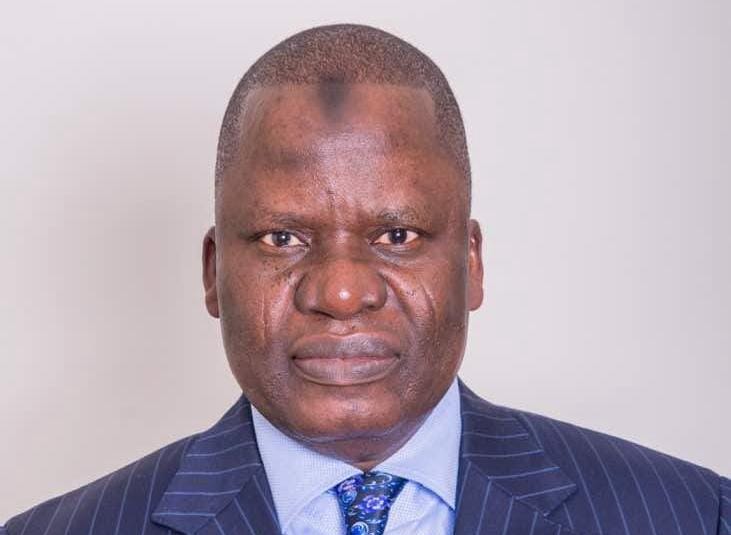
Suleyman A. Ndanusa, PhD, OON, is an economist, lawyer, strategic studies scholar, and public policy thinker and practitioner with extensive experience in financial markets, regulation, governance, national Security and development.