


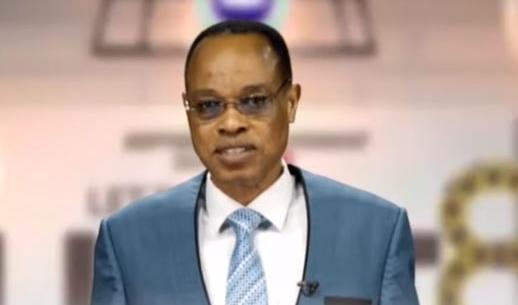
By Odesola JF., PhD
Every minute, someone leaves this world.
Not only the old.
Not only the sick.
Not only the weak.
Someone. Somewhere.
A father dies unexpectedly. A mother closes her eyes for the last time. A young man who woke up that morning with plans for the future never gets to see another sunrise. A woman who had dreams, appointments and unfinished conversations suddenly becomes a memory.
Age has nothing to do with it.
Life does not always send a warning.
That is why those who oppress others should be careful. Those who cheat people should be careful. Those who manipulate, deceive, exploit, betray and deliberately destroy the lives of others should pause and think.
Life is transient.
We are all passing through.
We may have different names, different backgrounds, different levels of education, different positions and different bank balances, but there is one appointment that awaits every human being.
Death.
It does not respect wealth.
It does not respect poverty.
It does not respect titles.
It does not respect political connections, religious positions, academic qualifications or social status.
One day, every one of us will leave this earth.
And when that day comes, many of the things we considered so important will suddenly become irrelevant.
WE ARE ALL STANDING IN THE SAME LINE
Imagine that life is a long line.
We wake up every morning thinking we have plenty of time. We make plans for next year, next month, next week and tomorrow.
We say, “I will apologise later.”
“I will forgive him one day.”
“I will settle the matter when I have time.”
“I will return what belongs to him eventually.”
“I will compensate her someday.”
“I will stop hurting people when the time is right.”
But the truth is that none of us knows how long our place in the line will last.
The line keeps moving.
Quietly.
Patiently.
Relentlessly.
Every day, somebody steps out of it.
And we never know who will be next.
The Bible says:
“For what is your life? It is even a vapour, that appeareth for a little time, and then vanisheth away.” — James 4:14.
That is a sobering description of human existence.
We are here today.
We may be gone tomorrow.
Therefore, how we treat people matters.
TO THE OPPRESSOR: BE CAREFUL
There are people who have deliberately made life miserable for others simply because they have power.
Some employers take advantage of vulnerable workers.
Some people refuse to pay what they owe because they believe the victim is too weak to fight back.
Some use their positions to intimidate others.
Some manipulate family members.
Some deliberately frustrate the progress of others because they are afraid that someone else might succeed.
Some destroy people’s reputations with lies.
Some use money to control people.
Some use influence to silence people.
Some use secrets as weapons.
Some oppress people because they believe nobody can challenge them.
But life has a way of reminding human beings that power is temporary.
The person you are humiliating today may be the person God uses to help you tomorrow.
The person you are exploiting today has a life, a family, dreams, feelings and dignity.
Do not mistake someone’s silence for weakness.
Do not mistake someone’s patience for stupidity.
Do not assume that because someone cannot fight back today, they will remain powerless forever.
Most importantly, do not forget that there is a God who sees what human beings cannot see.
Galatians 6:7 says:
“Be not deceived; God is not mocked: for whatsoever a man soweth, that shall he also reap.”
That is not merely a scripture to quote to others.
It is a principle by which we should examine our own lives.
TO THOSE WHO CHEAT AND DECEIVE OTHERS
There are people who have become experts at deception.
They promise what they never intend to deliver.
They borrow money with no intention of paying it back.
They manipulate business transactions.
They take advantage of people’s trust.
They forge stories, twist facts and manufacture excuses.
Some cheat even the people who love them.
But what is the ultimate gain?
You may deceive a human being, but you cannot deceive time.
You cannot deceive death.
And you cannot deceive God.
There is nothing wrong with pursuing legitimate success. There is nothing wrong with becoming wealthy. There is nothing wrong with building businesses, acquiring property or occupying influential positions.
The problem begins when success is built upon another person’s tears.
What kind of success requires another person’s destruction?
What kind of wealth is worth losing your integrity for?
What is the value of owning a mansion if you have destroyed the lives of the people around you?
What is the value of having millions if nobody can trust you?
A good name is still valuable.
Proverbs 22:1 says:
“A good name is rather to be chosen than great riches, and loving favour rather than silver and gold.”
TO THE MANIPULATOR: PEOPLE ARE NOT PAWNS
Manipulation is another form of oppression.
Some people are very skilled at making others feel guilty, afraid, indebted or inferior so they can control them.
They manipulate spouses.
They manipulate children.
They manipulate colleagues.
They manipulate friends.
They manipulate church members.
They manipulate employees.
They manipulate people who depend on them.
They know exactly what to say to get what they want.
But manipulating people may give you temporary control; it does not give you genuine respect.
There is a difference between influence and manipulation.
Influence persuades.
Manipulation controls.
Influence respects another person’s freedom.
Manipulation exploits vulnerability.
And eventually, people remember how you made them feel.
When your position disappears, when your money is gone and when your influence diminishes, what will remain of you?
Your character.
WHY DESTROY YOUR BROTHER OVER LAND?
Families have gone to war over property.
Brothers who once ate from the same plate have stopped speaking to one another because of inheritance.
Sisters have become enemies.
Children have taken their parents to court.
Relatives have destroyed relationships over houses, land, money and possessions.
But let us ask ourselves a simple question:
When we die, who takes the land?
The person who spent his entire life fighting over property eventually becomes part of the very earth he was fighting to possess.
Psalm 49:16–17 reminds us that when a person dies, wealth does not follow them.
There is nothing wrong with owning property.
There is nothing wrong with protecting your legitimate inheritance.
But there is something deeply tragic about sacrificing relationships, peace, love and family for things that cannot accompany us into eternity.
FORGIVE WHILE THERE IS STILL TIME
Some people are carrying anger that has lasted for decades.
They have not spoken to a brother for twenty years.
They have refused to forgive a friend.
They have allowed an old betrayal to poison their present.
But unforgiveness is like carrying a heavy stone everywhere you go.
You think you are punishing the person who hurt you, but sometimes you are the one carrying the burden.
Forgiveness does not mean pretending that wrongdoing never happened.
It does not mean allowing continued abuse.
It does not mean refusing justice or accountability.
It means refusing to allow bitterness to become the master of your heart.
Ephesians 4:31–32 says:
“Let all bitterness, and wrath, and anger… be put away from you… And be ye kind one to another, tenderhearted, forgiving one another.”
Life is too short to spend all of it angry.
WHAT WILL PEOPLE REMEMBER ABOUT YOU?
At the end of a person’s life, the important questions are rarely about possessions.
People ask:
Was he kind?
Did she help people?
Did he make a difference?
Did she bring peace?
Did he encourage people?
Did he lift others when they were down?
Did he use his position to help or hurt?
Did she build bridges or burn them?
Did he leave people better than he found them?
These are the things that become a person’s real legacy.
Money can buy a house, but it cannot buy a good name.
Power can open doors, but it cannot guarantee love.
Connections can give access, but they cannot purchase immortality.
Education can earn degrees, but it cannot cancel death.
Medicine can extend life, but no human being has discovered a way to live forever on earth.
Therefore, while we are alive, let us live well.
DO GOOD WHILE YOU CAN
If you have the opportunity to help somebody, help.
If you owe someone, pay.
If you have wronged someone, apologise.
If you have power, use it responsibly.
If you have wealth, remember those who have less.
If you have influence, use it to lift others.
If you have been blessed, become a blessing.
If you can forgive, forgive.
If you can make peace, make peace.
If you can encourage somebody, encourage them.
Do not postpone goodness.
Tomorrow is not guaranteed.
Proverbs 3:27 says:
“Withhold not good from them to whom it is due, when it is in the power of thine hand to do it.”
There are people who need your kindness today.
There are people who need your encouragement today.
There are people who need your apology today.
There are people who need you to stop hurting them today.
Do it while there is still time.
LIFE WILL EVENTUALLY ASK ONE QUESTION
When our journey is over, we will leave behind the houses, cars, titles, accounts, businesses, clothes and possessions.
Someone else will occupy the house.
Someone else will drive the car.
Someone else will inherit the money.
Someone else will sit in the office.
The title will remain, but the person carrying it will be gone.
What, then, will remain?
The lives we touched.
The prayers we prayed.
The kindness we showed.
The people we lifted.
The wounds we healed.
The people we encouraged.
The good we did.
That is why we must be careful how we treat people.
Do not destroy somebody simply because you have the power to do so.
Do not cheat someone because you think they cannot fight back.
Do not manipulate somebody because you know their weakness.
Do not oppress people because you believe your position is permanent.
Nothing on earth is permanent.
Not wealth.
Not power.
Not influence.
Not beauty.
Not fame.
Not office.
Not even life itself.
THE LINE IS MOVING
Every minute, someone leaves this world.
The line is moving.
One day, it will be our turn to step out of it.
We do not know when.
We do not know where.
We do not know how.
That uncertainty should not frighten us; it should teach us to live wisely.
So, while our hearts are still beating, let us make peace.
While we still have breath, let us forgive.
While we still have opportunity, let us do good.
While we still have influence, let us lift others.
While we still have possessions, let us share.
While we still have relationships, let us cherish them.
While we still have time, let us make amends.
Life is too short to spend it destroying one another.
To the oppressor: be careful.
To the cheat: be careful.
To the manipulator: be careful.
To the betrayer: be careful.
To the proud: be careful.
To all of us: be careful.
Because none of us knows how much time remains on the clock.
The greatest tragedy is not simply dying.
It is living without learning how to love, forgive, serve and make a positive difference.
May we never reach the end of our journey and discover that we spent our precious years hurting people over things that could never follow us beyond the grave.
May God give us wisdom to live right, humility to apologise, courage to forgive, compassion to help others and grace to leave behind a legacy of love.
One day, our turn will come to step out of the line.
When that day comes, may the testimony of our lives be that we made the world a little better because we passed through it.
This is food for thought for the wise.
Life is transient. Treat people well. Do good while you can. Love while you have time. Forgive while you have breath. And never forget: the line is moving.