


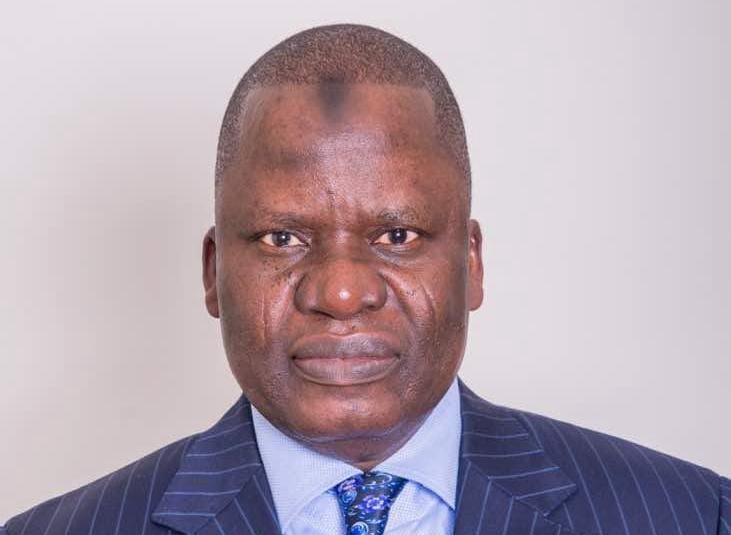
By Suleyman A.L Ndanusa PhD OON
Imagine that a senior American official responsible for export controls owned shares in Nvidia. The official then took part in a government decision about Nvidia’s access to China or the company’s compliance with export rules. The first question would not be whether the official had actually made money. It would be whether the official’s financial interest could be affected by the government matter, and whether the official had participated in it.
That is the ordinary conflict of interest problem. The Nvidia episode feels different because President Donald Trump reportedly owned Nvidia shares, personally pressed the company’s board to bring Jensen Huang back, and then celebrated a decision followed by an extraordinary rise in the share price. Nvidia’s shares jumped 31.5% on the day of the announcement. The company said its board had received input from senior levels of the US government and, based on that input, was confident Huang’s return posed no national security risk. Trump said he had spoken to the directors and convinced them.
For a Nigerian audience, the legal puzzle needs to be explained plainly. The United States has a strong conflict of interest law for many executive branch officials. But the President is outside its reach.
Under 18 U.S.C. § 208, an executive branch employee who participates personally and substantially in a particular government matter affecting the employee’s financial interest may face criminal penalties. In the normal course, an official with a relevant financial interest would be expected to disclose it to ethics officials and avoid participating in the matter, unless a valid exception or waiver applied. A willful violation can carry a prison sentence of up to five years; civil penalties are also available.
The law’s definition of who is covered, however, expressly excludes the President and Vice President, along with members of Congress and federal judges. The Office of Government Ethics has accordingly said that the President and Vice President are not legally subject to the main criminal conflict
of interest laws or the ordinary executive branch standards of conduct. This is not a Trump specific exemption. It is a structural carve out in federal law. But it leaves the President without the same statutory recusal rule that would apply to a cabinet secretary or senior agency official.
There is an important qualification. The Office of Government Ethics has said that it remains the consistent policy of the executive branch for a President to conduct himself “as if” bound by the conflict law, generally by divesting conflicting assets or placing them in a qualified blind trust. But the Office has also acknowledged that it cannot require the President to follow that policy. In other words, there is an ethical expectation, but no ordinary statutory mechanism compelling compliance.
That is the gap at the heart of the American anomaly. A President may be expected to behave as though bound by rules that Congress has chosen not to make legally binding on him. Disclosure can tell the public what assets he reports holding. It cannot itself remove the conflict, require recusal or establish that the official’s judgment was untouched by personal financial interests.
The STOCK Act does not close that gap in every respect. It expressly brings the President and Vice President within federal insider trading prohibitions where material, non public information obtained through official duties is involved. That matters. A President is not free to use confidential government information to trade securities. But insider trading is a different question from a conflict of interest. A conflict may arise because an official participates in a decision that could affect an investment. Insider trading requires evidence connecting material, non public information to a securities transaction or unlawful communication of that information. The public facts now available do not establish that Trump traded Nvidia shares on inside information.
The distinction is essential in this case. Public disclosures show Nvidia transactions in Trump’s portfolio during August and September, before Huang’s departure and return. The White House says third
party managers independently managed the portfolio by following market indexes and that Trump could not direct or influence the trades. The latest public filings do not cover October and November. The Financial Times estimated that the value of Trump’s reported Nvidia holdings could have risen by roughly $1 million to $15 million on the day of the rally, depending on how many shares he held. That is an estimated increase in value, not proof of a sale or realised profit; the disclosure ranges make the exact figure uncertain.
There is another legal distinction that should not be lost. Section 208 governs participation in a particular government matter. Nvidia’s CEO succession was, formally, a private board decision. If a cabinet secretary had owned Nvidia shares and taken part in a government decision on an export licence, enforcement action or security assessment affecting Nvidia, the conflict rules would be directly engaged. A call to a private board does not automatically fit the same statutory category. The legal analysis would depend on what official authority, information and government process were involved. The President’s exemption makes the usual § 208 test unavailable against him, but it does not resolve the separate questions about securities trading, misuse of office or whether any other law was broken.
The contrast with other jurisdictions helps show that the American arrangement is not inevitable. Canada’s federal Conflict of Interest Act applies to ministers, including the Prime Minister in his capacity as a minister. Publicly traded company shares are treated as controlled assets because their value may be affected by government decisions or policy. A public office holder must recuse from discussions and decisions where there is a conflict. Ministers must divest controlled assets, usually by selling them or placing them in a properly constituted blind trust. Recusals are publicly declared, and an independent Conflict of Interest and Ethics Commissioner administers the Act. A manager who follows an index may help prevent the official from directing trades, but Canada’s statutory scheme does not treat ordinary independent management as equivalent to divestment or a blind trust for ministers.
The United Kingdom uses a different model. Its Ministerial Code requires ministers to avoid both actual conflicts and conflicts that could reasonably be perceived to exist. Ministers must declare relevant interests, take advice from their permanent secretary and the Independent Adviser on Ministerial Standards, and dispose of an interest or manage it through steps such as recusal or a blind management arrangement. The UK system is less like Canada’s statute backed regime: the Prime Minister retains the final decision on whether a minister breached the Code and what sanction should follow. Still, the perception of conflict is expressly part of the standard. It is not dismissed as a matter of optics.
Nigeria’s Constitution is also direct on the underlying principle. The Fifth Schedule says that a public officer shall not put himself in a position where his personal interest conflicts with his duties and responsibilities. It requires asset declarations to be submitted to the Code of Conduct Bureau, directs that an official’s use of a nominee, trustee or agent does not avoid responsibility for a prohibited act, and provides for allegations to be made to the Bureau. If the Code of Conduct Tribunal finds a breach, its sanctions can include removal from office, disqualification from public office for up to ten years and forfeiture of property acquired through abuse or corruption of office. The President is among the offices covered by the constitutional code.
These systems are not interchangeable. Canada has a statutory Commissioner with specific divestment and recusal powers. The UK relies substantially on a ministerial code and political accountability, with the Prime Minister retaining the final decision. Nigeria’s Constitution sets a broad prohibition and provides for adjudication by the Code of Conduct Tribunal. The American system, by contrast, exempts its highest officeholder from the principal federal conflict statute while retaining financial disclosure and insider trading restrictions. That legal design makes transparency, oversight and voluntary ethical restraint especially important.
So what should we expect now? Not an automatic finding of guilt, and not an automatic criminal case simply because the President owned shares and spoke publicly. We should expect Congress to ask what communications took place with Nvidia’s board, what the government told the directors, who provided the national security assessment, and what Trump meant when he said he convinced them. We should expect the board to explain how it reached a unanimous decision while its independent investigation remained open. And when the next financial disclosures are due, the public should be able to see whether there were Nvidia transactions during October or November. Those records, along with any relevant communications, would help distinguish an appearance of conflict from evidence of actual misconduct.
A capital market regulator does not treat a dramatic price movement as proof of wrongdoing. But neither does a regulator shrug when a price sensitive intervention, a substantial reported investment and the President’s personal claim of influence converge. The question is not only whether anyone can prove that Trump personally traded on inside information. It is also whether the system gives the public a credible way to establish that official power was exercised for public reasons, without regard to private financial interests.
My instinct remains that this episode smells wrong. The law may not require the President to recuse himself under the rule that would govern a cabinet official. That legal exception makes independent scrutiny more necessary, not less. In a market that moved nearly a trillion dollars on the return of one chief executive, assurances alone are not enough. The public deserves the facts, the process and the evidence on which the board and the government relied.
Suleyman A. Ndanusa, PhD, OON, is an economist, lawyer, strategic studies scholar, and public policy thinker and practitioner with extensive experience in financial markets, regulation, governance, national Security and development.