

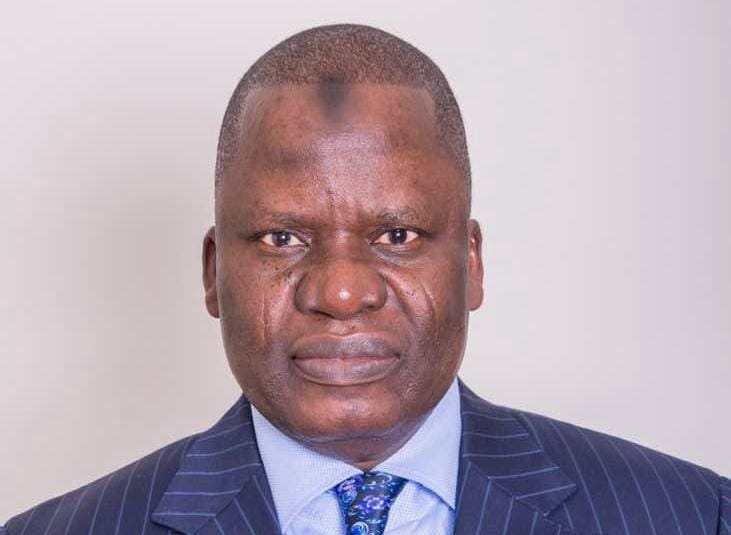
By Suleyman A. Ndanusa, PhD OON
The decision of the Federal Government to constitute a committee to prepare a National Threat Assessment and a rolling Five-Year Strategic Defence Operations Plan is timely and commendable. Nigeria’s security challenges require precisely this kind of forward looking framework, one that anticipates threats, establishes priorities and connects operational requirements with resources and measurable outcomes.
The composition of the committee, however, appears almost entirely drawn from the defence, intelligence and law enforcement establishment. This is understandable in relation to the Strategic Defence Operations Plan, which must necessarily be led by the institutions responsible for confronting immediate security threats. It may nevertheless be too narrow for the preparation of a truly comprehensive National Threat Assessment.
There is an important distinction between a defence operations plan and a national threat assessment. The first asks how the state should respond to identified threats. The second must ask where those threats come from, how they evolve, what sustains them and which interventions can prevent them from becoming violent. The people best equipped to confront a gunman may not, acting alone, be best placed to explain the economic, social and institutional conditions that continually produce new gunmen.
Nigeria’s insecurity does not begin only when a criminal picks up a weapon. It often begins much earlier in unemployment, poverty, food insecurity, displacement, weak education, environmental degradation, competition over land and water, drug abuse, illicit financial flows and the disappearance of legitimate livelihoods. The armed criminal may be the visible face of insecurity, but behind him frequently lies an economy of grievance, recruitment, financing and criminal opportunity.
This is particularly evident in Nigeria. When farmers cannot safely cultivate their land, insecurity becomes food inflation. When businesses close or avoid entire regions, insecurity becomes unemployment and lost investment. When schools are abandoned, insecurity becomes a future recruitment pool. When communities are displaced, insecurity becomes a humanitarian and urban planning crisis. When kidnapping and illegal mining generate substantial revenues, insecurity becomes an underground economy with investors, supply chains, financiers and beneficiaries.
In other words, insecurity has a balance sheet. It has sources of income, operating costs, incentives and beneficiaries. A national assessment that examines weapons and operational theatres without following the money may identify the fighters while overlooking the economic system that keeps the enterprise alive.
This broader understanding is well established internationally. The United Nations Development Programme introduced the modern human security framework in 1994, shifting attention from the protection of territory alone to the protection of people. It identified economic, food, health, environmental, personal, community and political security as interconnected dimensions of national stability. The essential proposition was simple: security should be understood not only as freedom from fear, but also as freedom from want and indignity.
Recent international practice has moved in the same direction. The United Kingdom’s 2025 National Security Strategy expressly declares that economic security is national security. It covers defence, energy, supply chains, food prices, digital communications, critical infrastructure, biosecurity, illicit finance and national resilience. It also adopts a “whole-of-society” approach involving government, business, communities and citizens—not the security services alone. The UK strategy therefore treats the strength of the economy and the resilience of society as part of the country’s defensive capacity.
The United States similarly places Treasury, Commerce, Energy, Agriculture, Health, Homeland Security and the Office of Management and Budget within high level national security coordination when the subject requires their expertise. This reflects a recognition that sanctions, financial intelligence, industrial capacity, supply chains, energy, technology and public health can be as consequential to national security as conventional military capabilities.
The African Union’s peace and security architecture also links conflict prevention with governance, humanitarian affairs, human rights, displacement and institutional resilience. The lesson across these models is not that soldiers should be replaced by economists or development specialists. It is that the kinetic and non kinetic perspectives must meet at the point where threats are being defined.
There is also a compelling fiscal dimension. The committee is expected to establish a path from threat to objective, objective to capability, capability to resource, and resource to measurable outcome. That assignment is not merely operational; it is fundamentally economic. It requires analysis of affordability, opportunity costs, procurement choices and the appropriate balance between military expenditure and preventive social investment.
For example, the cost of permanently deploying security forces to protect an unstable community should be compared with the cost of restoring livelihoods, schools, local administration, land management systems and community based early warning. Some threats must be defeated militarily. Others can be prevented more effectively and less expensively by removing the conditions that sustain them. Good national security planning should be able to distinguish between the two.
The National Threat Assessment should therefore examine at least four connected layers. It must identify immediate armed threats; the criminal economies that finance and sustain them; the economic and social vulnerabilities from which they recruit; and emerging threats such as cybercrime, artificial intelligence misuse, climate stress, epidemics, critical infrastructure disruption and disinformation. Nigeria cannot prepare a five year security plan using only yesterday’s definition of insecurity.
The answer may not be to enlarge the core committee until it becomes unwieldy. A committee can become so representative that everyone is present but progress is absent. The better approach is to use the proposed subcommittees and the power to consult or co opt relevant institutions to incorporate economic and human security expertise formally into the work.
That process should include Finance and the Economy, Budget and Economic Planning, Agriculture and Food Security, Humanitarian Affairs, Education, Health, Labour, Environment, Communications and the relevant state governments. It should also draw upon the Central Bank, the Nigeria Financial Intelligence Unit, the National Bureau of Statistics, the private sector, universities, civil society and specialists in development, demography, climate and human security.
Their involvement should not be ceremonial or limited to submitting memoranda after the security conclusions have already been reached. Economic and human security analysis should constitute an identifiable pillar of the National Threat Assessment, supported by data and connected to clear preventive interventions, funding responsibilities and measurable outcomes.
The assessment should ultimately answer some practical questions. Which communities are most vulnerable to recruitment and why? What economic activities finance violent groups? Where are climate and demographic pressures likely to create future conflict? What is the economic cost of insecurity in each affected region? Which preventive investments would reduce risk most effectively? And how should resources be divided between defeating present threats and preventing the next generation of them?
The committee is appropriately constituted to design defence operations, but it should broaden its lens in diagnosing the threats those operations are intended to address. The kinetic institutions must lead the response to violence, but economic and human security expertise must help explain why the violence arises, how it is financed, where recruitment occurs and what will prevent its recurrence.
Nigeria must avoid defining every security problem by the uniform of the person invited to solve it. A rifle may suppress an attack, but it cannot reopen a school, restore a farm, create employment or rebuild trust between a community and the state. Otherwise, we may produce an excellent five-year plan for fighting insecurity without producing an equally credible strategy for reducing its supply.
Suleyman A. Ndanusa, PhD, OON, is an economist, lawyer, strategic studies scholar, and public policy thinker and practitioner with extensive experience in financial markets, regulation, governance, national Security and development.