By Olatunbosun Obafemi
A profound silence has gripped Nigeria’s capital—not due to a public holiday or civil curfew, but from chains on gates, placards on walls, and the unified defiance of a workforce pushed to the brink.
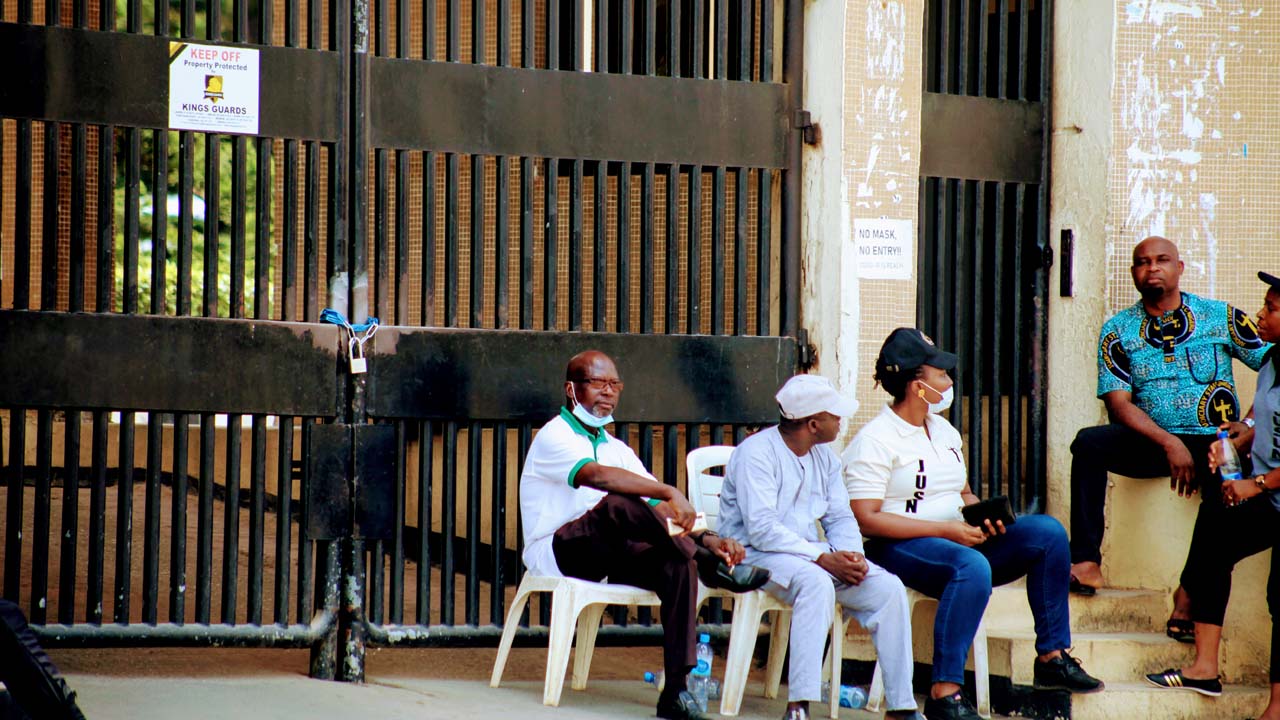
Since midnight on June 1, 2025, the Judiciary Staff Union of Nigeria (JUSUN) has enforced a total shutdown of courts across Abuja in protest against what it describes as “debilitating neglect” by the federal government. From the Federal High Court on Shehu Shagari Way to the magistrate courts in Wuse Zone II, Maitama, Garki, and Nyanya, court buildings now stand locked, their once-bustling corridors eerily empty.
The industrial action, though sweeping, did not erupt overnight. It was planned, signaled in a circular issued by JUSUN on May 30 and carried out with quiet but firm resolve two days later. The memo, signed by the union’s Acting National Secretary, M.J. Akwashiki, warned of a total withdrawal of service unless long-standing salary disputes were resolved. By dawn on June 1, the gates were bolted, the courtrooms silent, and access denied – not only to judges and clerks but to litigants who had waited months or even years to have their cases heard.
JUSUN’s demands are specific: the immediate payment of a five-month wage award, implementation of the proposed ₦70,000 national minimum wage, and a 25 to 35 percent salary increase to cushion the effects of economic hardship. According to union leaders, negotiations with the Ministry of Labour and Employment have gone nowhere, with promises repeatedly made – and repeatedly broken.
“The strike is not just a protest,” said one JUSUN official who asked not to be named. “It is a desperate act of survival. We’ve reached a point where we’re no longer begging—we’re demanding.”
The impact of the shutdown was felt immediately. Dozens of scheduled court proceedings were cancelled without notice. Lawyers milled restlessly outside court gates, their clients left in limbo. Some judges, unaware of the strike’s full force, arrived in their robes only to be turned away. Only the Supreme Court remains operational, continuing its activities under a cloud of tension and the weight of public scrutiny.
Scenes from the shuttered courthouses tell their own story: lobbies deserted, entrances chained, hand-scrawled notices fluttering in the breeze. The symbolism is stark – justice in the capital has been brought to a standstill, not by external threat, but by its own custodians.
Yet the strike is far from unanimous across the judiciary. A rift has emerged between JUSUN-affiliated workers and those under the direct purview of the National Judicial Council (NJC). While Federal High Court staff remain resolute, NJC employees and Supreme Court personnel have continued work, citing ongoing negotiations with the Accountant-General’s office and a directive from the NJC urging patience during a two-week grace period granted by the federal government.
This division within the judiciary workforce has raised concerns about the cohesion and ultimate impact of the strike. Critics warn that fractured solidarity could weaken JUSUN’s leverage, while others see it as a test of the union’s resolve.
So far, the federal government’s response has been conspicuously absent. As of this report, no official statement has been released by the Ministry of Labour. The Chief Justice of Nigeria, Justice Kudirat Kekere-Ekun, has called for calm and urged JUSUN to return to work in the spirit of dialogue. But with union leaders reportedly engaged in strategy meetings and vowing to press on, the appeal appears to have gone unheeded.
For many observers, the crisis is about more than unpaid wages. It speaks to a deeper institutional malaise. Nigeria’s court system is already weighed down by case backlogs, inadequate funding, outdated infrastructure, and limited access to digital case management tools. In this context, the strike has become a flashpoint – a moment of reckoning for a judicial sector long stretched thin.
“This isn’t just about money,” said a lawyer stranded outside a locked magistrate court in Garki. “It’s about respect for the rule of law and those who uphold it every day.”
As the standoff deepens, questions abound: Will the government return to the table? Will the split within the judiciary blunt the strike’s momentum? And how long can justice remain suspended before the system begins to fracture under the strain?
For now, uncertainty reigns. And behind locked courthouse doors, the wheels of justice remain motionless – waiting not only for resolution, but for recognition.
Meanwhile, JUSUN has called off its indefinite strike, which began on June 1.
The decision to call off the strike was contained in a communique issued by JUSUN after a series of meetings and agreements with the Representatives of the Chief Justice of Nigeria, Hon. Justice Kudirat Kekere-Ekun, and relevant stakeholders on June 3, 2025.