

By Olatunbosun Obafemi
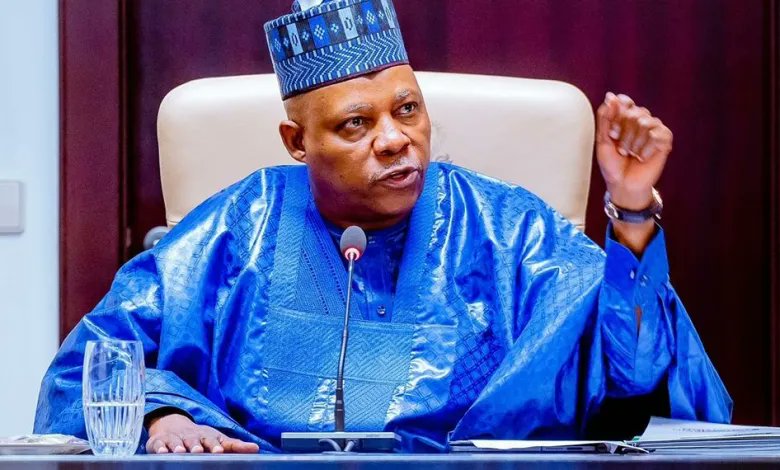
In a move that could reshape Nigeria’s energy future, Vice President Kashim Shettima has announced a bold bid for $25 billion in foreign investment to build an undersea gas pipeline linking Nigeria directly to Europe. The project, unveiled during a high-level meeting with executives of global energy giant Vitol Group at the Presidential Villa on June 2, 2025, aims to transform Nigeria from a raw gas exporter into a strategic global supplier.
“Nigeria holds the world’s eighth-largest gas reserves,” Shettima said, “but to transform that potential into prosperity, we need partners who can match our ambition.”
The announcement comes just a year after Shettima disclosed that Nigeria spends nearly $25 billion annually importing refined petroleum products—an irony not lost on energy observers. The juxtaposition of both figures, identical in value but opposite in implication, reflects a nation at an inflection point: one path drains the economy, the other offers long-term returns.
The pipeline project leverages Europe’s growing need for alternative gas supplies, heightened by the Russia-Ukraine conflict. Nigeria’s reserves and Atlantic access make it an attractive candidate to fill that vacuum.
But Shettima’s pitch wasn’t purely economic—it was also geopolitical. He framed Nigeria as a stable, transparent partner capable of meeting international demand at scale, appealing to Europe’s urgent need for energy security.
Yet ambition alone won’t build the pipeline. Nigeria’s past struggles with infrastructure delivery—bogged down by bureaucracy and corruption—loom large. Execution remains the real test.
Still, recent reforms, including the near-completion of the Dangote Refinery, suggest a new seriousness in energy policy. If realized, the pipeline could mark a pivot from decades of waste to a future of strategic export, making the $25 billion not just a number, but a symbol of national transformation.