

By Suleyman A. Ndanusa PhD OON
Picture a Nigerian campaign rally. The convoy arrives with sirens, flags and music loud enough to announce the candidate several streets before the candidate appears. The speech promises a new beginning. The supporters answer with cheers. The opponent is blamed for the country’s troubles, and the candidate promises to unite the nation and defeat corruption.
Then, before the dust settles, the campaign moves to another state. The slogans change slightly. The promises remain familiar. Somewhere in the crowd, a voter is wondering whether the price of food, the safety of the roads or the prospect of a job will also make it into the speech.
This is an imagined campaign scene, but it captures a familiar political tension: our candidates speak of unity, while campaigns can be conducted through suspicion over region, ethnicity, religion and who deserves a share of power. It is a good moment to ask what leadership might look like when the rally is over and the difficult work of governing begins.
During the 2008 American presidential campaign, Barack Obama was asked which book, apart from the Bible, he would take to the White House. He named Doris Kearns Goodwin’s Team of Rivals: The Political Genius of Abraham Lincoln. (The Constitution answer often remembered alongside it came from Hillary Clinton, who was asked the same question.) After winning the election, Obama spoke directly about Lincoln’s decision to bring former opponents into his cabinet. He then chose Joe Biden, who had also sought the Democratic nomination, as his running mate; appointed Hillary Clinton, his principal rival in the nomination contest, as Secretary of State; and retained Robert Gates, who had served in the previous administration, as Secretary of Defense. These choices were not all the same: Biden joined the ticket before the election, while Clinton entered the administration afterwards. But they showed Obama’s interest in drawing on people with experience and strong views beyond his closest circle.
Why did Lincoln’s example appeal to him? Goodwin’s book takes us back to 1860, when Lincoln won the Republican nomination despite facing better known rivals, including William H. Seward, Salmon P. Chase and Edward Bates. After becoming president, he brought all three into his cabinet. Seward became secretary of state, Chase secretary of the treasury, and Bates attorney general. These were men with experience and ambition and strong views of their own. Lincoln needed their ability, but he also had to manage their rivalry and lead a country moving towards civil war.
One revealing moment came as Lincoln considered emancipation. His cabinet members offered different counsel. Seward advised him to wait until the Union had achieved a military success, so the proclamation would not look like an act of desperation. Lincoln accepted the advice and waited. After the Union advance at Antietam, he issued the preliminary Emancipation Proclamation. He had listened to a colleague’s judgment about timing, while retaining responsibility for the decision and its purpose.
The book’s lesson is not simply “appoint your rivals.” Lincoln’s achievement lay in what he tried to do with the people he appointed. He valued ability over personal comfort, made space for disagreement, listened to advice and kept the administration focused on the Union’s survival. He also had to manage ambition and insist on performance. A team is not made effective by putting impressive names on a list; it becomes effective when its members know what they are there to accomplish and are answerable for doing it.
That brings us back to Nigeria. Our ethnic, regional and religious identities are real parts of our lives. The danger is that politicians can turn them into political weapons, presenting themselves as defenders of a community while encouraging citizens to suspect one another. Once the campaign becomes a contest over whose group will control the state, questions about competence, policy and public service can be pushed aside.
Corruption makes the division more costly. When public office is treated as a path to private advantage, appointments, contracts and allocations become prizes. Citizens may be urged to argue over which region or faith is favoured, while the people who profit from the system can find ways to cooperate across those same boundaries. The public is left to carry the cost in weaker services, lost opportunities and diminished trust.
Lincoln’s experience cannot be copied wholesale. Nigeria has its own federal character, constitutional arrangements, party system and political history. The useful comparison is the kind of leadership the book invites us to examine: a leader who can draw on different talents and views, keep a common purpose in sight and hold people accountable for their work.
For us, inclusion must mean more than seeing familiar identities represented in a photograph. People from across the country should have a genuine opportunity to contribute, and appointments should be matched by competence and responsibility. Disagreement over policy should be heard on its merits. And the fight against corruption must be steady and fair, whoever is involved.
In a campaign, rivals compete for the same office. In government, the country needs them to compete in the quality of their ideas and service. That is a demanding test for any leader and a demanding test for citizens, too. When the music stops and the convoy has moved on, we must ask whether those who sought our votes can work together for the people they promised to serve.
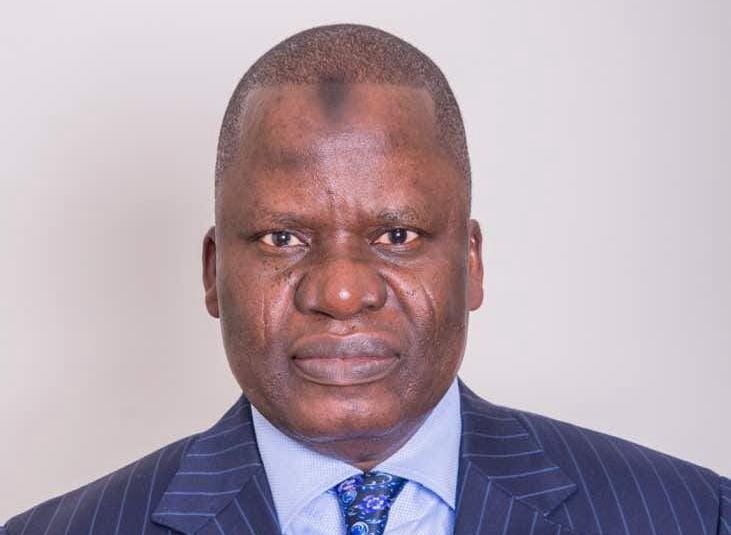
Suleyman A. Ndanusa, PhD, OON, is an economist, lawyer, strategic studies scholar, and public policy thinker and practitioner with extensive experience in financial markets, regulation, governance, national Security and development.