

By Olatunbosun Obafemi
As Nigeria’s political landscape begins to shift ahead of the 2027 general elections, the ruling All Progressives Congress (APC) has dismissed a newly formed opposition coalition as a “recycled alliance of failed politicians,” insisting it poses no credible threat to President Bola Tinubu’s re-election bid.
The coalition, formed by top figures from the Peoples Democratic Party (PDP) and other opposition groups, has coalesced under the African Democratic Congress (ADC), now repositioned as a unifying platform for disaffected political leaders seeking to challenge the APC’s dominance.
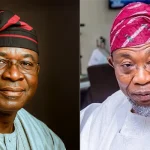
Former Senate President David Mark has been named interim national chairman of the ADC, with former Osun State Governor Rauf Aregbesola as secretary. A formal unveiling of the coalition is expected on Wednesday.
The development followed a high-level meeting held on Tuesday at the Transcorp Hilton Hotel in Abuja, attended by several prominent PDP chieftains including former Vice President Atiku Abubakar, ex-governors Aminu Tambuwal, Liyel Imoke, Babangida Aliyu, Sam Egwu, and former party chairman Uche Secondus, among others. The meeting concluded with a strongly worded communiqué condemning the APC-led government as a “national failure.”
“The APC, which rode to power on the back of propaganda to rescue Nigeria from the PDP, has now plunged the country into deeper disaster,” the communiqué read. “The time has come to unite and rescue the country.”
The group decried the PDP’s internal collapse, attributing it to a failure of leadership and constitutional breaches, while accusing the APC government of weaponising state institutions, blackmailing opposition figures, and undermining democracy.
They pledged to build a united front around key national issues – security, the economy, democracy, and anti-corruption – vowing to present a credible alternative in 2027. “Nigeria today is a shadow of itself, suffering from a collapsed economy, insecurity, and poor international image,” the communiqué added.
But in a swift rebuttal, the APC’s Director of Publicity Bala Ibrahim described the coalition as “dead on arrival,” mocking its members as politically obsolete figures driven by personal ambition rather than national interest.
“These people are coming together for selfish reasons. Their ambition is not rooted in the welfare of Nigerians but in their personal political survival,” he said.
He also downplayed the criticism of Tinubu’s administration, claiming the mere fact that opposition leaders could freely meet in luxury hotels without fear was proof of improved security and freedom under APC rule. “Their gathering itself is a testament to the progress made under the APC government,” Ibrahim said.
The APC expressed confidence that President Tinubu would secure another term, arguing that Nigerians would reject what it called “recycled failures” in 2027. “They have no ideological coherence, no vision, and no momentum. President Tinubu will beat them again, just as he did in 2023,” Ibrahim added.
The evolving coalition – which includes figures from the PDP, Labour Party, and even former APC stalwarts like Nasir El-Rufai and Rotimi Amaechi – marks a potentially significant realignment in Nigerian politics. The adoption of the ADC as its platform signals a strategic shift from fragmented opposition to a consolidated front with ambitions of mounting a serious challenge.
As political consultations intensify and defections continue to loom, Nigeria appears set for a heated and possibly transformative electoral cycle in 2027.