

By Ebenezer Mabinuola
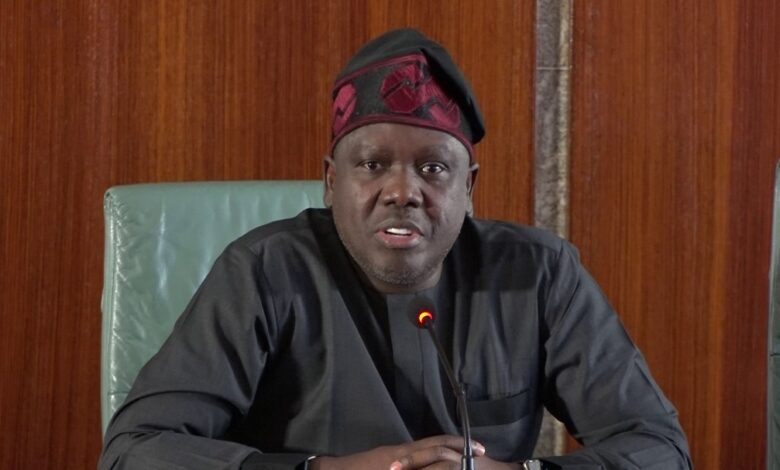
Daniel Bwala, Special Adviser to President Bola Ahmed Tinubu on Media and Public Communication, has issued a sharp rebuke to critics of the APC-led Federal Government, insisting that the administration’s achievements are “ascertainable, relatable, and touchable.” His remarks, made during a recent appearance on Journalists’ Hangout, drew immediate attention – and some criticism – for the combative tone in which they were delivered.
“Anyone who claims that the President has no achievement is either blind, deaf, or dumb — but I will help them today,” Bwala said during the broadcast, triggering reactions across the political spectrum.
Bwala cited a range of economic and social indicators as evidence of progress under President Tinubu’s leadership. He claimed that when Tinubu took office, 27 of Nigeria’s 36 states were effectively bankrupt. According to Bwala, the administration’s reforms — including the removal of fuel subsidies and improvements in federal revenue distribution — have revitalized state finances, enabling salary payments and new development projects.
He pointed to the recent launch of the National Education Loan Fund (NELFUND) as a milestone initiative, describing it as a “game-changer” for students from low-income backgrounds. He also highlighted rising foreign reserves and averted economic collapse as further proof of effective governance.
However, opposition leaders and independent analysts have challenged Bwala’s claims, describing them as overly optimistic and dismissive of the real economic hardship many Nigerians continue to face.
Speaking to reporters in Abuja, PDP spokesperson Debo Ologunagba criticized Bwala’s tone and assertions: “It’s not only insulting to call Nigerians ‘blind, deaf, or dumb’ for questioning their own lived reality, it also reflects a troubling disconnect from the daily struggles of millions,” he said.
Ologunagba acknowledged that some states have benefited from increased federal allocations but argued that this was due more to rising oil revenues than sound economic policy. “What the Tinubu administration calls reform is really just a shift of burden — the removal of fuel subsidies has left many Nigerians worse off, as inflation and transport costs continue to surge,” he added.
Civil society groups also weighed in. A spokesperson for the Centre for Social and Economic Rights said while the establishment of NELFUND is a welcome step, the implementation remains patchy. “Thousands of students still cannot access the funds due to bureaucratic delays and a lack of public awareness,” the group noted in a statement.
Economists remain divided. Some credit the administration with taking politically difficult steps like subsidy removal and currency reforms, while others argue the benefits are not yet filtering down to the population. Nigeria’s inflation rate remains high, and youth unemployment continues to be a major concern.
Bwala, however, stood by his comments, saying Nigerians would see more tangible results as the reforms take hold. “You can feel the impact — in the classrooms, on the roads, and in the improved capacity of state governments to deliver,” he insisted.

With the 2027 elections approaching, the Tinubu administration appears eager to project a message of resilience and progress. Whether that narrative resonates with the broader electorate remains to be seen.