

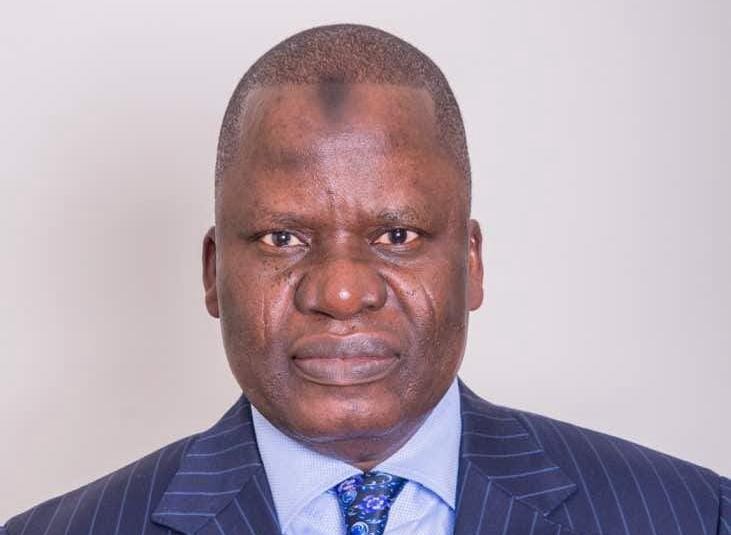
By Suleyman A. Ndanusa PhD OON
Economists have a remarkable gift for giving complicated names to problems ordinary people already understand. Professor Dani Rodrik of Harvard calls his own version the “political trilemma of the world economy.” It sounds like something requiring a calculator, a dictionary and perhaps a glass of cold water. Fortunately, the idea itself is much friendlier than its name.
Imagine three chairs in a room. One is labelled globalisation, the second national sovereignty, and the third democratic politics. Every government would naturally like to sit comfortably on all three. Rodrik’s warning is that no country can occupy the three chairs fully at the same time. It may settle securely on two, but the third will begin to wobble.
Globalisation requires countries to open their economies, welcome capital, respect international rules and remain attractive to investors. National sovereignty means a country should retain the freedom to make policies according to its own circumstances. Democratic politics means citizens must have a meaningful say in those policies.
All three sound reasonable. The quarrel begins when they arrive at the same meeting.
Global investors want fiscal discipline, predictable regulation, stable prices, free movement of capital and few restrictions on trade. Citizens may want affordable fuel, cheaper electricity, protected employment, subsidised services and government support for local industries. National leaders, meanwhile, want the freedom to respond to both sides without being punished by either.
The government consequently finds itself addressing two very different audiences. One audience watches bond yields, reserves, inflation and exchange rates. The other watches the prices of rice, transport, school fees and cooking gas. Both audiences can pass a vote of no confidence, although only one possesses a voter’s card.
Nigeria provides a particularly interesting theatre for Rodrik’s three chairs.
We want foreign investment, international trade, modern technology and access to global finance. We also want the freedom to protect our industries, support employment and pursue our own development priorities. And because we are a democracy, we expect economic policies to reflect the living conditions and preferences of Nigerians.
The problem is that the three ambitions do not always travel peacefully in the same vehicle. Global markets may ask government to remove subsidies, allow the naira to find its market value and reduce public spending. Citizens may ask why their incomes must also “find their market value” somewhere near the bottom while prices are allowed to travel freely upwards.
Nigeria’s relationship with globalisation is especially awkward. We are not deeply integrated into the productive side of the global economy. We do not export enough machines, technology, manufactured goods or high value services. Yet we are heavily exposed to international oil prices, foreign interest rates, imported inputs, exchange rate movements and decisions taken by foreign investors.
We are therefore close enough to globalisation to catch its cold, but not always close enough to enjoy its breakfast.
When interest rates rise in America, capital may quietly leave Nigeria. When oil prices change abroad, our revenues, reserves and domestic prices feel the effect. When conflict disrupts grain or energy supplies thousands of kilometres away, Nigerian families meet the consequences in the market. The world may sneeze in Washington, Moscow or the Middle East, and the naira begins looking for a handkerchief in Abuja.
This is the first important Nigerian modification to Rodrik’s argument. Our difficulty is not simply excessive globalisation. It is unequal exposure to globalisation. Nigeria carries many of the risks of the global economy without yet capturing enough of its productive benefits.
The second complication is our particular form of mass politics. Economic decisions in Nigeria are rarely judged only by their technical merits. They are filtered through history, region, ethnicity, party affiliation, social media, organised labour and, most importantly, the public’s level of trust in government.
Consider a major economic reform. Government explains that a subsidy is unsustainable, the exchange rate is distorted or electricity tariffs are too low. Economists may agree. International institutions may issue encouraging statements. Investors may applaud. The stock market may even smile.
But the Nigerian citizen is not standing inside the stock market. He is standing at the petrol station.
His question is not whether the reform has satisfied economic theory. His question is whether he can still afford to go to work on Monday. When transport fares rise, food prices follow. School fees do not wait for inflation to fall. Landlords rarely accept macroeconomic explanations in place of rent.
This does not mean Nigerians do not understand reform. Every Nigerian household conducts fiscal adjustment regularly. When income falls, the family reduces spending, postpones projects and searches for additional earnings. No consultant is required. The average household may not call it “macroeconomic stabilisation,” but it has been practising the policy for years.
What citizens find difficult to accept is a reform in which the pain is immediate, the benefits are promised for an unspecified future and the sacrifices appear to have been allocated mainly to people outside government.
The citizen is told that fuel, electricity and foreign exchange must now obey market forces. He looks at official convoys, foreign travel, duplicated public institutions and other costs of governance and wonders when the market forces will reach that neighbourhood. Government asks everyone to tighten their belts, but some belts appear to be enjoying constitutional immunity.
Here we discover a fourth chair that Rodrik did not include: trust.
Without trust, even an economically sensible policy arrives burdened by the failures of previous governments. Citizens hear that hardship will be temporary and remember several temporary problems that have acquired permanent addresses. They are promised that savings will be invested in infrastructure, education and healthcare, but the road remains unfinished, the school remains underfunded and the hospital continues to request that patients bring their own cotton wool.
In such circumstances, public resistance is not necessarily ignorance or selfishness. It may be a rational response to experience.
This is why communication must be part of policy, not a rescue operation introduced after the policy has entered trouble. Communication is not perfume sprayed on a reform after it has been cooked. It begins with explaining honestly why the reform is necessary, who will bear the burden, what protection will be provided, how long the difficult period may last and what measurable results citizens should expect.
Government must also understand that citizens do not experience reform through communiqués. They experience it through prices. A beautifully written statement cannot reduce a bus fare. A television interview cannot substitute for reliable electricity. If subsidy savings are promised, the public should be able to follow the money into visible improvements in transportation, roads, schools, hospitals and productive infrastructure.
Reform requires receipts.
Nigeria must also be careful about importing economic prescriptions as though every country wears the same size. A policy that succeeds in an economy exporting cars, electronics and machinery may behave differently in one dependent on imported fuel, equipment and industrial inputs. Allowing an exchange rate to float without expanding exports may be economically defensible, but the naira cannot swim indefinitely if the economy has not learnt how to produce.
Similarly, opening domestic industries to unlimited competition before fixing electricity, transport, ports and credit is like registering them for the Olympics after confiscating their running shoes. Competition is useful, but competitors should at least arrive at the starting line under reasonably comparable conditions.
The answer is not to shut Nigeria away from the world. That would be both unrealistic and unwise. Nigeria needs foreign capital, international markets, knowledge, technology and partnerships. But openness must serve a national purpose. We should not open the economy simply to demonstrate that we know where the door is.
Every major decision on trade, capital and investment should answer some basic questions. Will it help Nigeria produce more? Will it create employment? Will it transfer knowledge? Will it strengthen local businesses? Will it make the country less vulnerable to the next external shock?
Domestic industries may sometimes need support, but support must not become a retirement benefit. Protection should come with performance targets, clear conditions and an expiry date. An infant industry may deserve assistance while learning to walk. But if the infant is still being carried at forty, we may need to examine the family business.
The same principle applies to subsidy reform. Removing an inefficient subsidy can be justified. But timing and sequencing matter. Before citizens are asked to pay the full cost of electricity, supply should become more reliable. Before a transport subsidy is removed, credible alternatives should be prepared. Before local producers are exposed to unrestricted imports, the obstacles that make them uncompetitive should be addressed.
Nigerians are not opposed to surgery, but they are entitled to ask whether the anaesthetic has arrived.
Rodrik’s deeper lesson is that a reform must be not only economically correct but politically survivable. A policy that impresses investors while steadily impoverishing citizens will eventually produce resistance, reversal or both. Conversely, a policy that pleases voters today but creates inflation, debt and shortages tomorrow will also fail.
Good government must therefore build a bridge between the confidence of markets and the consent of citizens. Market credibility without popular legitimacy is fragile. Popularity without economic discipline is equally dangerous. Nigeria needs both.
The burden of adjustment must also be seen to be fairly shared. Political leaders sometimes underestimate the economic importance of symbolism. When citizens are asked to make sacrifices, visible restraint by government becomes part of the reform programme. Reducing waste may not solve every fiscal problem, but it tells the public that hardship is not a national assignment from which the governing class has excused itself.
This is ultimately what Rodrik’s three chairs mean for Nigeria. We cannot surrender our economic future entirely to global markets. We cannot ignore the discipline and opportunities of the global economy. And we cannot treat democratic consent as an inconvenience to be managed through public relations.
Nigeria must remain open to the world while retaining enough policy freedom to pursue its own development. It must reform the economy while protecting citizens from unbearable disruption. And it must recognise that election victory gives a government the authority to act, but not an unlimited supply of public trust.
The challenge is not to choose one chair and throw away the others. It is to find a workable Nigerian balance among the three: globally connected, nationally purposeful and democratically legitimate.
Markets may advise. Economists may calculate. International institutions may endorse. Government may announce.
But when the price of food rises, it is the citizen not the spreadsheet who must pay the bill.
Suleyman A. Ndanusa, PhD, OON, is an economist, lawyer, strategic studies scholar, and public policy thinker and practitioner with extensive experience in financial markets, regulation, governance, national Security and development.