

By Nchetachi Chukwuajah
On March 28, 2024, the Central Bank of Nigeria (CBN) gave deposit money banks (DMBs) in Nigeria a two-year window to recapitalise, requiring commercial, merchant, and non-interest banks to upwardly review their minimum capital base depending on their licence authorisation.
According to the apex bank, the recapitalisation drive aims to strengthen banks’ capacity to support the growth of the economy by providing capital for manufacturers and industrialists so as to achieve President Bola Tinubu’s N1 trillion economy target.
“The prevailing microeconomic challenges and headwinds, occasioned by external and domestic shocks, have underscored the need for banks to raise and maintain adequate capital to enhance their resilience, solvency and capacity to continue to support the growth of the Nigerian economy,” it said.
The recapitalisation policy requires commercial banks with international authorisation to raise their capital base from N50 billion to a minimum of N500 billion; those with national authorisation will raise theirs from N25 billion to N200 billion, while banks with regional authorisation are required to go from N10 billion to a N50 billion threshold.
The CBN said merchant banks with national authorisation are required to increase their capital base from N15 billion to N50 billion; non-interest banks with national authorisation would increase theirs from N10 billion to N20 billion, while non-interest banks with regional authorisation will raise their capital base from N5 billion to N10 billion.
It said the new guideline applies to existing and proposed banks whose licence applications were submitted after April 1, 2024.
To meet the capital threshold, the CBN said banks may decide to inject fresh equity capital through private placements, rights issues and/or offers for subscription, mergers and acquisitions, and/or upgrades or downgrades of licence authorisation.
Following the apex bank’s directive, Nigerian banks intensified efforts towards meeting the capital base requirement, more than 20 years after the last recapitalisation drive under Professor Chukwuma Soludo, which saw the number of banks in Nigeria drastically reduced from 89 to 25.
This is even as a report by Ernst and Young, in March 2024, stated that only seven deposit money banks in Nigeria would be able to meet the CBN’s capital requirement, while at least 17 would fall short of the target.
Another analysis noted that banks may require up to N4.7 trillion to meet the recapitalisation threshold, as findings from audited and unaudited financial reports of the 12 leading banks in the Nigerian Exchange Limited (NGX) showed a funding gap of N2.8 trillion, while others outside the NGX are estimated at N1.9 trillion.
Despite these, Nigerian banks adopted several strategies to shore up their capital bases, including through share offerings, rights issues or private placements, and mergers. One of the prominent bank mergers was between Unity Bank and Providus Bank, which secured the CBN’s financial accommodation for its operational stability post-merger, in accordance with the provisions of Section 42(2) of the CBN Act, 2007.
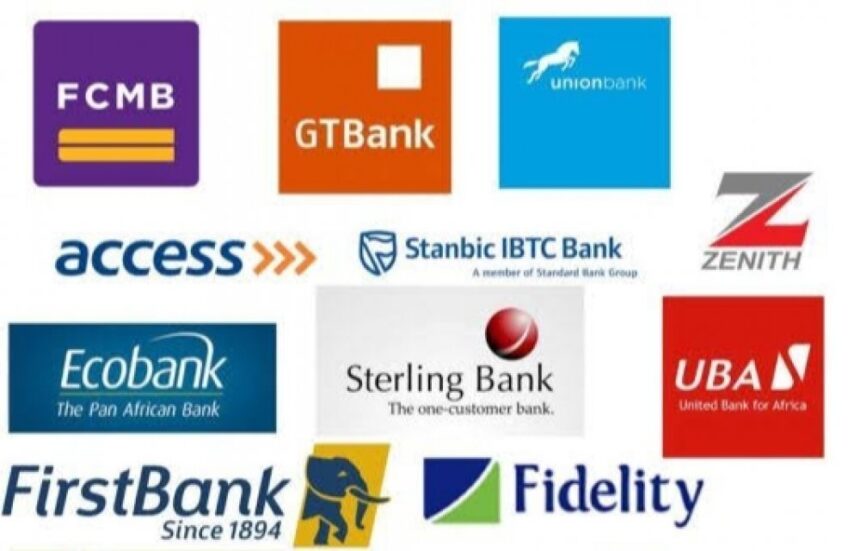
As the curtain closes on the CBN’s recapitalisation policy, Impact Nigeria Newspaper reports that over 30 banks in Nigeria have met the new minimum capital requirements for their authorised licence as of March 31.
From media reports, the banks that made the list include major banks with international and national licences.
Banks with an international banking licence and that have met a N500 billion threshold are the following:
Access Bank
Access Bank raised a total of N351 billion through a rights issue, making it the first Nigerian bank to meet the new capital base of N500 billion. The rights issue involved 17.77 billion ordinary shares at N19.75 each. With a combined share premium and paid-up capital of N602.8 billion, the bank exceeded the CBN requirement by N102.8 billion.
Zenith Bank
Zenith Bank raised over N350 billion through a combination of rights issues and public offers to meet the CBN’s minimum capital requirement. The bank’s share capital, which currently stands at N614 billion, surpasses the minimum capital requirement for international banks.
First HoldCo (First Bank)
First HoldCo Plc achieved its following the completion of a series of strategic capital initiatives, including a rights issue, a private placement, and the injection of proceeds from the divestment of the group’s merchant banking subsidiary.
GTCO
Guaranty Trust Holding Company (GTCO), the parent company of Guaranty Trust Bank (GTBank), raised its capital through a multi-tranche equity programme, raising over N209 billion in its first phase carried out in late 2024/early 2025.
The holding company conducted further fundraising, including a recent private placement for N10 billion, to strengthen its banking subsidiary (GTBank) and fund group expansion. The capital injection saw GTBank’s paid-up capital rise to over N504 billion above the N500 billion required for banks with international authorisation.
UBA
United Bank for Africa (UBA) raised N178.3 billion through a rights issue, which closed in September 2025 and follows a N239 billion injection completed in November 2024. The injection bolstered the lender’s capital to N355.2 billion. The combined transactions positioned UBA above the CBN’s recapitalisation threshold of N500.
Fidelity Bank
Fidelity Bank, which joined the FUGAZ league, is among the lenders that have met the new capital requirement for banks with an international licence. The bank’s capital now stands at N564.5 billion from N305.5 billion.
The rise was done through a private placement carried out under a mandate granted by shareholders at an extraordinary general meeting on February 6, 2025, authorising the bank to issue up to 20 billion ordinary shares.
First City Monument Bank (FCMB)
FCMB Group Plc completed its banking recapitalisation exercise to meet the threshold for an international licence through a public offer, which raised approximately N231.8 billion in gross proceeds, and the minority divestment of approximately 10 percent of the issued share capital of FCMB Pensions Limited, which raised an additional N11.0 billion.
Those with national banking licence that met a N200 billion threshold are the following:
Wema Bank
Wema Bank is among the banks with national licences that met the recapitalisation threshold by raising N150 billion through a rights issue of 14.29 billion shares at N10.45 per share, concluded on May 21, 2025.
Citibank Nigeria
Citibank Nigeria Limited (Citi) also met the CBN’s new minimum capital requirement of N200 billion for national commercial banks, although the lender did not disclose how the capital was raised.
Standard Chartered Bank
Standard Chartered Bank Nigeria met the N200 billion capital threshold for banks with a national licence in November 2025 through support from its UK-based parent.
Globus Bank
Globus Bank completed its capital requirement by raising N52.9 billion in 2024 to lift its capital to N98.6 billion and followed in 2025 with a further N102 billion through rights issues and private placements. The raise, subscribed entirely by existing shareholders, took its capital above N200 billion.
Sterling Bank
Sterling Financial Holdings Company Plc, the parent company of Sterling Bank and The Alternative Bank (AltBank), confirmed that its subsidiaries have rounded off its capital regulatory requirement through the combination of a private placement and rights issue, which injected N153 billion into the banks, enabling them to meet the capital threshold.
SunTrust Bank Nigeria
SunTrust Bank Nigeria Limited exceeded the N50 billion minimum capital requirement following the completion of its private placement exercise. The raise pushed the bank’s total paid-up capital to about N51.1 billion, surpassing the regulatory benchmark.
Stanbic IBTC
Stanbic IBTC has equally scaled through the capital threshold set for national banks, as the lender raised N200 billion through a rights issue and a direct capital injection by its parent company.
PremiumTrust Bank
PremiumTrust Bank was the third lender to meet the CBN’s N200 billion minimum capital requirement for national commercial banks.
The three-year-old bank exceeded the new capital requirement after wrapping up a rights issue and private placement with CBN sign-off in August 2025.
Providus-Unity Bank
Following an approval in 2024, Providus Bank completed its recapitalisation through a sealed strategic merger with Unity Bank. This makes Providus–Unity the first approved merger under the CBN’s recapitalisation programme announced earlier in 2024.
Other national commercial banks that met the N200 billion CBN’s recapitalisation threshold before the deadline include Optimus Bank and Ecobank Nigeria.
In the non-interest banking segment, the banks that have met the N20 billion threshold are Jaiz Bank Plc, Lotus Bank, TAJ Bank, and The Alternative Bank.
Banks with regional banking licences that have met the N50 billion target are Parallax Bank, Signature Bank, SunTrust Bank Nigeria, Alpha Morgan Bank, Nova Bank, and Tatum Bank.
Banks under the merchant banking segment that have met the N50 billion minimum capital base are Greenwich Merchant Bank, FSDH Merchant Bank, Rand Merchant Bank Nigeria, Quest Merchant Bank, and Coronation Merchant Bank.
Meanwhile, the CBN is expected to clarify the status of Polaris Bank, Keystone Bank and Union Bank of Nigeria, which are under regulatory intervention, even as the apex bank Governor, Olayemi Cardoso, earlier noted that the three lenders may not follow the same recapitalisation timeline due to legal and structural challenges.