


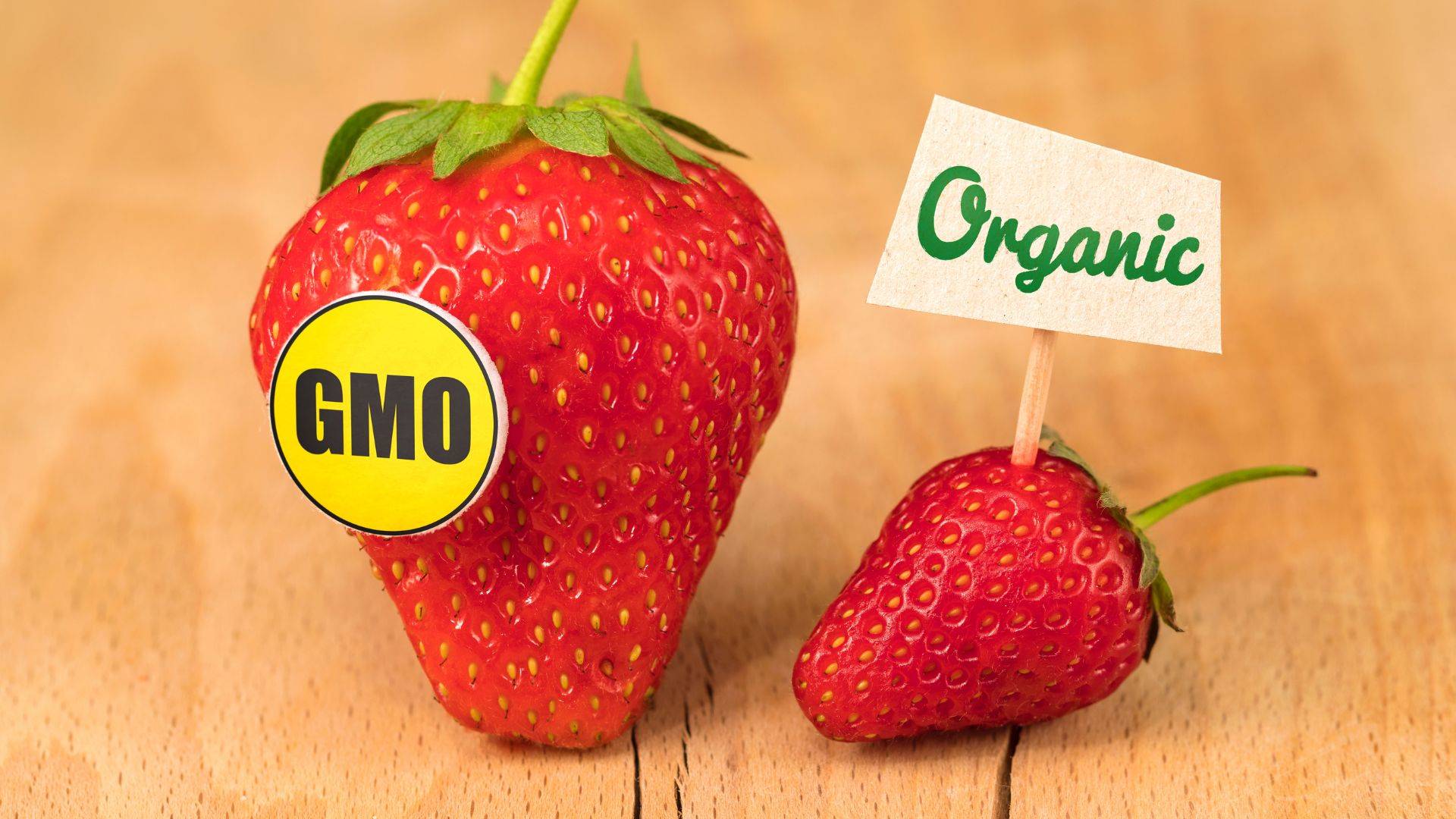
Controversies have stirred up among food researchers on the introduction of Genetically Modified Organic (GMO) foods in Nigeria.
While some say GMO foods are harmful to crops and human health, others note that they are healthy and enhance agricultural productivity and food security.
Celestine U. Aguoru, professor of plant science and technology, said that GMOs are safe for consumption, noting that they are genetically modified for the purpose of boosting food security and enhancing farmers’ profits.
The former president of the Nigerian Biosafety and Biotechnology Consortium (NBBC) highlighted that GMOs are viable solutions to meeting the world’s food demand and combating climate change.
“But just like other hybrids, continuous research and development on GMOs should be encouraged,” he said.
Fred Ukula, agro-production/processing Manager at Ecobasic Seed Nigeria Limited, noted that investment in GMOs-related research and technologies is the way forward for addressing food insecurity in Nigeria.
However, Nnimmo Bassey, executive director of Health of Mother Earth Foundation, disagreed.
According to him, “Nigeria does not need GMOs to address food insecurity.”
He noted that “the design of those crops does not support local economic growth but promotes dependency on corporate seed supply.”
“In September 2024, the National Cotton Association of Nigeria (NACOTAN), was reported to have said that they did not record any significant increase in their yields compared to the local seed varieties but instead, since the introduction of GM cotton seeds over four years ago, yield per hectare has remained about the same,” Bassey further said.
“Also, the farmers noted that no other plant has been able to germinate on the farmlands where the GM seeds were planted, even after four years – confirming the concerns regarding loss of biodiversity and soil degradation due to the release of genetic material (proteins) into the soil, which would not ordinarily occur.”
Ifeanyi Nwankwere, a national co-coordinator of the GMO-Free Nigeria Alliance, noted that GMOs approved in Nigeria so far are not currently being labelled, stressing that the nation’s socio-economic context will not allow labelling to be effective considering how food is sold in cups and basins in open markets where the majority of citizens shop from.
The global market for GMOs is projected to reach $29.1 billion by 2028, up from $22.3 billion in 2023, reflecting a growth rate of 6.1 percent, according to forecasts by Business Research Company, in partnership with the Association of Internet Research Specialists.
According to reports, the global use of genetically modified GMOs varies widely across regions. In the United States, crops like soy, corn, and cotton are predominantly genetically modified.
Similarly, South American nations like Brazil and Argentina have widely adopted GMOs technology, particularly for soybeans and maize.
European nations, however, maintain stricter regulations, allowing limited cultivation of GMOs crops, though they still import large amounts of GMOs for animal feed.
China and India are major producers of GMOs cotton in Asia, while other nations remain cautious. In Africa, interest is gradually increasing, with South Africa leading in GM crop production.
In 2023, the global land area used for genetically modified crops grew by 1.9 percent compared to the previous year, reaching a record 206.3 million hectares.
A total of 27 countries cultivated 11 distinct modified crops, with soybeans taking the lead at 100.9 million hectares, the first time this crop exceeded 100 million hectares. Maize followed with 69.3 million hectares, while cotton covered 24.1 million hectares.