

By Nchetachi Chukwuajah
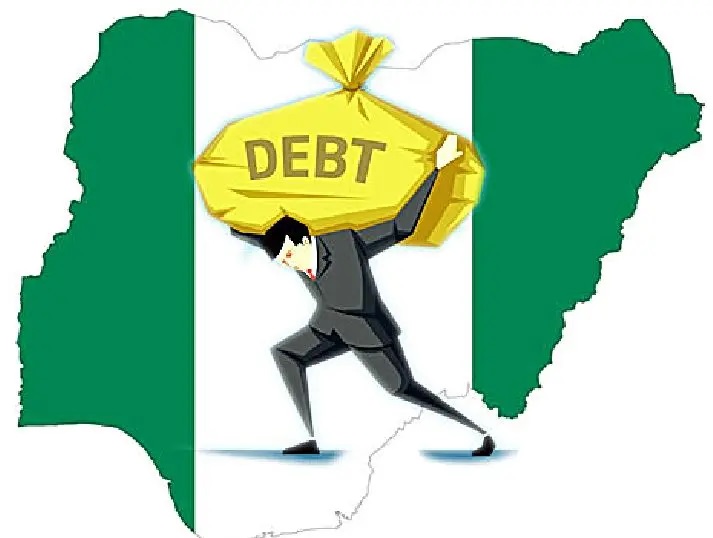
The Federal Government spent N9.81 trillion out of the N13.67 trillion total revenue generated in the first seven months of 2025 on debt servicing.
An analysis of the 2026–2028 Medium-Term Expenditure Framework (MTEF) and Fiscal Strategy Paper (FSP) released by the Budget Office of the Federation shows that the amount was generated and spent between January and July.
The document showed that the Federal Government generated total revenue of N13.67 trillion, out of which N9.81 trillion was used to service domestic and external debts.
The amount indicates that 71.8 per cent of total revenue was spent on debt servicing alone within the period under review, and highlights the intensifying pressure that Nigeria’s debt obligations exert on public finances.
According to the budget estimates, debt servicing surged above the projection as the Federal Government spent 17.5 per cent more than the initial target of N8.35 trillion during the seven months.
The country spent N4.65 trillion on domestic debt service, which is 10.9 per cent higher than the target, while foreign debt service increased to N5.07 trillion, exceeding projections by 28.7 per cent.
The document recalled that in 2024, total debt service cost N13.12 trillion, representing 77.5 per cent of Federal Government revenue.
The MTEF/FSP also shows that personnel costs of ministries, departments, and agencies (MDAs) as well as government-owned enterprises gulped N4.51 trillion, indicating that total spending on debt service and wages stood at N14.32 trillion within the period.
The data shows that the revenue shortfall was driven largely by a decline in oil earnings as Nigeria earned N4.64 trillion in oil revenue between January and July.
This indicates that the country’s oil revenue was 62.2 per cent below the target of N12.25 trillion, resulting in a N7.62 trillion shortfall.
Also, dividends from entities such as Nigeria Liquefied Natural Gas (NLNG) and development finance institutions were subpar, yielding N104.64 billion compared with a projected N428.71 billion.
Some non-oil tax lines, such as Company Income Tax (CIT) and Value-Added Tax (VAT) recorded modest gains.
The country generated N2.54 trillion in CIT, slightly higher than an initial target of N2.49 trillion, while VAT saw an increase to N630.10 billion, 11 per cent above the Federal Government’s target of N567.54 billion.
However, the gains were outweighed by poor performance in other areas like the Customs revenue, which dropped to N988.29 billion, 39.1 per cent below its N1.62 trillion target. Also, Federation Account levies recorded a significant decline of 70.1 per cent to N75.08 billion, while oil price royalties recorded no inflow during the period.
The fiscal framework also noted that while gains in VAT and Electronic Money Transfer Levy (EMTL) provided some relief, their overperformance was minimal compared to the scale of oil revenue losses.
The sinking fund recorded N96.70 billion, significantly below the N220.09 billion budgeted.
According to the data, the Federal Government recorded aggregate revenue of N13.67 trillion compared to a target of N23.85 trillion, representing N10.19 trillion or 42.7 per cent revenue deficit in the first seven months of the year.
The document showed that the total Federal Government spending, including government-owned enterprises and project-tied loans, stood at N20.40 trillion between January and July, compared to an initial target of N32.08 trillion, showing a 36.4 pe rcent shortfall.
Actual recurrent expenditure amounted to N15.68 trillion, representing 3.7 per cent below the target of N16.28 trillion.
Within recurrent items, non-debt recurrent expenditure stood at N5.87 trillion, a 26 per cent drop from the projected N7.93 trillion.
A total of N3.91 trillion was spent on personnel costs for MDAs, about 11.7 percent less than the target, while personnel costs for government-owned enterprises matched the N593.49 billion target.
Out of the N842.34 billion earmarked for pension and gratuity payments, only about half, which is N445.67 billion, was made, according to the document.
Within the period, total capital spending stood at N3.60 trillion, which is 73.7 per cent less than the initial budget of N13.67 trillion.
Out of the total target of N10.81 trillion, capital releases to MDAs within the period were N834.80 billion.