

By Suleyman A. Ndanusa PhD OON
Nigeria knows the oil price paradox well. A rise can strengthen government revenue and foreign exchange earnings while making transport, food and production more expensive. That paradox is now part of a wider global story. In its October 2026 World Economic Outlook, the International Monetary Fund (IMF) forecasts global growth of 3.1 per cent in 2026 and 3.4 per cent in 2027. Its October regional outlook projects the Middle East and Central Asia contracting by 0.3 per cent in 2026, then growing by 6.3 per cent in 2027, largely on the assumption that disruption to energy production and shipping eases. These are forecasts, not settled outcomes. Their central condition is that the conflict’s economic shock recedes before higher costs and tighter financing weaken growth further. That condition matters well beyond the region. It shapes the prices, trade routes and investment flows on which Nigeria also depends.
The global forecast offers some reassurance. The world economy is expected to keep growing, and to grow somewhat faster in 2027. But the headline figures hide an uneven picture. Higher energy and food prices weigh heavily on importing economies, while investment linked to artificial intelligence supports activity in a narrower group of countries and industries. The IMF expects global inflation to rise to 4.7 per cent in 2026 before easing to 4.1 per cent in 2027. It also warns that the risks to growth are tilted to the downside, including from conflict, trade tensions, fiscal pressures and a possible correction in AI-related investment.
The question is not simply whether the global economy can grow through a shock. It has already shown that it can. The more difficult question is how long that resilience can be maintained, and who bears its cost. The answer depends partly on whether the conflict related supply shock fades before higher costs, tighter finance and weaker confidence begin to reinforce one another.
The economic consequences begin with disruption on the ground. Conflict around the Strait of Hormuz and nearby routes affects energy production, shipping schedules, insurance costs and the availability of vessels. When cargoes are delayed, rerouted or interrupted, the cost is not confined to crude oil. Freight and insurance affect the price of food, chemicals, manufactured goods and other business inputs. Longer journeys also tie up ships and working capital, reducing the capacity of the transport system just as firms look for alternative routes.
If energy and transport costs remain high, inflation falls more slowly. Central banks then have less room to lower interest rates, while governments and businesses face higher borrowing costs. Firms may postpone projects whose returns have become less certain. Households spend more of their income on necessities. Public budgets also come under pressure. Governments may earn more from commodity exports but face higher costs for debt service, security and relief. A shock that begins along a shipping route can therefore reach the price level, credit conditions, investment and the choices available to governments.
Technology investment provides some support for global activity, but it carries risks of its own. AI-related spending is contributing to trade, capital investment and expectations of higher productivity. Yet the investment and supply chains are concentrated in a relatively small number of countries, firms and industries. If expectations disappoint while energy costs remain high, one of the economy’s main sources of growth could weaken at the same time as the supply shock continues. The current outlook therefore combines inflationary pressure from disrupted supply with strong investment in parts of the technology sector.
The Middle East sits at the centre of this uncertainty. The IMF’s projected shift from a 0.3 per cent contraction in 2026 to 6.3 per cent growth in 2027 is a striking change. It reflects the expected reopening of the Strait of Hormuz and the resumption of disrupted production, exports and logistics. For some of the most affected energy producers, the projected contraction in 2026 is followed by a sharp expansion as activity returns.
A strong rebound from a depressed starting point does not automatically mean a broad improvement in living standards. Countries differ in their exposure to disrupted routes, energy production, tourism, public finances and domestic demand. Regional output may rise quickly while households and non oil businesses continue to face expensive credit, uncertain trade and pressure on purchasing power. The IMF itself describes the region’s economic prospects as increasingly divergent.
Three possible paths help explain what is at stake. If shipping and production normalize gradually, energy and freight costs may ease, inflation may come down and the projected growth rebound becomes more plausible. If disruption persists, businesses and governments will face high costs for longer, investment may be delayed and regional growth may fall short of the forecast. If conflict escalates or alternative routes are also compromised, a renewed supply shock could weaken output while pushing prices higher. These are scenarios, not probability weighted forecasts. They show which assumptions underpin the outlook and what developments could change it. The US Energy Information Administration also expects oil prices to ease as Middle East production and exports recover, while warning that flows through the Strait of Hormuz and alternative routes may remain volatile.
Gulf states are responding by pursuing alternative transport routes, consolidating partnerships and diversifying economic relationships. These efforts can reduce reliance on a single chokepoint or supplier. They may also help trade hubs that connect businesses across regions whose economic and political relationships are becoming more strained.
Building alternatives, however, takes time, money and security. A new port, pipeline or land corridor must attract enough reliable commercial traffic to justify its cost. A bypass route may carry some cargo without matching the scale or efficiency of the route it supplements. The region’s future competitiveness will depend on more than infrastructure. Predictable regulations, security, skilled workers, reliable finance and access to multiple markets will matter just as much.
That is the region’s strategic tension. Its central place in energy and trade can attract investment, but also exposes it to disruption. Diversifying routes and relationships can reduce dependence, though it cannot eliminate geopolitical risk. The most useful alternatives will be those that make commercial sense in ordinary times and remain available in a crisis.
Nigeria also faces two sides of the oil-price shock. As a producer, it can earn more when international prices rise. The World Bank’s October 2026 Nigeria Development Update reports that higher oil prices strengthened government revenues and the external position, but also interrupted the decline in inflation. It notes that forward sales and oil backed financing arrangements limited the fiscal benefit. Nigeria may therefore gain from the higher price without receiving the full revenue that the headline figure seems to promise.
Households and businesses experience the other side of the ledger. Higher oil prices can raise the cost of fuel and transport, affecting food distribution, power generation and production. Higher freight and insurance costs make imported inputs more expensive. Tighter global financing conditions can raise borrowing costs and make investment flows less predictable. For a household already managing high food and transport bills, stronger oil revenue in government accounts does not automatically mean relief at the market stall.
The IMF’s October 2026 outlook puts Nigerian growth at about 4.2 per cent in 2026 and 4.3 per cent in 2027. The World Bank projects average growth of 4.4 per cent over 2026–28 and expects inflation to decline gradually towards 12 per cent by 2028. These forecasts point to improving conditions. But growth of around four per cent must also be considered alongside population growth, employment, real incomes and poverty. An economy can grow while many citizens continue to struggle to afford food, find productive work or rely on consistent power.
The net effect of higher oil prices on Nigeria depends on more than the international price. Production volumes, crude already committed through financing arrangements, domestic refining and fuel supply, the exchange rate, food prices and the quality of public spending all matter. Higher prices can improve the external accounts while making daily life more expensive. For Nigerians, that contradiction is not an accounting detail. It is the difference between a windfall recorded in national revenue and an improvement felt at home.
The first priority is to avoid treating a temporary price increase as permanent income. Higher receipts can strengthen fiscal buffers and support valuable public investment, but that requires clear reporting of oil volumes, forward commitments, receipts and transfers. When revenue has been pledged before it arrives, the public should be able to see the obligations alongside the headline figure. A credible budget must show what the country earns and what it already owes against those earnings.
The next priority is to reduce the domestic costs that magnify external shocks. Reliable power, efficient ports, better roads and railways, safer food producing areas, and effective storage and logistics can lower the cost of producing and moving goods. These investments are less dramatic than emergency interventions after prices have surged, but they can provide lasting protection. Support for vulnerable households should be timely and targeted, while allowing producers and businesses to keep responding to price signals.
The reorganization of regional trade may also create an opening for Nigerian businesses. If Gulf states and international firms seek new routes and suppliers, Nigerian producers could compete in food, processed agriculture, energy services, logistics, digital services and other inputs. Geography alone will not win those markets. Export quality, reliable power, customs efficiency, payment systems and consistent policy will help determine whether Nigeria becomes a supplier or simply watches trade move through other countries.
Nigeria should also approach the Middle East as a partner in productive investment. Gulf capital could support infrastructure, agriculture, manufacturing, renewable energy and logistics when projects have sound commercial foundations and clear public value. The test is whether an investment builds domestic capabilities, creates jobs and supports exports, rather than financing imports or standing apart from the rest of the economy.
The IMF’s forecasts offer a possible path. Faster global growth in 2027 and a sharp Middle East rebound. Both depend heavily on supply disruption easing. Even if that happens, businesses will carry higher costs, governments will face budget pressures and some trade routes will take time to restore. If disruption persists, the global economy may find that resilience has postponed some of the cost rather than removed it.
For Nigeria, higher oil prices can buy breathing space, but they cannot build a resilient economy on their own. That requires turning temporary revenue into productive assets, easing the domestic bottlenecks that amplify external shocks, and connecting Nigerian businesses to the trade and investment relationships taking shape across the region. The test of success will not be how much Nigeria earns when the world is disrupted. It will be whether the country is more productive, less vulnerable and better able to improve ordinary lives when the disruption passes.
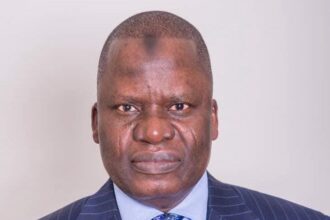
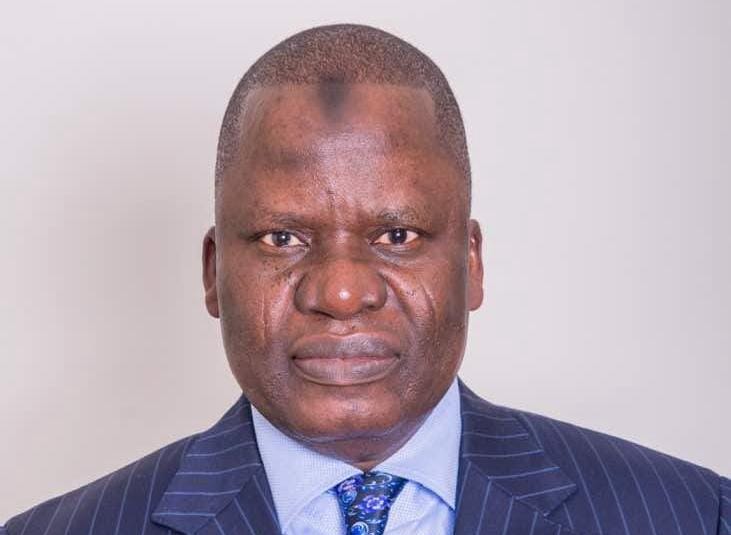
Suleyman A. Ndanusa, PhD, OON, is an economist, lawyer, strategic studies scholar, and public policy thinker and practitioner with extensive experience in financial markets, regulation, governance, national Security and development.