

Why Nigerian Christians Must Move from Political Indifference to Responsible Participation in Governance
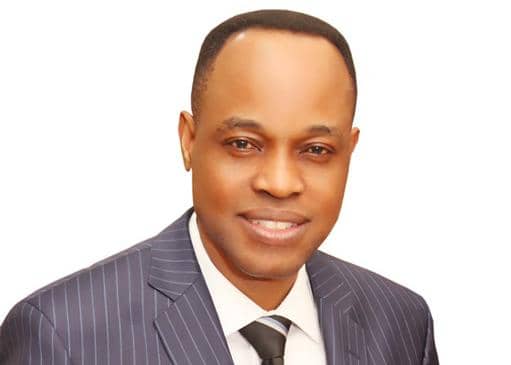
By Prof. Odesola JF
There is something I have observed with considerable concern over the years. In conversations, church gatherings, social media discussions, interviews and public commentaries, I have listened to a significant number of Christians express their disappointment with politics and politicians. The familiar expressions are almost predictable: “Politics is dirty,” “Politics is corrupt,” “I cannot be involved in such a dirty game,” and “Christians should stay away from politics.”
I have often wondered: if everybody who desires a clean environment refuses to go near the dirt, who then will clean it? If those who understand the importance of integrity abandon the corridors of power, who will occupy those spaces? If people with sound values refuse to participate in the decisions that shape society, should they be surprised when people without such values determine their future?
This is where I believe many Christians need to reconsider their understanding of politics and governance.
Every dirty garment needs a cleaner, and every polluted environment needs someone willing to make a difference. Similarly, every corrupt society needs men and women of integrity who are prepared to become agents of positive change. We cannot continue to complain about the condition of our country while deliberately distancing ourselves from the processes that determine its direction.
Politics may be difficult, frustrating and sometimes morally challenging, but that is precisely why people of character, conviction and competence are needed.
THE DANGER OF ABANDONING THE POLITICAL SPACE
One of the greatest mistakes Christians can make is to confuse staying away from partisan politics with staying away from governance.
Not every Christian is called to become a politician, contest an election or occupy public office. I fully appreciate that. Our individual assignments, gifts and callings differ. Some are called to the pulpit, others to business, education, medicine, law, administration, technology and other professions.
However, no Christian should consider responsible participation in the affairs of society somebody else’s responsibility.
We may not all become governors, senators, ministers, commissioners, councillors or legislators, but we all have a responsibility to be concerned about who occupies those offices, how they get there and what they do with the authority entrusted to them.
We must understand that governance is not an abstract subject. It affects the roads on which we travel, the schools our children attend, the hospitals where our families receive treatment, the security of our communities, the taxes we pay, the jobs available to our young people and the economic opportunities open to future generations.
A decision taken in a government office can affect millions of people who may never have the opportunity to meet the person who made it.
This is why political indifference is dangerous.
When responsible citizens withdraw from political processes, they leave room for others to make decisions on their behalf. Some of those who step into that vacuum may be competent and patriotic, but others may be driven by personal ambition, greed, ethnic considerations, religious manipulation or the desire to acquire power for its own sake.
We cannot simply surrender the political space and expect it to produce the kind of leadership we desire.
The truth is uncomfortable but important: if we abandon governance, we surrender part of our collective future to those who are willing to participate.
POLITICS IS NOT A DIRTY WORD; BAD POLITICS IS THE PROBLEM
We must make a distinction between politics as a process of organising society and the misconduct of individuals who participate in it.
Politics, in its proper sense, is about leadership, representation, public policy, the distribution of resources, the protection of rights and the management of competing interests in society.
These are not inherently sinful activities. Indeed, they are essential to the orderly functioning of any nation.
What makes politics appear dirty is the conduct of people who manipulate the process through corruption, violence, dishonesty, vote buying, intimidation, religious bigotry and the abuse of public office.
But should the existence of dishonest doctors make us abandon hospitals? Should the misconduct of some lawyers make us reject the legal profession? Should the existence of corrupt businessmen make every honest person abandon business?
Certainly not.
Rather, the presence of misconduct should strengthen our determination to uphold the standards that are being compromised.
The same principle should apply to politics.
The biblical instruction in Matthew 5:13–14 describes believers as the salt of the earth and the light of the world. Salt is useful because it preserves, while light is meaningful because it dispels darkness. Neither salt nor light fulfils its purpose by withdrawing from the environment where its influence is needed.
Christians cannot continually describe society as morally decaying while refusing to contribute to its preservation.
We cannot preach righteousness on Sunday, demonstrate indifference to public accountability throughout the week and then wonder why our society is deteriorating.
FAITH MUST INSPIRE CIVIC RESPONSIBILITY
Christianity should not produce citizens who are indifferent to the welfare of their neighbours or the direction of their country.
The Bible contains several examples of people whose faith influenced their involvement in public affairs.
Joseph was not a pastor or a priest, yet God positioned him in the government of Egypt. Through wisdom, sound administration and foresight, he helped preserve lives during a severe period of famine (Genesis 41:38–57).
Daniel served in the governments of successive kingdoms. Despite the political and cultural pressures surrounding him, he maintained his integrity and distinguished himself through wisdom, diligence and an excellent spirit (Daniel 6:3–5).
Esther used her position within the royal establishment to intervene in a national crisis and save her people (Esther 4:14–16).
Nehemiah served as a cupbearer to the king, but when he heard about the broken walls of Jerusalem, he did not simply lament the situation. He prayed, developed a plan, sought permission, mobilised resources and led the rebuilding effort (Nehemiah 1–6).
These examples remind us that spiritual conviction and public responsibility are not necessarily opposing forces.
It is also important to remember that Jesus taught His followers to be salt and light, not spectators. Our faith should influence how we treat people, how we exercise authority, how we handle public resources and how we respond to injustice.
Romans 13:1–4 also reminds us of the responsibility of governing authorities to serve the public good. Government is therefore not merely an avenue for personal advancement; it carries a serious responsibility towards human welfare.
Christian participation in politics should be motivated by service, justice and the common good, not by the desire to dominate others or impose religious privilege.
THE CONSTITUTION EXPECTS CITIZEN PARTICIPATION
This is not merely a religious argument. It is also a democratic responsibility.
Section 14(2)(c) of the Constitution of the Federal Republic of Nigeria 1999, as amended, provides that the participation of the people in their government shall be ensured in accordance with the Constitution.
The same section declares that the security and welfare of the people shall be the primary purpose of government.
In other words, governance is not supposed to be the private property of politicians. The people are the source of governmental authority, and their participation is an essential part of democratic life.
Political participation also goes beyond casting a ballot every four years. It includes joining political parties, participating in policy discussions, attending public consultations, engaging elected representatives, supporting credible candidates, joining civic organisations, demanding transparency and holding public officials accountable.
The Nigerian Constitution recognises the right of qualified citizens to vote and to seek elective office, subject to its provisions.
The 2023 general election should give us further reason to reflect. Freedom House reported that voter turnout in the presidential election was approximately 27 per cent, a record low at the time. This means that a significant proportion of eligible voters did not participate in choosing the country’s leadership.
Such a development should concern every responsible Nigerian, including Christians.
We cannot build a strong democracy on the foundation of widespread civic apathy.
THE ORGANISATION OF OTHERS SHOULD CHALLENGE OUR APATHY
Across many countries, religious and community organisations understand the importance of collective organisation, civic education, representation and political advocacy.
Different religious communities, including Muslim communities in Nigeria, have their own structures and approaches to public engagement. We should recognise this reality without turning political participation into a competition between Christians and Muslims.
The point is not that Christians should organise against another religious community. The point is that Christians should understand the importance of organisation and representation in a pluralistic democracy.
When people organise around shared interests, educate their members, engage political parties, participate in public consultations and encourage competent individuals to seek public office, they are better positioned to contribute to national decisions.
Christians should therefore ask themselves some honest questions:
Why are we often more organised when preparing for church conventions than when discussing the future of our communities?
Why can we mobilise thousands of people for a religious programme but struggle to mobilise the same people for voter registration, civic education, public accountability and community development?
Why do we passionately discuss the shortcomings of political leaders but pay little attention to the process through which those leaders emerge?
Why do we sometimes celebrate political officeholders who identify with our religious institutions without asking whether they are delivering quality leadership to the people?
These questions deserve serious reflection.
Our churches, denominations, Christian associations and professional fellowships can contribute meaningfully through non-partisan civic education, leadership development, voter awareness, public policy discussions and the promotion of ethical leadership.
The pulpit should not become a platform for partisan manipulation, but neither should the Church become silent when matters of justice, accountability, human dignity and national welfare arise.
WE HAVE EXAMPLES OF FAITH THAT TRANSLATES INTO DEVELOPMENT
There are encouraging examples of Christian leaders and institutions demonstrating that faith can inspire practical contributions to society.
Pastor William F. Kumuyi, through the Deeper Christian Life Ministry, has been associated with extensive investments in education and institutional development, including the establishment of Anchor University. His life also demonstrates how a person can combine professional learning, religious conviction and institution-building.
Pastor Enoch Adeboye and the Redeemed Christian Church of God have likewise been associated with significant investments in education, healthcare and other humanitarian initiatives. The establishment of Redeemer’s University and the development of healthcare initiatives within the RCCG mission illustrate the potential of organised faith to contribute to national development.
Pastor Paul Enenche and Dunamis International Gospel Centre have also demonstrated the importance of building institutions and providing facilities that extend beyond conventional religious activities.
These examples are worth considering because they show that the influence of faith should not end at the church auditorium. It should translate into opportunities, institutions, human development and practical solutions to the challenges facing society.
If Christian leaders can contribute to the development of universities, healthcare facilities, roads, community infrastructure and humanitarian services, Christians should also be encouraged to contribute to the public policies and governance structures that determine how such development is sustained and expanded.
Building a university is important, but influencing educational policy is also important. Establishing a hospital is commendable, but advocating a functional national healthcare system is equally important. Supporting individuals in need is good, but helping to create a society where fewer people are trapped in poverty is even more transformative.
We need both private initiatives and responsible public governance.
THE CHURCH MUST NOT CONFUSE SPIRITUALITY WITH POLITICAL INDIFFERENCE
One concern that deserves attention is the tendency to regard political involvement as a distraction from spirituality. Some Christians believe that the more spiritual a person becomes, the less concerned that person should be about political affairs.
I respectfully disagree with that understanding.
Spirituality should make us more conscious of justice, fairness, honesty, compassion and the welfare of others. It should not make us indifferent to the suffering of our communities.
When roads are impassable, when schools are poorly equipped, when young graduates cannot find employment, when insecurity threatens lives and when public resources are mismanaged, these are not issues that should concern Christians only when they become subjects of prayer requests. They are also matters requiring responsible civic action.
Prayer is essential, but prayer should not become an excuse for avoiding our civic responsibilities. We should pray for our leaders, but we should also help to produce credible leaders. We should pray against corruption, but we must refuse to participate in corrupt practices. We should pray for national development, but we must also support policies, institutions and individuals capable of delivering development.
Nehemiah prayed, but he also approached the king. He prayed, but he also developed a strategy. He trusted God, but he also mobilised people to rebuild Jerusalem.
That is a useful lesson for the Nigerian Christian community.
NOT EVERY CHRISTIAN MUST BE A POLITICIAN, BUT EVERY CHRISTIAN MUST BE CIVICALLY RESPONSIBLE
Let me make this distinction clear. I am not advocating that every pastor should join a political party or that every Christian should aspire to political office.
The Church must preserve its spiritual mission, independence and moral authority. Pastors should not turn congregations into political voting machines, and church members should never be coerced into supporting candidates simply because they share the same faith.
Our participation must be guided by competence, character, integrity, capacity and a demonstrable commitment to the common good.
A Christian who becomes a politician should understand that public office is a responsibility, not an opportunity to enrich himself. Such a person should be prepared to serve people of every religion, ethnicity and social background.
Similarly, Christians who are not seeking political office can still make meaningful contributions.
They can register and vote. They can study the manifestos of candidates. They can participate in party activities, where appropriate. They can support credible candidates irrespective of their religious or ethnic identities. They can monitor public projects, question elected representatives, contribute to public debates and encourage young people to understand governance.
Christian professionals can offer their expertise in policy development, public administration, law, economics, education, healthcare and security.
Christian businesspeople can support ethical political participation without seeking inappropriate favours. Christian organisations can promote leadership training and civic education.
There are many ways to participate without compromising one’s faith.
THE YORUBA WISDOM WE MUST NOT IGNORE
There is a Yoruba saying that captures this argument beautifully:
“Tí ọba gba wèrè láyè níbi tí ó ṣá aṣọ rẹ sí, yóò padà wá kó imìn.”
The expression conveys a simple but powerful lesson: if you allow a fool to take your clothes from where you have spread them out to dry without making an effort to recover them, he may return for more.
In other words, when you fail to protect what is yours, you may encourage further exploitation.
This is not a call for hostility, religious confrontation or political aggression. It is a call for vigilance, responsibility and the protection of our collective interests.
We cannot allow people to make decisions that affect our children, our communities and our national future while we remain unconcerned about the processes through which those decisions are made.
Democracy requires participation. Silence does not automatically produce good leadership, and withdrawal does not guarantee protection.
If we refuse to engage, we should not be surprised when others determine the direction of our society.
WE MUST RAISE A NEW GENERATION OF CHRISTIAN LEADERS
Perhaps one of the most important responsibilities of the Church is to prepare the next generation for responsible leadership.
Our young people should not grow up believing that politics is exclusively for the dishonest, the wealthy, the desperate or those seeking personal influence.
They should be taught that public service is an honourable calling when pursued with the right motives and conducted with integrity.
We need young Christian lawyers who understand constitutional democracy, economists who can contribute to sound fiscal policies, administrators who understand public-sector reforms, educators who can influence educational development and professionals who are prepared to serve in government.
We also need young people who can participate in local government, community development associations, political parties, legislative processes and public policy institutions.
The Church should deliberately encourage leadership development beyond the four walls of its institutions.
It should help young people understand that being a Christian does not disqualify them from participating in national development. Rather, their Christian convictions should challenge them to bring higher standards of honesty, accountability and service into whatever responsibilities they undertake.
We must stop presenting politics as an occupation that automatically compromises one’s faith. The real question is not whether a Christian can participate in politics, but whether that Christian is prepared to uphold Christian values while participating.
THE REAL TEST IS THE QUALITY OF LEADERSHIP WE PRODUCE
Ultimately, the objective of Christian political participation should not be to ensure that Christians occupy every political office. That would be a narrow and potentially dangerous interpretation of our responsibility.
Our objective should be to contribute to a country where leadership is determined by competence, character, vision, accountability and commitment to the welfare of the people.
A good leader should be supported because he or she can serve the country, not simply because of religious affiliation. A corrupt Christian should not receive automatic endorsement because he attends church, just as a competent and honest Muslim should not be rejected because of his religion.
Nigeria belongs to all of us.
The country needs leaders who will protect the rights of every citizen, create opportunities, strengthen institutions, promote economic development and ensure that public resources are used for the public good.
Christians must therefore be prepared to work with people of other faiths and those without religious affiliations in building a better Nigeria. Our commitment to the common good must be greater than our religious suspicions and political differences.
This is what responsible citizenship demands.
CONCLUSION: THE TIME TO MOVE FROM COMPLAINTS TO PARTICIPATION IS NOW
I believe the time has come for Nigerian Christians to reconsider their attitude towards politics and governance.
We cannot continue to complain about corruption while refusing to participate in the processes that can help address it. We cannot continue to criticise bad leadership while showing little interest in the emergence of good leadership. We cannot continue to lament the condition of our country while leaving the responsibility of determining its future entirely to others.
Let us become more interested in how our local governments function, how our states are administered and how our country is governed.
Let us encourage credible Christians and other patriotic Nigerians to participate in public service. Let us support voter education, political awareness, leadership development and accountability. Let us teach our children that integrity is not only required in the Church but also in the marketplace, the public service and the corridors of power.
And to our Christian leaders, I respectfully appeal that we should not limit our influence to the spiritual development of our members alone. We should also encourage them to become responsible citizens who understand the importance of good governance and national development.
We must pray, but we must also participate. We must preach righteousness, but we must also demonstrate it in public life. We must teach our people to obey God, but we must equally teach them to demand accountability from those entrusted with public responsibilities.
Politics will not become cleaner simply because good people refuse to participate.
The presence of darkness is not a reason for light to disappear. The existence of corruption is not a reason for integrity to surrender. And the failure of some politicians is not sufficient justification for responsible citizens to abandon governance.
Nigeria needs Christians who will not only pray for the nation but also participate in building it.
Let us remember that the future we complain about today is being shaped by decisions being made now.
If we excuse ourselves from governance, others will make those decisions for us. If we refuse to participate in choosing our leaders, others will choose them. If we abandon the political space, we should not be surprised by the kind of people who eventually occupy it.
The time has come to move beyond political complaints, religious sentiments and passive observations.
Get involved. Get informed. Get organised. Vote responsibly. Demand accountability. Encourage credible leadership.
We may not all be called to occupy political offices, but we are all stakeholders in the future of our country.
After all, a better Nigeria is not the responsibility of politicians alone. It is the responsibility of all of us.
May God give Nigeria leaders with wisdom, courage, integrity and genuine love for the people. And may He give the Nigerian Church the wisdom to understand that its influence must extend beyond the pulpit into the transformation of society.