

By Olatunbosun Obafemi
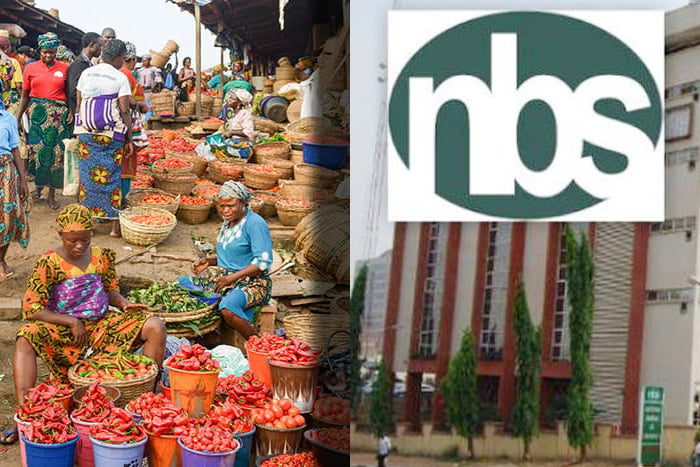
Nigeria’s food inflation rate stood at 22.74% in July 2025 on a year-on-year basis, according to the latest report from the National Bureau of Statistics (NBS). This represents a 16.79 percentage point drop from the 39.53% recorded in July 2024, and a notable decline from the 45.40% reported in June 2025.
The NBS attributed the sharp annual drop mainly to the change in the base year for calculating inflation. On a month-on-month basis, food inflation was 3.12% in July, down by 0.14 percentage points from 3.25% in June. The monthly slowdown was linked to falling average prices of key staples, including vegetable oil, white beans, local rice, maize, flour, guinea corn (sorghum), wheat flour, and millet.
State-by-state breakdown:
- Highest year-on-year food inflation: Borno (55.56%), Osun (29.10%), Ebonyi (29.06%).
- Lowest year-on-year food inflation: Katsina (6.61%), Adamawa (9.90%), Zamfara (14.72%).
- Highest month-on-month food inflation: Borno (10.89%), Kano (10.86%), Sokoto (7.40%).
- Declines month-on-month: Zamfara (-6.00%), Bauchi (-2.18%), Abia (-1.00%).
Headline inflation eased to 21.88% in July 2025, down from 22.22% in June, and 11.52 percentage points lower than July 2024’s rate of 33.40%. The top contributors to headline inflation were food and non-alcoholic beverages (8.75%), restaurants and accommodation services (2.83%), and transport (2.33%). The smallest contributors were recreation, sport and culture (0.07%), alcoholic beverages, tobacco and narcotics (0.08%), and insurance and financial services (0.10%).
Core inflation—which excludes volatile agricultural produce and energy—stood at 21.33% year-on-year in July 2025. On a monthly basis, core inflation dropped to 0.97% from 2.46% in June.
Among the sub-indices, farm produce (3.96%), energy (2.71%), and goods (2.70%) saw notable increases, while services fell to 0.47%.
Urban inflation stood at 22.01% year-on-year and 1.18% month-on-month, while rural inflation was 21.08% year-on-year and 2.30% month-on-month.