

By Nchetachi Chukwuajah
The Independent National Electoral Commission (INEC) has unveiled a revised draft of its 2026 Regulations and Guidelines for Political Parties ahead of the 2027 general election.
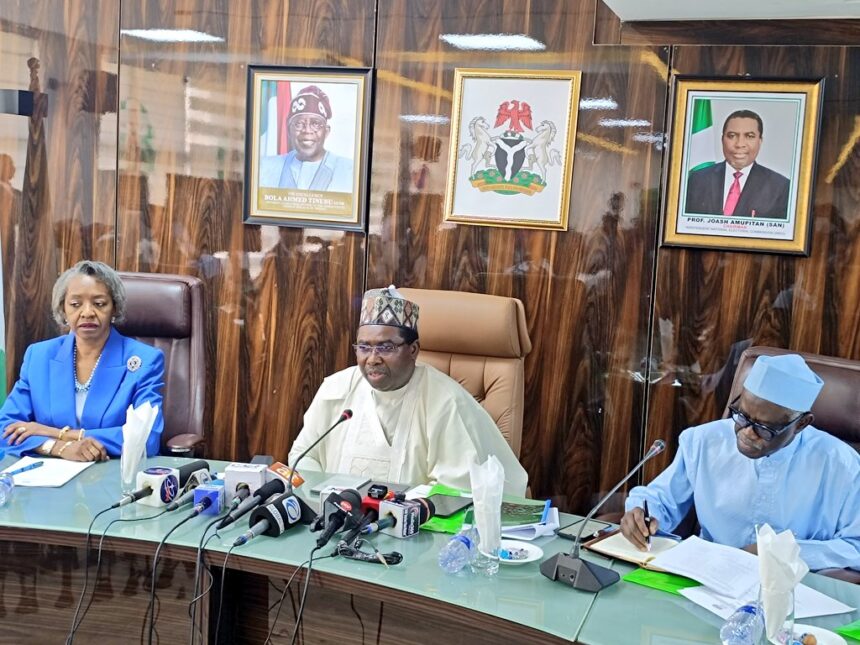
The guidelines, unveiled by INEC Chairman, Professor Joash Amupitan, at a consultative meeting with political party leaders in Abuja on Tuesday, March 24, seek the input of political parties to strengthen the electoral process ahead of the 2027 general elections.
Amupitan said the new regulations were designed to align with the Electoral Act 2026 and address gaps identified in previous frameworks.
The INEC chairman stressed that credible elections begin long before election day, noting that transparency in candidate selection processes is an important aspect of electioneering.
He said, “We gather not only to discuss the newly drafted INEC Regulation and Guidelines for Political Parties, 2026, but also to reaffirm our collective commitment to enhancing the democratic process in Nigeria.
“Credible elections begin long before polling day; they begin in the transparency of the processes that produce the candidates.”
Amupitan explained that the revised guidelines followed a comprehensive review of the 2022 regulations and were informed by empirical findings, including the Political Party Performance Index developed with support from the Westminster Foundation for Democracy.
According to the INEC boss, the review exposed a “disturbing gap between party constitutions and grassroots realities.”
He added that the new framework introduces reforms across key areas such as party registration and mergers, internal operations, conduct of primaries, campaign activities, financial transparency, and conditions for deregistration.
Amupitan stressed that the measures are aimed at curbing irregularities, particularly in party primaries, which give rise to unpopular candidates and fuel voter apathy and other issues.
He also highlighted provisions on campaign finance, noting that the Electoral Act 2026 empowers the commission to determine election expenses in consultation with political parties, and further urged stakeholders to pay close attention to clauses relating to funding and expenditure.
Amupitan warned that with the 2027 general elections scheduled for January 16, for presidential and National Assembly polls, and February 6, for governorship and state assemblies, the commission is operating within a compressed timeline, which demands “surgical precision.”
He further disclosed that the draft regulations incorporate measurable benchmarks to boost the participation of women, youth, and persons with disabilities.
The INEC chairman further called for constructive engagement and asked political parties to view the regulations as safeguards rather than restrictions.
“By sharpening these rules, we are protecting the sovereign will of the Nigerian people from nomination to the final declaration of results,” he said.
Amupitan added, “INEC remains a neutral umpire, but we are no longer passive observers to the erosion of democratic values.”
In his remarks, the National Chairman of the Inter-Party Advisory Council (IPAC), Dr Yusuf Dantalle, raised concerns over provisions of the Electoral Act 2026, warning that unresolved issues could undermine the credibility of the 2027 general elections.
Dantalle described the law as falling short of public expectations, arguing that it represents a setback to Nigeria’s democratic progress.
The IPAC chairman further said the requirement for parties to submit membership registers, including National Identification Numbers, within a limited timeframe is impractical and exclusionary.
He also called for mandatory electronic transmission of election results, warning against a repeat of past lapses.