


By Praise Afolabi
For months, traders and pedestrians on Broad Street, the bustling commercial heart of Lagos Island, have whispered the same fear: a growing number of displaced persons taking over the sidewalks after dark, turning one of the city’s oldest business corridors into a zone of menace. On Thursday, September 11, that fear appeared justified.
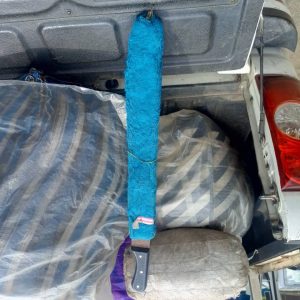
Security operatives from the Lagos State Neighbourhood Safety Corps (LNSC), Lion Building Detached, working alongside the Lion Building Police Division, arrested a suspect alleged to have been stalking and attacking unsuspecting passersby in the dead of night. The man, identified as 34-year-old Matthew Chukwu from Enugu State, was caught carrying a cutlass.
Investigators say Chukwu routinely posed as a mentally unstable wanderer while casing targets – often young women returning late from work – before striking around 2 a.m. “He blends in like one of the street drifters, but what he does is far more dangerous,” one officer told this reporter, requesting anonymity because they were not authorized to speak.
Residents say the arrest only scratches the surface of a larger problem: the quiet but steady transformation of Broad Street’s once-busy walkways into an open camp for vagrants and miscreants. “We’ve been calling for help for months. You can’t walk freely anymore once the shops close. These people sleep here, fight here, drink here – and we are left at their mercy,” said a shop owner who asked not to be named.
Authorities confirmed that others who had set up makeshift shelters along the corridor were also taken in for questioning. But locals fear that without consistent policing and social intervention, the arrests will amount to little more than a temporary sweep.
The incident underscores a broader tension in Lagos Island: a thriving commercial hub by day, increasingly shadowed by lawlessness at night. As investigations continue, many residents are demanding not just arrests, but a lasting strategy to reclaim their streets.