By Olatunbosun Obafemi
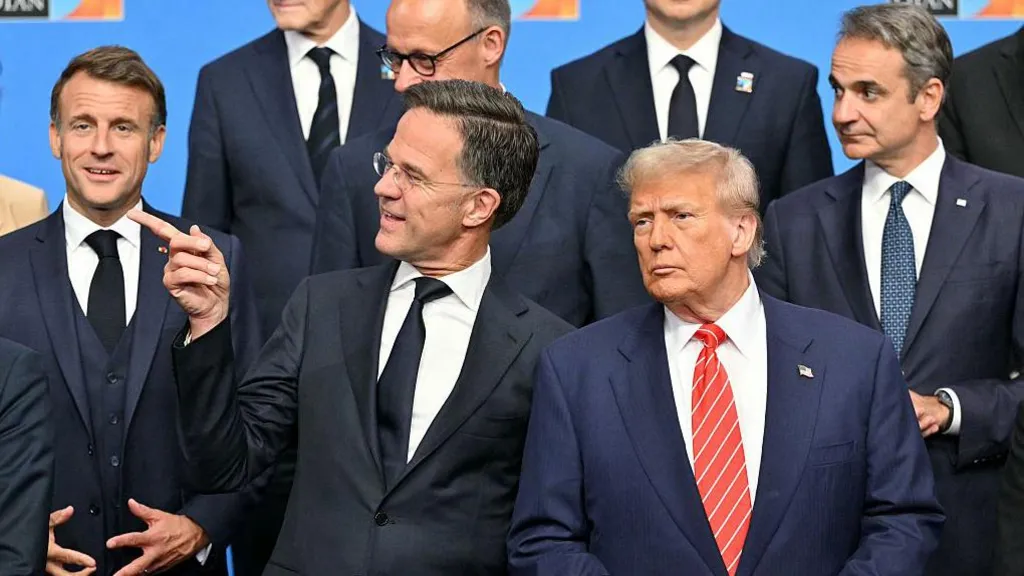
At a high-stakes summit in The Hague, NATO leaders agreed to a dramatic escalation in defence spending, adopting a new target of 5% of GDP over the next decade.
The move, widely seen as a response to former U.S. President Donald Trump’s longstanding criticisms of NATO members’ military contributions, marks the most significant shift in the alliance’s financial commitments since the Cold War.
Trump, who has repeatedly accused NATO allies of not paying their fair share, emerged from the summit declaring “a great victory.”
Speaking at a press conference, he praised the deal and expressed hope that the additional funding would be used to purchase military hardware made in the United States. “We had a great victory here,” he said, visibly pleased. His tone was echoed by Dutch Prime Minister Mark Rutte – host of the summit and now NATO Secretary General – who told reporters that Trump deserved “all the praise” for securing the commitment.
The new 5% target significantly raises the bar from NATO’s previous benchmark of 2%, which many member states have struggled to meet. However, only 3.5% of the new goal must be allocated to direct defence spending on troops and weapons. The remaining 1.5% can include broader “defence-related” expenditures – such as cybersecurity, protection of critical infrastructure, civil preparedness, and industrial innovation. These flexible categories appear designed to help reluctant countries meet the target without committing entirely to military hardware and personnel.
Despite the show of unity, cracks were visible. Trump singled out Spain for criticism after Prime Minister Pedro Sanchez suggested his country could meet NATO’s core commitments without adhering to the full 5% figure. Trump responded with threats of potential consequences, underscoring his transactional approach to alliances and his willingness to name and shame non-compliant partners.
One of the summit’s key deliverables was a renewed commitment to Article 5 of the Washington Treaty – NATO’s foundational pledge that an attack on one member is considered an attack on all. Trump publicly affirmed this principle, saying, “I stand with [Article 5], that’s why I’m here.” However, his previous remarks – suggesting he might not protect allies who fail to meet spending targets – continue to raise doubts about the reliability of U.S. guarantees under his potential second term.
Noticeably absent from the summit’s main agenda were hard discussions about the ongoing war in Ukraine, future strategy toward Russia, and the long-term U.S. military posture in Europe.
Former U.S. ambassador to NATO Julianne Smith criticized the omission, warning that ignoring the war “should worry all of us.” Peter Bator, Slovakia’s former NATO envoy, added that the alliance had “missed an opportunity to send a strategic message to the ruler in the Kremlin.”
While the summit succeeded in preserving unity—at least on the surface—it also revealed how fragile that unity might be if NATO fails to confront deeper strategic rifts. For now, the alliance leaves The Hague with an ambitious new spending pledge. But the fundamental question of how to manage Russia—and how to navigate Trump’s unpredictable influence—remains unresolved.