

By Nchetachi Chukwuajah
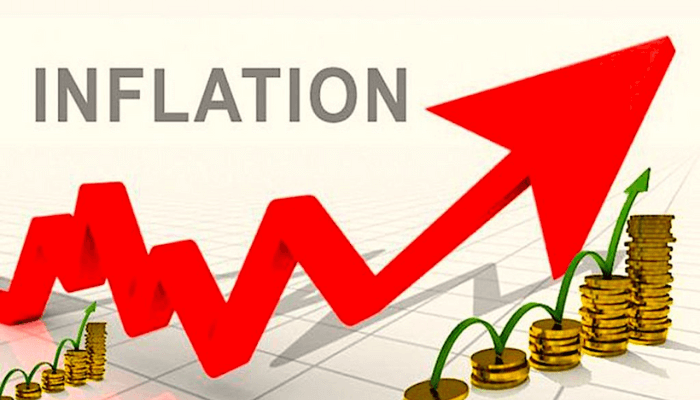
The National Bureau of Statistics (NBS) has projected a temporary “artificial spike” in Nigeria’s December 2025 inflation rate.
Statistician-General of the Federation, Adeyemi Adeniran, disclosed this on Monday, January 12, during a stakeholder engagement on the December 2025 Consumer Price Index (CPI) and inflation organised by NBS and the Nigerian Economic Summit Group (NESG).
Adeniran said the spike would result from the base effect of December 2024, which was equated to 100 following the rebasing.
He added that the spike is purely arithmetic, driven by computations and comparisons, and does not reflect structural changes in the economy.
Adeniran said: “This artificial spike is as a result of the base effect of December 2024, which is equated to 100, following the rebasing exercise.
“It is important to state that the base effect is a common feature in statistical practice when comparing yearly or monthly data, especially if you are coming from a high or low price from a base period to the current period.
“It is not something unexpected, it is not something unusual. Base effect is common in statistical exercises.”
In the technical presentation, NBS Director of Prices and Trade, Ayo Anthony, explained that the bureau’s CPI basket now includes 934 products, up from 700 in the previous basket, reflecting changing consumption patterns over the last 15 years.
Anthony said over 400 new products were added, while 200 were removed as they were no longer commonly consumed.
He noted that linking the new CPI with the previous index can create temporary distortions in the December figures.
The director said: “If the CPI for December is projected at 131.2, derived from November’s 130.5, it does not represent the true state of the economy. This is why we apply normalisation to remove the base effect,” noting that normalisation involves maximising the index reference period.
“If we don’t normalise, the year-on-year inflation in December will not be speaking to the true reality of the inflationary pressure of the economy,” he added.
Anthony further assured stakeholders that the base effect will not influence inflation figures from January 2026 onward.
NBS said Nigeria’s inflation rate for December 2025 will be announced this week.
The Chief Executive Officer (CEO) of Nigerian Economic Summit Group (NESG), Tayo Aduloju, noted in his opening remarks that credible CPI statistics are crucial as Nigeria transitions from stabilisation to consolidation reforms.
Aduloju noted that accurate data is essential for policy coherence, informs monetary and fiscal decisions, shapes wage negotiations, and strengthens public trust in economic institutions.
He added that CPI statistics, when used correctly, allow policymakers and stakeholders to track structural economic transformation and respond intelligently.
“In the consolidation phase, where we are transitioning to from a macro point of view, errors in policy can reverse hard-won gains.
“Misleading inflation signals can be very costly in this phase of macroeconomic reforms. Equally, the CPI statistics is a confidence-building mechanism.
“When data is produced with methodological rigour, disclosed transparently, and communicated clearly, it strengthens trust. In institutions, they reduce uncertainty in the economy, and this trust is essential to sustaining reforms, attracting long-term capital, and entrenching macroeconomic stability,” he said.