

By Nchetachi Chukwuajah
Nigeria’s inflation rate decreased to 18.02 per cent in September 2025, a 2.1 percentage points decline from the 20.12 per cent recorded in August 2025.
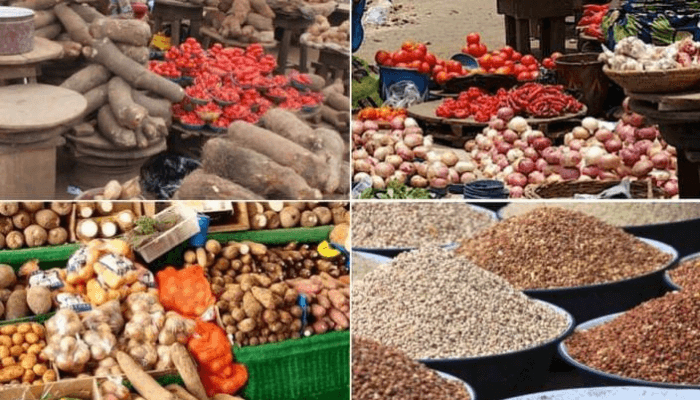
Reports also said the average prices of maize (corn) grains, garri, beans, millet, potatoes, onions, eggs, tomatoes, fresh pepper, among others, have decreased.
The decline in the inflation rate in September marks the sixth consecutive month of decline since April 2025 and the first time in three years that the nation’s inflation rate fell below 20 per cent.
The September inflation figure was disclosed in the Consumer Price Index (CPI) Report for September 2025 released by the National Bureau of Statistics (NBS) on Wednesday, October 15.
The CPI report also showed that the inflation rate declined to 14.68 per cent on a year-on-year basis compared to the 32.7 per cent recorded in September 2024, while the rate declined by 0.2 per cent on a month-on-month basis.
The NBS report stated, “In September 2025, the headline inflation rate eased to 18.02 per cent relative to the August 2025 headline inflation rate of 20.12 per cent.
“Looking at the movement, the September 2025 headline inflation rate showed a decrease of 2.1 per cent compared to the August 2025 headline inflation rate.
“In addition, on a year-on-year basis, the headline inflation rate was 14.68 per cent lower than the rate recorded in September 2024 (32.7 per cent).
“This shows that the headline inflation rate (year-on-year basis) decreased in September 2025 compared to the same month in the preceding year (i.e., September 2024), though with a different base year, November 2009 = 100.
“However, on a month-on-month basis, the inflation rate in September 2025 was 0.72 per cent, which was 0.02 per cent lower than the rate recorded in August 2025 (0.74 per cent).
“This means that in September 2025, the rate of increase in the average price level was lower than the rate of increase in the average price level in August 2025.”
According to the NBS, food inflation also declined by 5.0 percentage points to 16.87 per cent in September, compared to 21.87 per cent in August 2025.
It attributed the decline to the decrease in the average prices of maize (corn) grains, garri, beans, millet, potatoes, onions, eggs, tomatoes, fresh pepper, among others.
The NBS also disclosed that on a year-on-year basis, food inflation was highest in Ekiti (28.68 per cent), Rivers (24.18 per cent), and Nasarawa (22.74 per cent), while the slowest rise in food inflation year-on-year was recorded in Bauchi (2.81 per cent), Niger (8.38 per cent), and Anambra (8.41 per cent).
The report read, “The Food inflation rate in September 2025 was 16.87 per cent on a year-on-year basis.
“This was 20.9 percentage points lower compared to the rate recorded in September 2024 (37.77 per cent).
“The significant decline in the annual food inflation figure is technically due to the change in the base year.
“However, on a month-on-month basis, the food inflation rate in September 2025 was -1.57 per cent, down by 3.22 per cent compared to August 2025 (1.65 per cent).
“The decrease can be attributed to the rate of decrease in the average prices of maize (corn) grains, garri, beans, millet, potatoes, onions, eggs, tomatoes, fresh pepper, etc.”