By Ebenezer Mabinuola
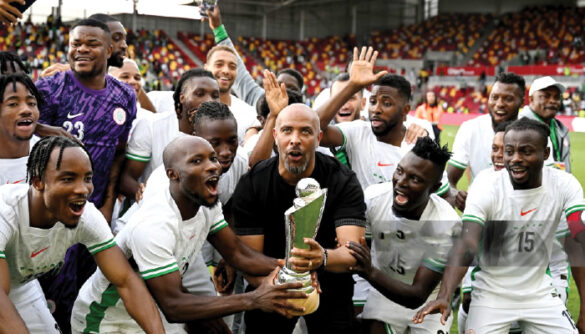
The Super Eagles of Nigeria ended a 12-year wait for international silverware on a historic night at the Gtech Community Stadium in London, edging Jamaica 5–4 on penalties to lift the 2025 Unity Cup.
In a final brimming with intensity, tactical intrigue, and cultural celebration, Nigeria twice led in regulation but were pegged back each time by a spirited Jamaican side. The match finished 2–2 after 90 minutes, and the ensuing shootout saw Uche Chrisantus calmly convert the decisive spot-kick to seal victory and spark jubilant scenes among thousands of green-and-white-clad fans in the stands.
Moses Simon opened the scoring early in the first half, finishing off a well-weighted pass from Cyriel Dessers in the 9th minute. The lead lasted only three minutes, however, as Kaheim Dixon’s swift equaliser exposed Nigeria’s defensive vulnerability – an issue that would persist throughout the match.
In the second half, head coach Eric Chelle’s tactical reshuffle proved inspired. Moving Samuel Chukwueze into a central attacking role yielded immediate results. The Villarreal forward found space between the lines and slotted home in the 53rd minute to restore Nigeria’s lead. It was a mature, composed performance from Chukwueze, one of his most complete in a Super Eagles shirt.
But Jamaica refused to fold. Jon Russell’s late header levelled the match once again, setting the stage for a tense shootout under the London lights. Nigeria remained composed, converting all five of their penalties through Kelechi Iheanacho, Simon, Tolu Arokodare, Bruno Onyemaechi, and finally Chrisantus. Jamaica’s lone miss proved costly.
The win not only handed Nigeria its first trophy since the 2013 Africa Cup of Nations but also cemented a promising start for Chelle, who has now won three of his first four matches in charge. His team showed signs of an emerging identity: fluid in attack, confident in possession, and willing to take tactical risks.
Chukwueze’s role change highlighted Chelle’s strategic flexibility, while Dessers, who had also scored in the semi-final win over Ghana, continued his fine form. At the back, while there were clear lapses, young defenders Benjamin Fredrick and Felix Agu showed signs of composure under pressure – an encouraging sign for a team in transition.
Yet, this match was about more than football. Sanctioned by FIFA just hours before kickoff, the Unity Cup was conceived as a celebration of African and Caribbean heritage. With Nigeria, Ghana, Jamaica, and Trinidad & Tobago all participating, the tournament turned west London into a cultural festival. Traditional attire, rhythmic drums, and choreographed celebrations created an electric atmosphere. It was a night steeped in pride, unity, and shared history.
The historical subtext added further emotional weight. Nigeria and Jamaica share a long-standing footballing connection, including a memorable 2–2 draw in Kingston ahead of the 1998 World Cup. This final brought that relationship full circle, with Nigeria emerging victorious this time around.
While the Unity Cup may not carry the gravitas of continental or global tournaments, its psychological significance for Nigeria is immense. It represents the first tangible success of a new era – an early but meaningful validation of Chelle’s methods, and a reminder to fans and players alike that the Super Eagles can still soar.
As confetti settled on the pitch and fans spilled into the streets in celebration, the message was clear: Nigeria’s long wait is over. With a new coach, emerging talents, and a clear sense of direction, the Super Eagles are flying again.