

By Suleyman A. Ndanusa PhD OON
The Finance Ministry is right to question whether the World Bank’s figures compare like with like. But its response does not yet provide the numbers needed to settle that question.
The headline figure is striking, in the first half of 2026, Nigeria’s interest payments were reported at ₦7.7 trillion, against federal revenue of ₦6.2 trillion. Divide one by the other and the result is about 124 per cent. The World Bank’s October Nigeria Development Update reports both figures, and the arithmetic is sound.
That ratio needs careful interpretation. It does not mean the federal government had no money for anything else, nor does it prove that Nigeria is insolvent. Governments can borrow and draw on other financing sources. But it does mean that, on the World Bank’s reported figures, interest payments were greater than the revenue counted in that comparison. A serious signal of pressure on public finances.
The wider spending picture strengthens that concern. The World Bank reported that interest payments rose to 3.1 per cent of GDP in H1 2026, from 2.5 per cent a year earlier, while reported capital spending fell to 0.3 per cent of GDP, from 1 per cent. Those figures do not prove that interest costs caused the fall in capital spending, but together they point to a government with limited room to fund investment from current resources.
The Finance Ministry’s first objection is that the interest figure includes debt the federal government services on behalf of other levels of government, including external loans to states. There is a genuine accounting question here. Nigeria’s federal government has historically paid some state external debt centrally, with the cost deducted from the relevant states’ allocations. If such payments are included in the World Bank’s numerator while the denominator counts only federal revenue, the ratio may overstate the federal government’s own debt burden.
But the ministry has not published the amount of H1 interest attributable to states, shown how the payments are recorded, or recalculated the ratio on a consistent basis. Its objection identifies a possible mismatch; it does not show how large the mismatch is or how much it changes the result.
The ministry also argues that the revenue figure omits income already earned by government agencies but not yet remitted to the Treasury. That may matter for assessing revenue on an accrual basis. For a cash-flow comparison, however, money that has not reached the Treasury may not have been available to pay interest during the period. The World Bank’s report itself says that higher independent revenues helped raise federal revenue, but the ministry has not quantified the additional unremitted amounts it says should also be counted.
The ministry’s year on year comparison is valid, but it answers a different question. It says federal revenue grew 72 per cent from H1 2025 to H1 2026, while interest payments grew 38 per cent. The ratio therefore improved from roughly 156 per cent to 124 per cent. That is progress. Yet interest payments still rose by ₦2.1 trillion, and the reported H1 2026 gap between interest and revenue remained ₦1.5 trillion. Improvement does not, by itself, erase the pressure the figures describe.
Nor does the ministry’s “below 60 per cent” figure directly rebut the World Bank’s H1 ratio. The ministry applies it to full year 2025 debt service, which includes principal repayments; the 124 per cent figure compares H1 2026 interest payments with H1 revenue. The ministry also cites a World Bank projection that full year 2026 debt service will equal 46 per cent of revenue. That annual forecast may provide useful context, but it is not directly comparable with a half year interest ratio: the periods and measures differ.
A six-month ratio cannot, on its own, determine whether a country’s debt is sustainable. But it can show whether the government’s reported receipts kept pace with interest costs during that period. The ministry says more revenue typically arrives in the second half of the year, which could make an annual picture less severe. That possibility deserves examination alongside the H1 figures, not in place of them.
Independent verification remains difficult. BusinessDay reported that Nigeria had not published a budget implementation report for 2026 by the time of the dispute. Without a timely official breakdown of interest payments, state loan deductions and revenue receipts, outside reviewers cannot fully reconcile the World Bank’s numbers with the ministry’s objections.
The fairest conclusion is therefore narrower than either side’s headline. The World Bank’s 124 per cent figure is a correct calculation using its reported H1 2026 figures. The ministry has raised plausible questions about whether those figures cover the same government and the same revenue perimeter, but it has not provided the data needed to resolve them. The ratio is a warning about fiscal pressure not, on its own, a verdict on Nigeria’s debt sustainability.
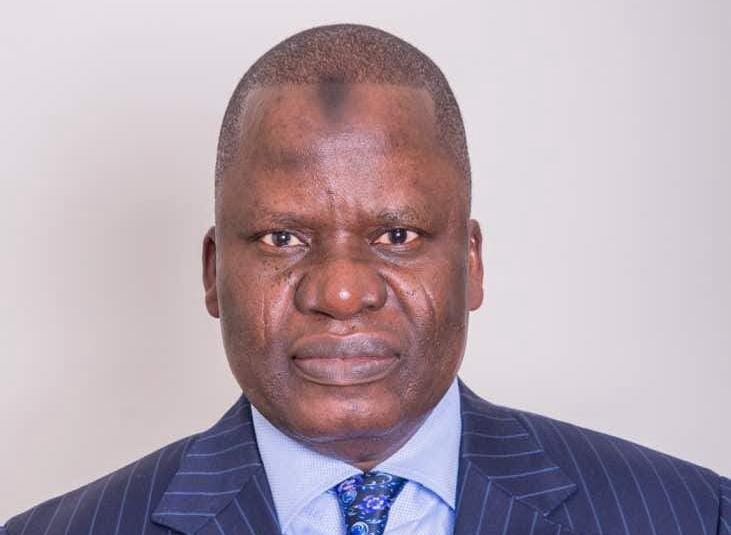
Suleyman A. Ndanusa, PhD, OON, is an economist, lawyer, strategic studies scholar, and public policy thinker and practitioner with extensive experience in financial markets, regulation, governance, national Security and development.