

By Olatunbosun Obafemi
The Yoruba nation, with its centuries-old traditions and institutions, has never lacked for grandeur, wisdom, and occasionally, controversy. Among the most respected royal thrones in the Yoruba world stand the Alaafin of Oyo and the Ooni of Ife, two monarchies whose histories stretch far into antiquity.
The Alaafin, seated in Oyo, has long been considered the custodian of imperial authority, the shadow of empire that once stretched across West Africa. The Ooni of Ife, on the other hand, is revered as the spiritual father of the Yoruba, guardian of their origins, and custodian of the sacred city of Ile-Ife, believed to be the cradle of creation itself. Between these two thrones lies a delicate balance of power – sometimes harmonious, other times strained.
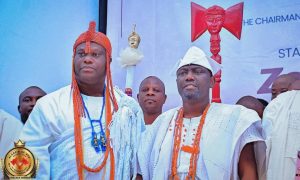
In recent times, a dispute arose between Alaafin of Oyo, Oba Abimbola Owoade, and Ooni of Ife, Oba Adeyeye Enitan Ogunwusi, over the conferment and legitimacy of a newly popularized chieftaincy: the Okanlomo of Yorubaland – a title loosely translated as the foremost son of the Yoruba nation. Though the title itself has no ancient origin traceable to the Ife dynasty or the Oyo Empire, it has, in contemporary politics, become a powerful symbol. To be named Okanlomo is to be acknowledged as a foremost son of the Yoruba people, a figure whose influence rivals kings and politicians alike.
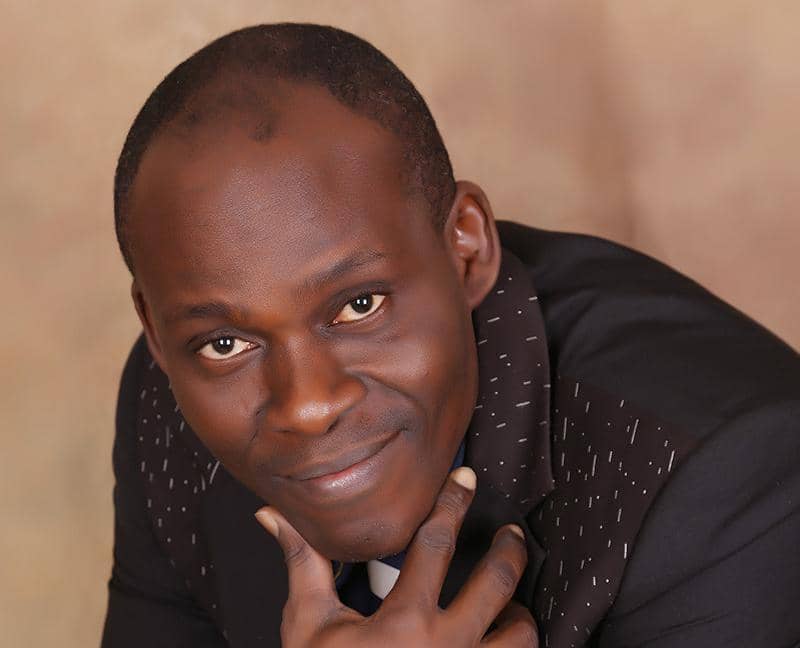
The controversy began when the Ooni of Ife conferred the title of Okanlomo of Yorubaland upon Engineer Jubril Dotun Sanusi, a prominent Ibadan son, owner of International College of Arts, Science and Technology (ICAST), Ilaji Farms, Ilaji Hotel and Resort as well as other business ventures.
In his speech, Ooni Ogunwusi declared that Engineer Sanusi had served the Yoruba cause with dedication and that Ife, being the source of all Yorubas, held the divine right to bestow such recognition. The ceremony was attended by high chiefs, political leaders, and cultural ambassadors. The Ooni’s declaration was clear: the Okanlomo of Yorubaland was his to confer, for Ife was the fountainhead.
The Alaafin of Oyo, Oba Abimbola Owoade, did not receive this development with ease. From Oyo’s perspective, titles that carry such weight within Yorubaland cannot be created or legitimized without reference to Oyo, the political capital of the old empire. Historically, the Alaafin was regarded as the supreme overlord of all Yoruba kings during the zenith of the Oyo Empire. For centuries, subordinate Obas paid homage to Oyo, acknowledging its authority and might. To Alaafin Owoade, the Ooni’s action was not just a ceremonial oversight, but a direct challenge to the historical supremacy of Oyo.
The Alaafin summoned his council of chiefs, the Oyo Mesi, in the ancient palace at Oyo. With their backing, he issued a statement to the press and traditional councils across Yorubaland, directing the Ooni to rescind his action with 48 hours, asserting that the creation and conferment of the title Okanlomo of Yorubaland was within the authority of Oyo. He described Ife’s action as a “symbolic trespass,” reminding the world that while Ife is the spiritual cradle, Oyo has always been the seat of political and imperial legitimacy.
This sparked a wave of heated debates across Yoruba land and diaspora communities. Historians, cultural custodians, and public intellectuals weighed in. Some argued in favor of the Ooni, stressing that spiritual authority predates political supremacy. According to this school of thought, all Yoruba kings – including the Alaafin – trace their legitimacy to Ife, the navel of creation. Thus, Ife holds the primordial right to define Yoruba identity. Others sided with the Alaafin, noting that during the centuries of empire, it was Oyo’s cavalry, Oyo’s administration, and Oyo’s diplomatic power that united the Yoruba under one imperial banner. For them, to ignore Oyo’s centrality was to rewrite history.
What made the dispute even more poignant was its echo of older rivalries. The tension between Ife and Oyo is not new. As far back as the 16th and 17th centuries, Yoruba oral traditions spoke of moments when the Ooni’s spiritual claims and the Alaafin’s imperial ambitions clashed. Though couched in rituals and proverbs, these rivalries often shaped the politics of the day. The 21st-century version, however, played out in newspapers, television, and social media, amplifying every statement and gesture.
In an effort to mediate, prominent Yoruba elders, including the Aare Ona Kakanfo of Yorubaland, convened a gathering in Ibadan. Their goal was to preserve unity and avoid a public rift that could weaken Yoruba influence within Nigeria’s broader political landscape. At the gathering, both monarchs were represented by delegations of chiefs. While the Ooni’s representatives emphasized the spiritual essence of the title, the Alaafin’s envoys insisted on the need for historical respect and recognition of imperial precedence.
A compromise was proposed: that henceforth, titles claiming the pan-Yoruba mantle should be jointly sanctioned by both thrones – spiritual and political – before being announced. This would allow both Ife and Oyo to preserve their dignity without undermining each other. Yet, neither monarch was quick to embrace the suggestion. Both understood the symbolic weight of concession: to yield too much would be to weaken their throne in the eyes of posterity.
For ordinary Yoruba people, however, the debate transcended the palaces. Market women, students, and professionals alike discussed it passionately. Many felt the dispute was unnecessary, a distraction from more pressing challenges of unemployment, insecurity, and economic instability. Some joked that while kings quarreled over titles, the people sought bread and butter. Yet, others recognized the deeper currents at play: the Yoruba identity, rich in culture and pride, was being renegotiated through symbols like the Okanlomo.
In the end, the dispute revealed not only the enduring power of Yoruba kingship but also the fragility of unity among great thrones. The Alaafin of Oyo, Oba Abimbola Owoade, stood firm on the ground of historical supremacy, while the Ooni of Ife, Oba Adeyeye Enitan Ogunwusi, invoked spiritual primacy. Between history and spirituality, the Yoruba nation was reminded that its greatness has always rested on balance.
Yet, a note of caution is necessary. For both monarchs, who occupy first-class thrones and embody the pride of millions, it is crucial to temper rivalry with wisdom. The Yoruba people look to them not only as custodians of tradition but as unifying fathers in a time when unity is desperately needed. To allow disputes over titles such as Okanlomo of Yorubaland to escalate into bitterness is to risk weakening the dignity of the thrones themselves. A divided Yoruba monarchy diminishes the voice of the Yoruba in the Nigerian federation. Wisdom demands that both Ooni Ogunwusi and Alaafin Owoade rise above rivalry, remembering that their crowns are heavier than gold: they are bound with the expectations of history and the hopes of the future.