

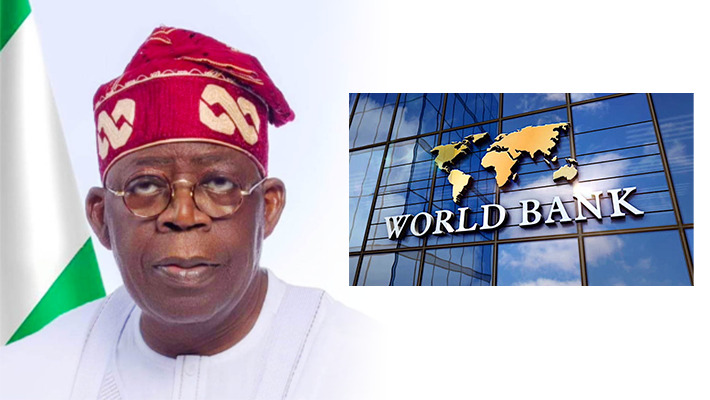
The Presidency has reacted to growing online campaigns by Nigerians urging the World Bank to stop granting loans to Nigeria amid rising concerns over the country’s debt profile.
The reaction followed a wave of comments by Nigerians on the World Bank’s social media platforms, where many citizens appealed to the international financial institution to deny further loans to the country.
Speaking during an interview on Arise Television on Thursday, the Special Adviser to President Bola Tinubu on Policy Communication, Daniel Bwala, dismissed the campaign as possibly politically motivated ahead of future elections.
“This is the eve of election, and so, it’s difficult to tell if the citizens who flooded the social media page of the World Bank asking that Nigeria be denied the right to borrow are opposition members,” Bwala said.
He, however, maintained that regardless of public criticism, the government has a constitutional responsibility to govern and make decisions in line with the law.
“Whether they are opposition or not, government has the duty to execute the provision of the constitution,” he stated.
Bwala argued that leadership decisions cannot be driven solely by social media reactions, noting that there would always be differing public opinions on government policies.
“As a government, you are going to react to a people who on social media said do not borrow Nigeria. What if you have another set of people saying go and borrow? How are you going to move as a leader?” he queried.
According to him, government policies must be guided by legal and economic frameworks rather than emotional public sentiment online.
“Leadership is not guided by certain things that do not have the backing of law,” he added.
The presidential aide also defended the Tinubu administration’s borrowing strategy, insisting that Nigeria’s debt level remains within acceptable limits based on international financial assessments.
“World Bank, the International Monetary Fund, IMF, and experts in the field said our borrowing so far is still in order,” Bwala said.
The debate over Nigeria’s borrowing has intensified in recent months as citizens continue to express concern over rising debt obligations, economic hardship, inflation and the cost of living across the country.