

By Olusegun Obisanya
As Nigeria’s public education system continues to grapple with underfunding, infrastructure deficit, and recurring industrial actions, private schools are stepping in to fill a widening gap.
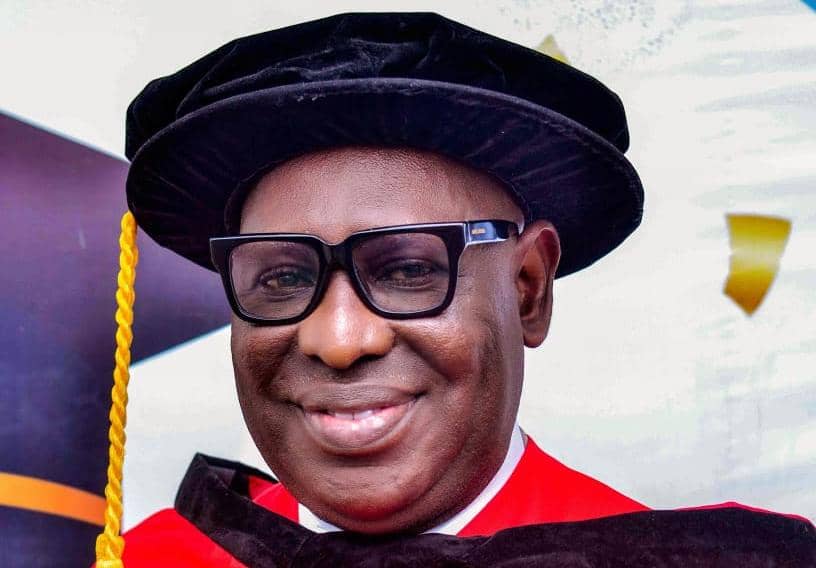
Dr Joseph Otuagoma, an educationist made the submission while addressing some selected reporters in Lagos recently.
According to the educationist, this trend reflects both the resilience of Nigeria’s private sector and the government’s persistent failure to prioritize education.
“Private schools have come to stay in Nigeria. Even those who may not like it cannot change that fact, because government funding in education is simply not enough,” he asserted.
Dr. Otuagoma, who began his career as a primary school teacher in 1998 and now runs a network of schools across the country, painted a grim picture of the state of public education. He noted that many public schools exist only in name, with dilapidated facilities and little or no supervision.
“In some schools, you find one teacher handling several subjects. And in some rural areas, there are no qualified teachers at all. They depend on NYSC members, who often have little interest in teaching because they are only passing through,” the educationist explained.
According to him, while some states like Lagos and Rivers have made attempts to improve public schools, the number of institutions and students in need far outweighs government capacity.
“Many of these schools have buildings, but the spirit to run them is not there. Teachers are not motivated, supervision is poor, and learning standards have dropped drastically,” he added.
He argued that this decay has made private schools indispensable, as parents increasingly turn to them to ensure their children receive quality education. “That’s why private schools remain relevant — they fill the void left by government schools,” he noted.
Beyond the primary and secondary levels, Nigeria’s higher education system has long been plagued by industrial disputes. Dr. Otuagoma described the frequent strikes by the Academic Staff Union of Universities (ASUU) as one of the major reasons for declining confidence in public universities.
“In Nigeria, if a university doesn’t go on strike for a year, people are shocked. A course meant to last four years can easily stretch to six or seven,” Otuagoma revealed.
He recounted how a student who attended a private university, completed her degree and entered the workforce while her counterparts in public institutions were still in their second year.
“These strikes don’t just delay education; they affect students’ mental health and career prospects,” he said, adding, “When students are idle for months, many fall into depression or become vulnerable to negative influences. It’s a national tragedy.”
To prevent further strikes, Dr. Otuagoma urged the federal government to honour its agreements with university unions.
He emphasized, “Government must keep to the agreements it signs. Each time ASUU threatens to strike, government makes new promises, knowing they won’t keep them. That cycle must end.”
He also called for broader collaboration, suggesting that resolving educational crises should not be left solely to lecturers. “Stakeholders such as governors, parents, and even the private sector should join in putting pressure on government. When there’s a crisis in other sectors, it’s resolved overnight. But when it’s education, they drag it for years.”
The educationist believes that meaningful reform must start with prioritizing education funding and fair remuneration for teachers. He criticized the country’s spending patterns, noting that government officials enjoy lavish allowances while professors and teachers struggle to survive.
“A professor earns about ₦500,000 a month, yet a local government chairman or political appointee earns far more. We hear of billions spent on renovating official residences or building car parks. That same amount could renovate universities across Nigeria,” he said.
He urged the government to channel more funds into building laboratories, libraries, and technology-enabled classrooms. “There are students studying computer science in universities who have never touched a computer. How can that produce quality graduates?” he lamented.
He commended some private universities and corporate organizations for taking the lead in improving infrastructure through partnerships. “Banks like Zenith and others have invested in universities like UNILAG and the University of Ilorin. These efforts help, but government still needs to do more,” he said.
The veteran educator also stressed the importance of innovation in bridging educational gaps. He advocated for the integration of digital learning platforms, teacher retraining, and vocational education into the national curriculum.
“Technology should not be an afterthought,” he said. “If we equip schools with digital tools and encourage practical learning, students will become more employable and self-reliant.”
For him, the path forward is clear: Nigeria must treat education as a national emergency. “No nation can rise above the quality of its education system. If we continue to neglect education, we will keep producing half-baked graduates. But if we invest in teachers, infrastructure, and innovation, the results will speak for themselves,” he maintained.
Private schools, he added, have shown what commitment and vision can achieve.
“What private schools have done in Nigeria is proof that quality education is possible when there is focus and accountability. Now, it’s time for government to do the same,” he posited.


