

By Odesola JF., PhD
By now, many Nigerians have watched the videos. They have read the headlines. They have listened to self-appointed social media commentators who have suddenly become judges, jury and historians over Pastor Enoch Adeboye’s recent comments on Nigeria’s security situation.
As has become the culture of our digital age, many conclusions were reached before all the facts were known. A few influencers, armed with little more than short video clips and personal opinions, rushed to question the integrity of a man whose public ministry has spanned over four decades. Others even criticised those who recently honoured him, as though recognising a lifetime of service had suddenly become a crime.
But there is an old African proverb that says, “The person standing outside the palace cannot know everything discussed in the king’s chamber.”
That proverb could not be more appropriate.
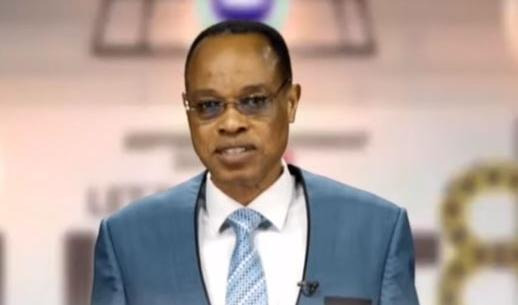
Last weekend, during an interview on Channels Television, United States-based lawyer, Barrister Emma Ogebe, pulled back the curtain—just a little. His remarks were neither emotional nor political. They were measured and revealing.
“What Pa Adeboye has done, and is doing, a lot of it cannot be disclosed in the public space,” he said.
He explained that the only reason he chose to mention part of it was because Pastor Adeboye had just been honoured at an international event where some of those quiet contributions were acknowledged. Even then, he insisted that much more could not be discussed because of the sensitive nature of the assignments involved.
That single statement should humble every one of us.
It reminds us that public knowledge is never complete.
Not every act of patriotism comes with a press conference.
Not every contribution to national security is announced on television.
Not every intervention is designed for social media consumption.
Some of the most important work done for any nation happens quietly.
Security agencies understand this. Diplomats understand this. Statesmen understand this. Responsible religious leaders understand this too.
Yet, in our generation, silence is often mistaken for inactivity, and humility is sometimes interpreted as irrelevance.
Pastor Enoch Adeboye has never been known as a man who advertises himself. Those who have followed his ministry over the years know that he has consistently preferred quiet service to public applause.
Whether one is a member of the Redeemed Christian Church of God or not, the facts remain undeniable.
Under his leadership, RCCG has grown into one of the world’s largest Christian movements, with churches in well over 190 nations. Beyond evangelism, the church has invested in universities, schools, healthcare, disaster relief, scholarships, rural development, community empowerment and humanitarian interventions that have transformed countless lives.
These are not claims. They are visible realities.
Yet, somehow, a few minutes of online commentary have become sufficient for some people to dismiss decades of consistent service.
That says more about our culture than it does about Pastor Adeboye.
Social media has become one of humanity’s greatest communication tools. It has exposed injustice, promoted accountability and given ordinary citizens a voice.
But it has also created a dangerous illusion—that having a platform automatically makes one an authority.
Today, controversy has become an industry. Outrage has become a business model. The louder the accusation, the higher the engagement. The more controversial the opinion, the greater the number of views.
In that environment, facts often become casualties.
Unfortunately, respected individuals become attractive targets because attacking credibility is easier than building one.
No reasonable person is suggesting that Pastor Adeboye—or any public figure—is above criticism. Leaders must always be open to questions and differing opinions.
However, criticism should be informed, fair and responsible.
It should never be built upon assumptions or incomplete information.
That is why Barrister Emma Ogebe’s comments deserve serious reflection. Here is someone who has firsthand knowledge of certain interventions and who openly admitted that many of them cannot yet be discussed publicly because they relate to sensitive national matters.
Shouldn’t that caution us against making absolute statements?
Shouldn’t it remind us that there are conversations and interventions happening behind closed doors that ordinary citizens may never know about?
History repeatedly teaches this lesson.
Many of the world’s greatest peacemakers carried out their finest work away from cameras. Conflicts have been prevented without the public ever knowing how close disaster came. Hostages have been released through private negotiations. Communities have been saved because influential voices quietly persuaded opposing sides to choose peace over violence.
The public often learns these stories years later—if at all.
Why should anyone assume that respected faith leaders cannot play similar roles?
Equally unfortunate has been the criticism directed at those who honoured Pastor Adeboye.
Why exactly should they apologise?
Civilised societies honour men and women whose lives have made lasting contributions to humanity. Nations decorate military officers. Universities honour distinguished scholars. Humanitarian organisations celebrate those who serve selflessly.
Religious leaders who have positively influenced millions of lives deserve the same respect.
Honouring Pastor Adeboye is not about creating a personality cult. It is about recognising consistency, integrity and decades of service that have touched lives across continents.
Gratitude should never be mistaken for blind loyalty.
As Nigerians, we must also guard against a growing habit of tearing down every institution and every leader simply because cynicism has become fashionable.
Constructive criticism strengthens society.
Relentless contempt weakens it.
There is a difference.
Our nation needs accountability, but it also needs fairness. We need courageous voices, but we also need responsible ones. Above all, we need the humility to admit that we do not know everything.
Perhaps that is the greatest lesson from Barrister Emma Ogebe’s revelation.
There are dimensions of national service that cannot be livestreamed.
There are sacrifices that cannot be announced.
There are interventions that remain confidential because making them public would defeat their very purpose.
Those who honoured Pastor Enoch Adeboye saw beyond the noise of the moment. They recognised a lifetime of service, spiritual leadership, humanitarian commitment and quiet national influence.
History has a way of vindicating those who serve faithfully without seeking applause.
Long after today’s hashtags have disappeared and tomorrow’s influencers have moved on to another controversy, what will remain is character, consistency and impact.
In the end, that is how great lives are measured—not by the volume of criticism they attract on social media, but by the lasting difference they make in the lives of people and in the destiny of a nation.
Before we rush to condemn, perhaps we should remember that not everything worth knowing is posted online, and not every patriot wears his service on his sleeve.