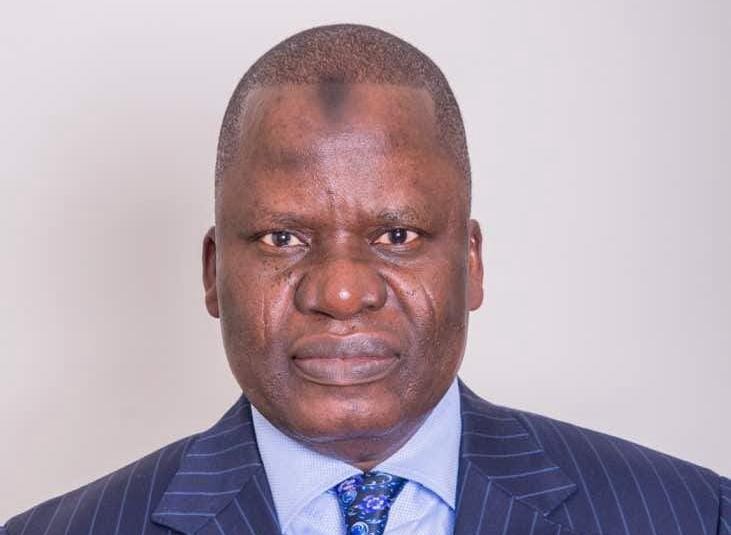
By Suleyman A. Ndanusa, PhD, OON
For decades, discussions about the naira have followed a familiar pattern. The debate has often revolved around inflation, exchange rate depreciation, the introduction of higher currency denominations, redenomination proposals, and periodic currency redesign exercises.
These discussions remain important. Yet they increasingly risk focusing on yesterday’s challenges while overlooking tomorrow’s opportunities.
The world is undergoing one of the most profound transformations in the history of money. Digital technology is changing how money is created, transferred, stored, invested, borrowed, and used. Fintech platforms are redefining payments. Mobile phones are becoming financial gateways. Artificial intelligence is beginning to reshape financial services. Central banks are exploring digital currencies. Cross-border transactions are becoming faster, cheaper, and increasingly independent of traditional banking structures.
Against this backdrop, the most important question facing Nigeria is no longer whether the naira should be redenominated or redesigned.
The more fundamental question is whether the naira is being adequately modernized for the economy of the future.
The challenge before Nigeria is therefore not merely currency reform.
It is monetary ecosystem modernization.
Historically, currency reforms were designed to address specific monetary problems. Some countries sought to curb hyperinflation. Others attempted to restore public confidence in their currencies. Some introduced new currencies following political transitions, while others redenominated existing currencies to simplify transactions and accounting systems.
Nigeria has experienced various forms of currency restructuring since the introduction of the naira in 1973. These reforms were largely conceived within a world where physical cash dominated economic transactions. Monetary efficiency was measured by the effectiveness of notes and coins, the costs of printing currency, and the convenience of cash handling.
That world is rapidly disappearing.
Today, Nigeria possesses one of Africa’s most vibrant fintech ecosystems. Millions of transactions occur daily through mobile applications, electronic transfers, payment gateways, POS terminals, QR codes, and digital wallets. Salaries are paid electronically. Businesses increasingly settle obligations digitally. Consumers purchase goods and services without touching physical cash.
In such an environment, money is no longer merely a physical instrument.
It is increasingly a technological platform.
Consequently, the modernization of a currency can no longer be assessed solely through the lens of banknotes, coins, or denomination structures. It must be evaluated through the quality of the ecosystem within which the currency operates.
This distinction is critical because many discussions about currency reform continue to focus on redenomination. Redenomination undoubtedly has its place. It can simplify transactions, reduce accounting complexity, improve payment efficiency, and symbolically signal the beginning of a new era of economic management.
However, redenomination does not create wealth. It does not increase productivity. It does not reduce inflation by itself. It does not strengthen economic fundamentals.
Successful redenomination is usually the consequence of stability rather than the cause of it.
The real challenge therefore lies elsewhere.
The real challenge is building a modern monetary ecosystem capable of supporting a twenty first century economy.
At its foundation, such an ecosystem requires currency credibility. No amount of technological sophistication can compensate for weak economic fundamentals. Strong currencies are ultimately reflections of strong institutions. The Swiss franc is trusted because Switzerland is trusted. The Singapore dollar is trusted because Singapore’s institutions are trusted. The same principle applies to the naira.
Sustainable currency strength depends on fiscal discipline, monetary stability, productivity growth, export competitiveness, policy consistency, institutional credibility, and public confidence.
Technology can amplify confidence.
It cannot substitute for it.
Beyond credibility lies digital infrastructure. The future monetary system must be built around universal access to low cost, instant, secure, and interoperable payment systems. Every Nigerian should be able to send or receive money instantly regardless of location, income level, bank affiliation, fintech provider, or telecommunications network.
The objective should be a seamless national payment ecosystem functioning as a single integrated platform rather than a collection of disconnected systems.
Yet even this national perspective is no longer sufficient.
The future of the naira will be shaped not only by developments within Nigeria but also by the transformation occurring across Africa.
For much of modern history, African countries traded with one another through foreign currencies. A Nigerian business exporting to Ghana frequently settled transactions through the US dollar. A Kenyan importer dealing with Rwanda often relied on external currencies despite both parties being located within Africa.
This arrangement imposed unnecessary costs on African trade. It increased transaction expenses, created avoidable foreign exchange pressures, prolonged settlement periods, and reinforced dependence on financial infrastructures located outside the continent.
That paradigm is now beginning to change.
Africa is quietly constructing a new payments architecture.
The emergence of continental initiatives designed to facilitate local currency settlements and reduce reliance on third country currencies represents one of the most significant financial developments in Africa since independence. These initiatives are being driven by collaboration among African central banks, regional financial institutions, payment system operators, and continental trade bodies.
At the centre of this transformation lies a simple but powerful idea:
African businesses should increasingly be able to trade with one another using African currencies.
The significance of this development cannot be overstated.
Historically, discussions about the naira focused primarily on its relationship with the US dollar.
The future may require Nigeria to think equally about the naira’s relationship with African currencies, African trade corridors, and African payment networks.
This changes the strategic context of currency modernization.
The future competition among currencies may no longer be determined solely by exchange rates. Increasingly, it may be determined by network effects.
The currencies that become embedded within the largest payment networks, trade platforms, settlement systems, and investment ecosystems are likely to enjoy greater relevance and influence.
The dominance of the US dollar is not merely a consequence of American economic size. It is also the result of the dollar’s position at the centre of the world’s financial networks.
A similar dynamic is beginning to emerge within Africa.
The strategic opportunity before Nigeria is therefore not necessarily to make the naira a continental reserve currency. Rather, it is to position the naira as a major transaction and settlement currency within Africa’s emerging trade and payments ecosystem.
Nigeria enters this new era with significant advantages. It possesses one of Africa’s largest economies, one of its largest banking systems, one of its most sophisticated fintech sectors, a dynamic entrepreneurial culture, and extensive commercial relationships across the continent.
These strengths position Nigeria to become a leading node within Africa’s evolving financial architecture.
However, such an outcome will not occur automatically.
It requires deliberate strategy.
A credible modernization roadmap should therefore rest on six pillars: macroeconomic stability, digital payments infrastructure, financial inclusion, African payments integration, technological innovation, and monetary sovereignty.
The objective is not merely to modernize the naira.
The objective is to position Nigeria at the centre of Africa’s emerging monetary ecosystem.
This broader perspective also reshapes the role of the Central Bank.
Traditionally, central banks have been viewed primarily as issuers of currency and guardians of monetary stability.
In the digital age, their role increasingly resembles that of ecosystem orchestrators.
The modern monetary ecosystem extends far beyond the Central Bank itself. It encompasses commercial banks, fintech companies, telecommunications providers, payment switches, merchants, software developers, cybersecurity institutions, regulators, consumers, and international financial networks.
The effectiveness of the monetary system increasingly depends on how well these actors interact within a coherent framework.
The future strength of the naira will therefore depend not only on monetary policy but also on the Central Bank’s ability to orchestrate a dynamic, innovative, inclusive, and regionally integrated financial ecosystem.
Ultimately, the debate about the future of the naira is not a debate about notes, coins, or zeros.
It is a debate about Nigeria’s place in the future architecture of African finance.
Currency modernization is no longer about paper.
It is about platforms.
It is no longer about denominations.
It is about networks.
It is no longer about cash.
It is about ecosystems.
The future of the naira will be determined less by the number of zeros printed on its notes and more by the quality of the economic, technological, institutional, and continental ecosystem that stands behind it.
The real challenge before Nigeria is therefore not simply to reform its currency.
It is to build a monetary ecosystem capable of supporting national prosperity, regional integration, and African economic transformation in the decades ahead.
That is where the future of the naira will ultimately be decided.