


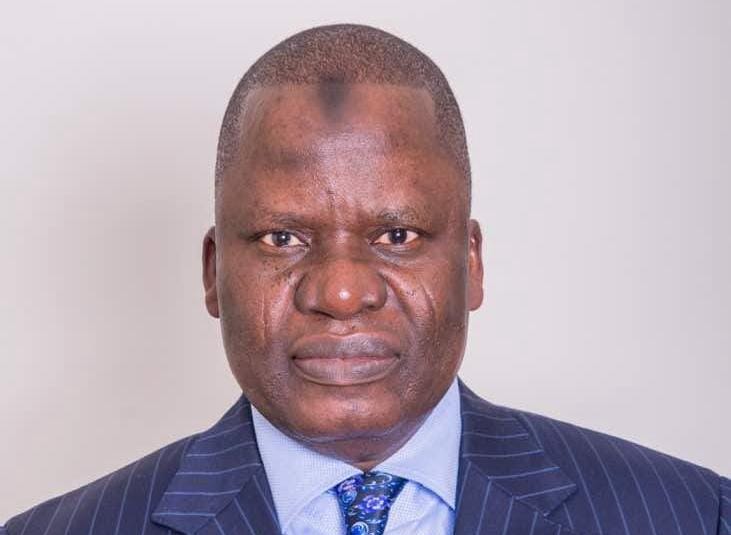
By: Suleyman A Ndanusa PhD OON
One of the most fascinating developments in public governance over the past two decades has been the transformation of communication from a supporting function into a strategic national asset. Governments once believed that policies alone determined public confidence. Today, experience across the world suggests otherwise. The quality of governance is increasingly measured not only by the decisions governments make, but also by how they explain those decisions, particularly when events take an unexpected turn.
There is perhaps no country where this lesson is more relevant than Nigeria.
We are a nation of energetic conversation. We debate politics in taxis, analyse economic policy in barber shops, solve constitutional questions in airport lounges and, thanks to social media, investigate virtually every national issue from the comfort of our mobile phones. Somewhere between breakfast and lunch, millions of Nigerians become economists, security experts, epidemiologists, petroleum engineers and constitutional lawyers. It is one of our more charming national characteristics.
The difficulty, of course, is that crises do not wait for facts to catch up with opinion.
In an earlier era, governments had the luxury of time. Information travelled at the speed of newspapers and evening radio broadcasts. Official statements often arrived before speculation had gained much ground. That world has disappeared. Today, information travels at digital speed while verification still moves at human speed. The result is that rumours frequently arrive before the facts have even left the building.
This is not uniquely Nigerian. It is the defining challenge of governance in the digital age.
The old scientific principle that nature abhors a vacuum has acquired an unexpected companion. Public communication abhors one too. Whenever uncertainty arises, people instinctively search for explanations. If credible information is unavailable, less credible explanations quickly volunteer their services. Before long, assumptions begin to masquerade as facts and repetition gradually acquires the appearance of truth.
That is precisely why crisis communication has become so important.
Contrary to popular belief, it is not an exercise in image management. It is an exercise in trust management.
Every government, no matter how competent, will eventually confront events it neither anticipated nor desired. Economic shocks occur. Natural disasters happen. Infrastructure fails. Markets become volatile. Security incidents arise. Public health emergencies emerge without invitation. The real test of leadership is therefore not whether crises occur, but whether citizens continue to believe that those entrusted with public authority understand the problem, appreciate its human consequences and possess the resolve to address it.
People are often far more resilient than governments imagine.
They can endure inconvenience.
They can tolerate sacrifice.
They can even accept difficult reforms.
What they find difficult is uncertainty.
Nothing unsettles citizens more than feeling that they know less today than they knew yesterday.
Perhaps this explains why communication should never be regarded as something that begins after policy has been announced. It should begin much earlier. Citizens deserve to understand not only what government intends to do, but why the decision has become necessary, what alternatives were considered, what risks remain and how progress will be measured. When people understand the journey, they are generally more willing to travel the road.
There is another lesson that deserves equal attention.
Governments sometimes assume that authority alone commands confidence. Experience suggests otherwise. Confidence grows from consistency, honesty and empathy. A government that openly acknowledges uncertainty while demonstrating competence often inspires greater trust than one that projects absolute certainty only to revise its position days later. Credibility is accumulated patiently but can be exhausted remarkably quickly.
Empathy occupies an equally important place in this conversation. Public policy is frequently discussed in percentages, projections and statistical tables. Citizens, however, experience policy through household budgets, transport fares, school fees and the weekly visit to the market. Before people evaluate the technical merits of a policy, they instinctively ask a simpler question: Do those making these decisions understand what life currently feels like? That question cannot be answered by spreadsheets alone.
Nigeria also faces another communication challenge arising from the complexity of modern government. The increasing number of institutions involved in public decision-making means that coordination has become almost as important as communication itself. Citizens naturally expect government to speak with clarity and coherence. Mixed messages, however unintentionally delivered, often create uncertainty where none previously existed. The issue is therefore not merely one of messaging, but of institutional alignment.
Perhaps the greatest revolution, however, has occurred outside government altogether.
Public communication is no longer controlled by those who hold official microphones. Every citizen with a smartphone now participates in the national conversation. Some contribute facts. Others contribute opinions. A few contribute imagination of extraordinary quality. It is sometimes difficult to distinguish among them, particularly when the imaginative versions arrive first.
One is tempted to smile at how quickly certainty now circulates. An event may occur at ten o’clock. By half past ten someone has already explained what happened, why it happened, who planned it and what will happen next. By eleven, another commentator has confidently dismissed the first explanation while introducing an entirely different one, equally authoritative and equally unsupported. Government, meanwhile, is still trying to verify whether the original report was accurate.
There is a gentle lesson in all of this.
In the age of digital communication, speed matters
But credibility matters even more.
Ultimately, crisis communication is not about eloquent speeches or carefully crafted press statements. It is about preserving the bond of trust between institutions and the citizens they serve. That bond is built patiently during ordinary times so that it remains strong during extraordinary ones.
As Nigeria continues its journey through economic reform, technological change and institutional transformation, crises of various kinds will inevitably arise. That is the nature of every society in transition. Our success will depend not simply on how effectively we manage those moments, but on how effectively we communicate through them.
Perhaps that is the quiet power of crisis communication. It does not eliminate crises. It simply prevents uncertainty from becoming a bigger crisis than the event itself.
And if there is one lesson the digital age has taught us, it is this: rumours now travel by private jet. Facts still insist on checking in at the departure lounge. The task of modern government is not to compete with rumour by becoming louder, but to ensure that truth leaves the terminal much sooner.
Suleyman A. Ndanusa, PhD, OON, is an economist, lawyer, strategic studies scholar, and public policy thinker and practitioner with extensive experience in financial markets, regulation, governance, national Security and development.