


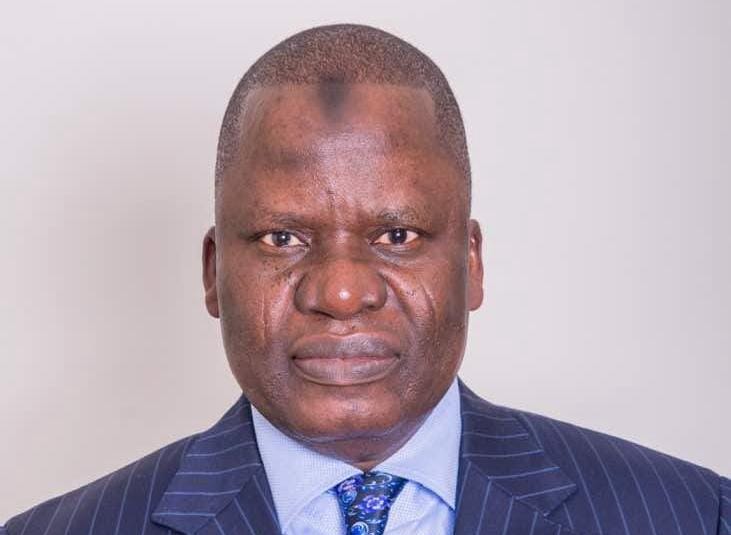
By S. A. Ndanusa, PhD, OON
Nigeria may be sitting on a second treasury.
It is not kept in one building, and much of it is not even held in cash. It is scattered across government owned companies, equity investments, land and buildings, oil and mineral rights, telecommunications spectrum, concessions, licences, airports, ports, rail corridors, intellectual property and thousands of public services for which fees are collected.
The curious thing is that government may know more about the turnover of a small business than it knows about the value and performance of some of its own assets. The tax authority increasingly wants to know what the citizen earns, where the money came from and whether the correct amount has been paid. That is fair enough. But the citizen is equally entitled to ask government: What do you own? What does it earn? Who is using it? What should they be paying? And where is the money?
That conversation takes us beyond taxation.
Nigeria’s recent fiscal reforms have understandably concentrated on taxes. New tax laws have been enacted, revenue administration has been reorganised, exemptions are being reviewed and the tax base is being widened. The declared intention is to build a simpler and fairer system that protects low income earners and small businesses while improving public revenue.
But taxation is only one way in which a government earns money. A state can also receive dividends from companies in which it owns shares; operating surpluses from public corporations; royalties from oil, gas and minerals; licence and spectrum fees; rent from land and buildings; concession payments from public infrastructure; interest and investment income; and properly priced charges for identifiable public services.
These are broadly described as nontax revenues. They arise not from government’s power to tax income or transactions, but from its position as owner, shareholder, regulator, licensor, investor, concession grantor or provider of a particular service.
The distinction is important. A tax is paid because the law requires citizens and businesses to contribute towards the general cost of government. Non-tax revenue should normally represent payment for the use of a public asset, access to a scarce public right, the commercial return on a public investment or the cost of a specific service.
Unfortunately, the boundary can become blurred. If every ministry, department, regulator, local council and uniformed agency invents a new charge, non-tax revenue quickly becomes taxation wearing a different name tag. The citizen who has already paid tax may then be charged again for forms, certificates, stickers, permits, inspections, endorsements and services that sometimes exist mainly to justify the fee.
That is not the reform being proposed here.
The objective is not to send more collectors into the streets. It is to make government a better owner of what it already possesses.
Nigeria’s need is urgent. The Federal Ministry of Finance indicates that the 2026 federal budget of ₦68.32 trillion is set against projected revenue of ₦36.87 trillion, leaving a substantial financing gap. Tax reform can help narrow that gap, but there are practical and political limits to how much can be raised from households and businesses already adjusting to inflation, higher energy costs and difficult operating conditions.
The next revenue frontier must therefore include a disciplined search inside government’s own balance sheet.
There has already been progress. The Federal Ministry of Finance recently reported about ₦3.125 trillion in incremental independent revenue between 2023 and 2025, principally from remittances by government owned entities. That is significant. It demonstrates that improved oversight and collection can produce substantial revenue without imposing a new tax on citizens.
The Ministry of Finance Incorporated has also begun developing a National Assets Register covering federal corporate holdings, concessions, real estate, infrastructure, energy assets, solid minerals, financial investments and other public property. This is a foundational reform because government cannot manage, protect or earn a return from assets it has not fully identified and valued.
But identifying the assets is only the beginning. A register tells us what government owns. It does not by itself tell us whether the asset should be retained, leased, concessioned, restructured, sold or put to more productive public use.
The reform must begin by changing government’s attitude from passive ownership to active stewardship.
For many years, government ownership has been treated as an administrative fact rather than an economic responsibility. Ministries supervise agencies, officials sit on boards, annual budgets are prepared and accounts are eventually submitted. Yet the central questions are not always asked with sufficient discipline: Why does government still own this enterprise? What public purpose does it serve? What return should it produce? What capital does it require? What risks is it creating for the Treasury? And who is accountable when performance falls below expectation?
Every government owned enterprise should first be classified according to its real purpose.
Some are genuinely commercial and should earn profits, pay dividends and grow in value. Others provide essential public services that may never be fully commercial. Some combine commercial activity with regulatory responsibilities, an arrangement that can create conflicts. Others have outlived the purpose for which they were established but continue to retain staff, assets and budget lines.
One financial template should not be applied blindly to all of them. A commercial enterprise, a regulatory agency and a social service institution should not be judged by exactly the same standard.
Commercial enterprises should operate under clear performance contracts covering profitability, service quality, investment, debt, governance, dividends and risk. Their boards should be selected for competence and held accountable for results. Executives should not receive performance bonuses when the only impressive performance is the size of the subsidy received from government.
Enterprises that provide public services below commercial cost should also have performance contracts, but their public service obligations must be clearly defined and costed. If government directs an enterprise to provide a service at a subsidised price, the cost should be transparent. Otherwise, inefficiency and social policy become mixed together in the accounts, and nobody can tell which one produced the loss.
The Fiscal Responsibility Act already requires scheduled government corporations to maintain only a limited reserve and remit the balance of their operating surplus to the Consolidated Revenue Fund. This is commonly understood as the requirement to remit 80 per cent of operating surplus.
The principle is sound: a public institution should not collect government revenue, deduct whatever it chooses to spend and remit whatever remains.
But the calculation of operating surplus must be credible. An entity can report very little surplus if costs are allowed to expand conveniently. Revenue may rise while travel, consultancy, vehicles, headquarters projects, allowances and other expenses rise alongside it. Government then celebrates gross collections while the Treasury receives the financial leftovers.
The solution is not simply to demand 80 per cent of an unreliable number. It is to scrutinise the number itself.
Government owned entities should operate with approved cost ceilings, independently audited accounts and common rules for determining allowable expenditure. Their revenue, expenditure and remittances should be reconciled digitally among the entity, Office of the Accountant-General, Budget Office and Fiscal Responsibility Commission.
For commercial enterprises, Nigeria also needs a clear national dividend policy. A company may sometimes need to retain part of its profit to finance growth or protect its balance sheet. But retained earnings should be based on an approved investment plan, not the natural preference of every institution to keep as much money as possible.
Singapore’s Temasek, for example, applies a dividend policy that balances distributions to its shareholder with the retention of earnings for future investment and long term value. The lesson is not that Nigeria should copy Singapore mechanically. It is that the government, as shareholder, should know what return it expects and why.
Nigeria should also review the practice of percentage based cost of collection deductions. Collection costs should reflect the reasonable cost of running an efficient agency, not automatically rise because the value of revenue collected has increased.
Technology can cause collections to grow dramatically without an equivalent rise in administrative costs. If an agency receives a fixed percentage of a rapidly expanding revenue stream, its funding may become disconnected from its operational needs. It can then become wealthier than the ministry supervising it and occasionally more comfortable than the sector it regulates.
Revenue agencies and regulators should be funded through needs based budgets linked to approved functions, service standards and investment plans. Any retention of revenue should be transparent, capped and subject to appropriation.
Natural resources provide another major source of non tax revenue. Nigeria earns royalties, rents, licence fees and other payments from petroleum and solid minerals. The challenge is not only setting the correct rates. Government must know the volume produced, the value sold, the amount due and whether it was paid into the correct account at the correct time.
In the petroleum sector, the Nigerian Upstream Petroleum Regulatory Commission has developed systems for monitoring production and determining royalties. Its National Production Monitoring System is intended to obtain production and export information directly and electronically, replacing dependence on paper based reports submitted by operators.
This is the correct direction. The government’s revenue demand should be generated from independently verified production data, market prices, contractual terms and applicable royalty rates. Metering, production monitoring, export records, invoices and Treasury receipts must speak to one another digitally. The barrels should not have one story at the production point and another by the time they reach the Federation Account.
The same discipline is required in solid minerals. Mining titles, production volumes, royalties, environmental obligations and exports should be connected through a shared platform. A country cannot maximize mineral revenue when it knows who holds a licence but cannot confidently determine what has been extracted under it.
Nigeria must avoid another danger: raising royalties and licence fees so aggressively that lawful operators are driven out while illegal operators flourish. The best rate is not always the highest rate on paper. It is the rate that fairly compensates the public, attracts credible investment, encourages compliance and produces the highest sustainable value over time.
The same principle applies to telecommunications spectrum. Spectrum is a scarce national asset. Competitive auctions can produce substantial public revenue, as Nigeria’s past spectrum auctions have shown. But the objective should not be to extract the highest possible upfront payment without regard to coverage, affordability, investment and service quality.
If a telecommunications company pays an excessive price merely to enter the market, the cost may eventually reappear in consumer tariffs or reduced network investment. Government would have collected more from the operator only for the citizen to receive the bill indirectly.
Scarce public rights should therefore be priced transparently and competitively, but the auction design must balance revenue with wider economic value. The government’s aim should be to maximise national benefit, not simply the size of the ceremonial cheque.
Public land and buildings present an equally important opportunity. The Federal Government owns extensive real estate within Nigeria and abroad. Some properties are productive, some are underutilised, some are poorly documented and others may be occupied on leases that no longer reflect commercial value.
A complete property register should show title, location, condition, present use, occupant, market value, rental income and maintenance cost. Underutilised properties can be consolidated, leased, redeveloped or converted to more productive uses. Government institutions occupying premium property without operational necessity may be relocated where the value released exceeds the cost.
But asset optimisation should not become a hurried clearance sale. Public property must be independently valued, competitively offered and protected from transactions designed primarily to transfer public wealth to well connected buyers.
Sale is only one option. In many cases, a long lease, joint development or concession may preserve public ownership while creating a recurring income stream. The aim is not to sell the family house to pay for dinner. It is to make the property contribute more intelligently to the wellbeing of the family.
Concessions and public private partnerships can also unlock value from airports, ports, roads, rail terminals, silos, markets and other infrastructure. A well designed concession can mobilise private capital, improve service quality and provide government with concession fees or revenue sharing.
A badly designed concession can produce the opposite: private profit, public risk and years of litigation.
Every concession should therefore pass tests of public interest, value for money, affordability, competitive selection and appropriate risk allocation. Government must have the capacity to monitor the agreement after it has been signed. The most elegant concession contract is of little value if nobody checks whether the operator is meeting investment, service and revenue sharing obligations.
Concession fees should also be distinguished from taxes. They represent payment for the right to operate or earn from a public asset. The fee must be derived from a credible business case, not an arbitrary revenue target imposed after the investment has been made.
One off privatization and concession receipts require special treatment. They may provide immediate cash, but they are not recurring income. Selling an asset increases revenue today while removing that asset from tomorrow’s balance sheet.
Proceeds from major asset sales should therefore be used principally for debt reduction, new productive investment or the rehabilitation of other public assets. Using privatization proceeds to finance salaries and routine administration is equivalent to selling the furniture to pay the electricity bill. The room may remain bright for the evening, but it will be emptier in the morning.
Nigeria also possesses less visible assets. Government controls data, intellectual property, commercial names, rights of way, satellite slots and emerging environmental assets such as carbon credits. These may become increasingly valuable, but they require careful legal and governance frameworks.
Public data should not be commercialised in ways that compromise privacy, security or access to essential services. Carbon credits must be based on verifiable environmental benefits and clear ownership rights. Government should not sell the same carbon reduction twice or discover, after the transaction, that the affected community was not part of the conversation.
The principle should remain consistent: new revenue must not be pursued by quietly transferring public rights without transparency and public value.
Administrative charges also deserve reform. Passports, permits, registrations, inspections and certifications have legitimate costs. It is reasonable for users to bear some or all of those costs, particularly where the service provides a direct private benefit.
But every fee should have a legal basis, a clearly identified service and a transparent method of calculation. A ministry or agency should not create a new charge merely because its budget is tight. The power to regulate is not a licence to improvise revenue.
Before any administrative fee is introduced or increased, government should ask what the service actually costs, how efficiently it is being provided, whether the fee duplicates another charge and whether vulnerable users require protection. Fees should also be reviewed periodically; inflation may render some outdated, while technology may reduce the cost of delivering others.
Digital delivery should normally make services cheaper and faster. It should not simply add a technology charge, platform charge, convenience charge and processing charge to the fee the citizen was already paying.
Fines and penalties present an even clearer boundary. They exist to deter misconduct, not to finance government. A road safety agency, environmental regulator or market supervisor should not be assessed primarily by how much it collects in penalties. If compliance improves, fine revenue should fall and that should be regarded as success.
Once fines become budget targets, the regulator develops an unhealthy financial interest in the continuation of violations. Enforcement then risks becoming a revenue hunt rather than a means of correcting behaviour.
Nigeria therefore needs a National Non-Tax Revenue Strategy built around four different roles of the state: government as owner, government as custodian of natural and scarce public rights, government as provider of specific services, and government as enforcer of the law.
These roles should not be mixed carelessly.
The strategy should begin with a comprehensive register of revenue bearing rights and assets. MOFI’s National Assets Register provides an important foundation, but it should be connected to registers of licences, mineral titles, spectrum assignments, concessions, leases, public service charges and government equity interests.
Every revenue bearing asset or right should have a unique digital identity showing the responsible institution, legal basis, valuation method, amount due, payment schedule, exemptions granted and actual receipts.
Nigeria does not necessarily need one institution to collect every form of non tax revenue. A petroleum regulator must still assess petroleum royalties; the communications regulator must administer spectrum; and the relevant service agency must confirm that a licence or service has been delivered.
What the country needs is one reliable revenue picture.
MOFI should exercise professional ownership oversight over federal commercial assets and investments. Sector regulators should assess charges arising from their technical mandates. The Fiscal Responsibility Commission should monitor operating surplus calculations and remittance compliance. The Budget Office should prepare realistic forecasts. The Accountant-General should control collection accounts, reconcile receipts and report cash performance. The Revenue Mobilisation Allocation and Fiscal Commission should exercise its constitutional monitoring responsibilities over revenues accruing to the Federation Account.
Clear roles are important because fragmented responsibility can become fragmented accountability. When five institutions are involved in a revenue stream, it sometimes becomes remarkably difficult to identify the one responsible when the money is missing.
An integrated non tax revenue platform should connect assessment, electronic invoicing, payment, reconciliation and reporting. Cash collection should disappear. Every payer should receive a government generated invoice with a unique reference. Every payment should flow directly into the designated Treasury account. Every licence, permit or concession should be activated only after payment has been confirmed electronically.
The system should also flag arrears, unusual exemptions, changes in rates and unexplained differences between operational activity and reported revenue. If an agency reports issuing one thousand permits but the Treasury records payment for six hundred, the discrepancy should appear immediately not three years later in an audit report.
Revenue forecasts must also become more realistic. Non tax revenue should not be used as the convenient balancing figure that closes an uncomfortable budget gap. An ambitious target unsupported by asset performance, production volumes, legally collectible fees or historical trends is not a revenue forecast. It is a wish wearing a spreadsheet.
Performance should be assessed against both gross and net revenue. A programme that generates ₦100 billion but costs ₦90 billion to operate has not made the same contribution as one that generates ₦100 billion at a cost of ₦10 billion. The public should see the cost of collecting and generating each major revenue stream.
Transparency should extend to exemptions, waivers and discounts. Some may be economically justified, but every concession granted to one party is revenue forgone by the public. The legal authority, beneficiary, duration and estimated value should be disclosed, subject to legitimate commercial or security limitations.
International experience provides useful principles. Singapore demonstrates the value of professionally managing government investments with clear commercial objectives and dividend policies. Ghana’s State Interests and Governance Authority uses annual performance contracts to supervise state entities. The United Kingdom has consolidated substantial parts of its government property portfolio under professional management to improve utilisation and taxpayer value.
Nigeria should not import any of these arrangements wholesale. Our Constitution, federal structure and institutional history are different. But the underlying lessons travel well: know what the state owns, separate ownership from political interference, set performance expectations, publish results and impose consequences.
The reforms must also extend to states and local governments. Subnational authorities own land, markets, motor parks, water assets, commercial enterprises and other properties capable of producing legitimate revenue. Many, however, rely too heavily on multiple levies and informal collection.
The better approach is to build asset registers, professionalise enterprise management, digitise collections, consolidate charges and eliminate cash based roadside enforcement. A state should earn more from a well managed market, transport terminal or property portfolio than from dispatching several groups of collectors to pursue the same trader.
This is where the warning in the title becomes important. Non-tax revenue reform must not tax the citizen twice.
The first test of every proposed charge should be whether it represents payment for a real service, asset or right. The second should be whether that service is delivered efficiently. The third should be whether the same citizen has already paid another agency for substantially the same purpose.
Government should publish a harmonised schedule of approved fees and charges. Any levy outside that schedule should be presumed unauthorised. Citizens and businesses should be able to verify a charge digitally before paying it and report an unlawful demand without having to negotiate with the same agency making the demand.
The political economy will not be easy. Some agencies regard internally generated revenue as their private financial territory. Ministries may resist surrendering control of valuable assets. Boards may prefer weak performance targets. Occupants of public property may resist commercial rent. Beneficiaries of old concessions may oppose revaluation. Informal collectors will not voluntarily retire from a profitable occupation.
Reform therefore requires presidential authority, legislative support and consistent Treasury enforcement. But it must also protect legitimate institutional needs. Agencies should receive predictable, needs based funding so that they do not recreate informal charges out of desperation after their revenues have been centralised.
The ultimate objective is not merely to collect more. It is to improve the management of the national balance sheet.
Nigeria should be able to publish an annual Statement of Public Wealth showing the value and performance of major government assets, dividends received, operating surpluses remitted, concessions granted, royalties earned, properties leased, assets sold and fiscal risks arising from government enterprises.
That statement should sit beside the annual budget. The budget tells citizens what government intends to earn and spend during the year. The public wealth statement would tell them what the country owns, how that wealth is being managed and whether it is growing or declining.
This would change the fiscal conversation. Government would no longer appear only as a collector of taxes and borrower of money. It would also be judged as an owner, investor and steward of the commonwealth.
Nigeria certainly needs a stronger tax system. Taxes remain indispensable to stable government. But the legitimacy of asking citizens to contribute more will be strengthened when government demonstrates that it is earning a proper return from its own companies, assets, licences and natural resources.
The country’s revenue problem cannot be solved by repeatedly returning to the same taxpayers with a larger bowl.
Sometimes the money is not missing from the economy. It is sleeping in an idle government property, trapped in an underperforming enterprise, understated in a royalty assessment, lost in an obsolete concession, consumed before remittance or hiding inside an agency’s generous definition of operating cost.
The next great revenue reform should therefore begin not at the citizen’s door, but inside government’s own house.
Before asking Nigerians for more, the state must first account for and make productive what Nigerians already own.
Suleyman A. Ndanusa, PhD, OON, is an economist, lawyer, strategic studies scholar, and public policy thinker and practitioner with extensive experience in financial markets, regulation, governance, national Security and development.