

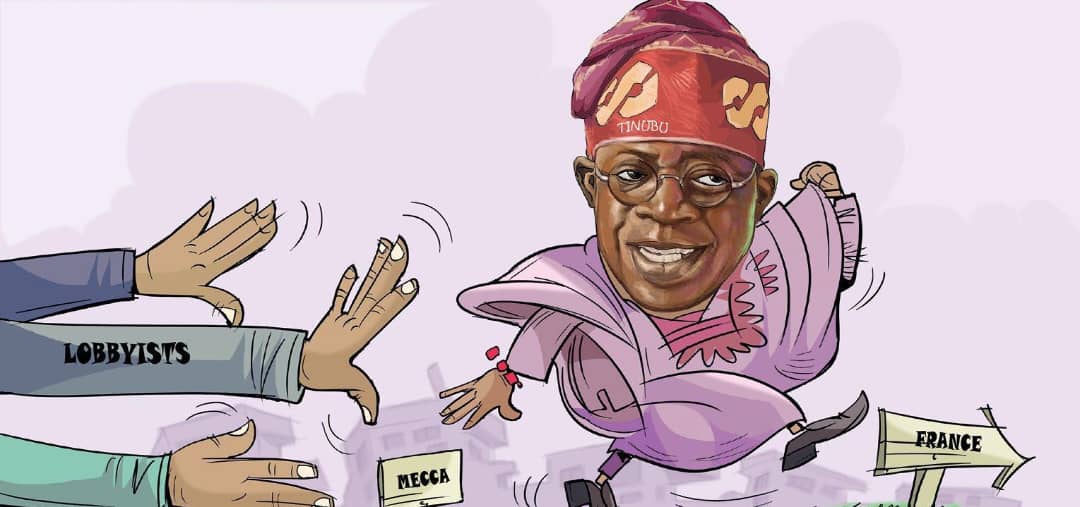
When President Bola Ahmed Tinubu took the oath of office on May 29, 2023, his first major policy pronouncement was as abrupt as it was consequential: “Fuel subsidy is gone.” Those four words instantly ended a decades-old practice of cushioning petroleum prices through government subsidies.
For years, economists, international financial institutions, and reform advocates had argued that the subsidy was unsustainable, wasteful, and riddled with corruption. Tinubu’s supporters hailed the move as a bold, necessary step toward economic restructuring. Yet, over two years later, the ordinary Nigerian – struggling under the weight of spiraling costs – is yet to see the promised relief.
The pain is not abstract; it is daily, measurable, and relentless. Petrol prices more than tripled almost overnight, triggering a chain reaction across the economy. Transport fares surged, the price of food staples soared, and small businesses reliant on fuel-powered generators found themselves gasping for breath. Inflation, already troubling before the subsidy removal, shot into dangerous territory, eroding purchasing power and pushing millions deeper into poverty.
Tinubu’s defenders argue that subsidy removal was inevitable. Indeed, successive governments had flirted with the idea, each retreating under public pressure. Nigeria, they contend, was hemorrhaging billions of naira annually – funds that could have been directed toward infrastructure, healthcare, and education. The subsidy, critics say, disproportionately benefited the wealthy and fuel smugglers, not the poor it purported to protect. On paper, this reasoning is sound. But sound theory does not feed a hungry family or keep a commuter’s fare within reach of her wages.
What has turned justified economic reform into a social crisis is not merely the decision itself but the absence of a robust, credible cushioning mechanism. In 2012, when the Jonathan administration attempted a similar removal, the backlash was fierce, culminating in nationwide protests. That episode should have taught a vital lesson: subsidy removal without an immediate, well-funded safety net is political dynamite. Tinubu’s government promised interventions – cash transfers, transport subsidies, and investment in local refining capacity. Yet these measures have been slow, patchy, and opaque in implementation. The result is a widening trust deficit between government and governed.
The government’s narrative has leaned heavily on the promise of long-term gain: savings from subsidy removal will be invested in infrastructure, reviving refineries will reduce import dependency, and market forces will eventually stabilize fuel prices. But the “eventually” has become the masses’ greatest fear. Nigerians have heard similar promises before, often with little to show. In the meantime, the lived reality is that salaries have not risen to match inflation, formal sector jobs remain scarce, and informal workers – the backbone of the economy – are squeezed to breaking point.
A more thoughtful approach could have softened the blow. Phased removal, with clear timelines and communication, might have given households and businesses time to adjust. Targeted subsidies for public transport and agriculture could have slowed the inflationary spiral. Most importantly, transparency in the use of saved funds could have reassured a skeptical public that the sacrifice is not being squandered.
Beyond economics, there is a moral dimension to the crisis. Governance is not only about making hard decisions; it is about sharing in the burden of those decisions. Yet the perception persists that the political elite remains insulated from the hardships gripping the streets. That perception was only reinforced when the United States Embassy in Nigeria recently alleged that the federal government and several state governors were spending billions of naira on constructing and renovating official residences and offices – even as citizens are urged to “tighten their belts.” Such revelations make the government’s call for sacrifice appear one-sided and deepen public resentment.
Solidarity cannot be preached; it must be demonstrated. Nigerians are resilient, but resilience has its limits. If the government expects the public to endure short-term pain for long-term gain, it must first prove that the gains will indeed materialize and be shared equitably.
President Tinubu still has an opportunity to turn the tide. Fast-tracking the rehabilitation of refineries, diversifying the energy mix to include affordable alternatives, and rolling out well-monitored social safety programs can begin to rebuild confidence. Equally critical is the need for the political class to cut its own excesses, signaling that sacrifice is not the exclusive preserve of the poor.
The removal of fuel subsidy could, in the long run, be a cornerstone of Nigeria’s economic transformation. But as it stands, it has become a symbol of widening inequality and governmental detachment from grassroots realities. Without urgent, people-centered action, the policy risks being remembered not as the moment Nigeria began to rebuild, but as the moment the social contract frayed beyond repair.