


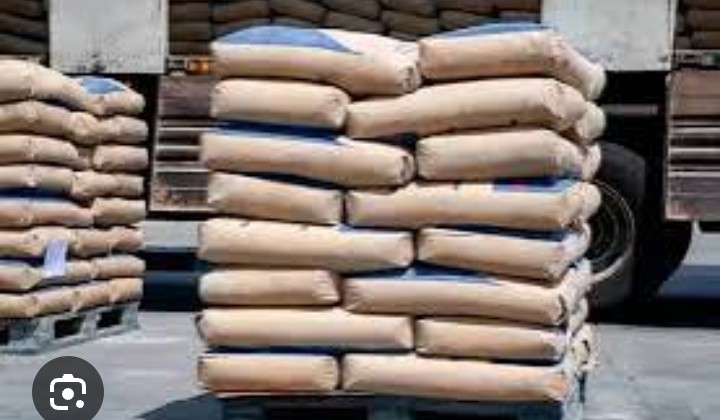
The Federal Competition and Consumer Protection Commission (FCCPC) on Tuesday, August 18, disclosed that findings from an industry-wide investigation conducted by it suggested manipulation of prices of cement in the Nigerian market.
It added that in various instances, a bag of cement was sold as high as N15,000 in some parts of the country, which corroborated its claim of manipulation, especially by one of the cement producers.
It also carried out a comparative analysis of prices of cement in some African countries, showing that even in countries without limestone deposits, prices of bags of cement are cheaper than that of Nigeria that is blessed with huge limestone deposits.
It particularly mentioned Togo, a country that has no limestone deposit where a bag of cement is being sold for N9,180.
The FCCPC said: “The ACP investigations extended to markets in Sub-Saharan Africa like Kenya, Tanzania and South Africa as well as Egypt, Morocco and Algeria.
“Metrics adopted included the availability of limestone, the basic raw material for cement production, as well as other variables such as population, production capacity and consumption.
“In Kenya, for instance, the 58.6 million population (76% lower than Nigeria’s) has domestic cement demand of approximately 9.3m MTPA (metric tonne per annum) in 2025. Retail price in Nairobi is $5.40 (N7,344). Kenya is endowed with limestone.
“In Tanzania, with population of 66.3 million (72% lower than Nigeria’s) and the domestic cement demand is 9.3m MTPA (2025), a bag of cement sells for $4.80 (N6,528).
“In Togo, a bag sells for $6.75 (N9,180). Significantly, Togo does not have limestone deposit.
“Comparatively, in Nigeria, market intelligence reviewed by the commission shows that the retail price of a 50kg bag of cement rose significantly during the first half of 2026.
“A bag reportedly selling for between N9,300 and N9,700 in January sold for between N10,500 and N13,000 by mid-year. By July, prices of between N13,000 and N15,000 were reported in some parts of the country.
“The commission’s survey indicates that Nigeria has installed cement production capacity of more than 60 to 65 million metric tonnes annually, while estimated domestic consumption is approximately 25 to 30 million metric tonnes. Nigeria is also a net exporter of cement to neighbouring markets.
“Of particular concern to the commission is that this level of production capacity has not resulted in the downward pressure on domestic prices that might ordinarily be expected in a competitive market with substantial excess capacity.”
These, the FCCPC said, are the preliminary summation of the 40-page field reports collated following a three-month cross-border study by the Anticompetitive Practices Department (ACP) of the commission, undertaken in response to widespread public complaints over the high cost of cement.
It said during the field work, concerns were raised over the comparatively high retail price of cement in Nigeria compared with other countries in Africa, despite the country’s substantial limestone deposits, significant domestic production capacity and reported surplus installed capacity relative to domestic consumption.