By Nchetachi Chukwuajah
The Academic Staff Union of Universities (ASUU) has outlined what the Federal Government must do to end frequent strike actions by tertiary institution-based unions.
ASUU urged the Federal Government to significantly increase funding for public universities, stressing that proper investment in education is the only sustainable solution to ending frequent strikes and improving Nigeria’s standing in global university rankings.
This was the submission of the ASUU National President, Professor Chris Piwuna, while appearing before the Senate Committee on Tertiary Institutions and TETFund at the National Assembly on Friday, October 17.
Piwuna warned that if the government did not prioritise consistent and adequate funding, the challenges facing higher education in the country would persist.
He also stated that the ongoing two-week warning strike by ASUU was as a result of longstanding issues dating back to 2011 and the government’s failure to honour agreements.
Piwuna said: “We engaged the Federal Government for eight years without tangible results. The Yayale Ahmed Committee report, submitted in December 2024, was ignored until this industrial action began.”
The ASUU president stressed that the union is not backing down from its key demands, which include sustainable funding, improved working conditions, revitalisation of public universities, and academic autonomy.
Piwuna further urged the Senate committee to prevail on the government to increase funding and achieve a turnaround in the global ranking of Nigerian universities.
“Try us. Push the government to fund universities adequately and you’ll see the end of strikes and the improvement of our universities in global rankings,” he said.
Piwuna also touched on funding delays, noting that although the National Assembly approved N150 billion for universities, N50 billion had been released so far.
He added that the released amount has, however, remained stuck at the Ministry of Education, where the minister allegedly intends to share it among universities, polytechnics, and colleges of education, despite separate allocations for those institutions.
Piwuna cautioned that the N150 billion approved specifically for universities must be used for the intended purpose.
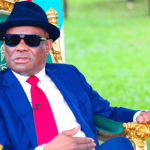
During the meeting with the Senate Committee, the ASUU president raised alarm over attempts by the Minister of the Federal Capital Territory, Nyesom Wike, to allegedly encroach on a portion of the 10,000 hectares of land belonging to the University of Abuja.
He said: “We are worried because the University of Abuja is located in the FCT. Anyone serious about higher education should be focused on developing it. If the minister wants land, he should look in the opposite direction.
“The university has over 10,000 hectares of land. Despite repeated calls, the FCT minister continues to show interest in acquiring part of it.
“We appeal to the Senate to intervene and prevail on the minister to leave the university land alone.”
Recall that ASUU, on Monday, October 13, declared a two-week warning strike to protest the government’s failure to honour agreements reached with the union.
Among the union’s demands are improvement in the work conditions of lecturers, the 2009 FGN-ASUU agreement, the release of withheld salaries, and sustainable funding for the revitalisation of public universities.
However, the government, through the Minister of Education, Tunji Alausa, said it had addressed all demands by ASUU and was open to continued negotiation to avert the strike.
The Federal Government consequently imposed the no-work-no-pay policy on striking members of the union.