By Nchetachi Chukwuajah
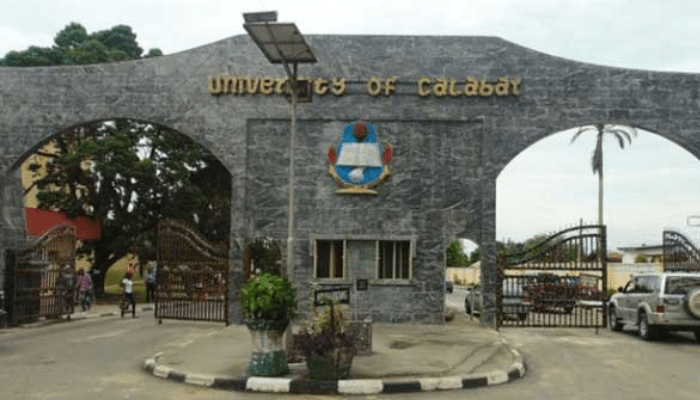
Nigerians have reacted to the ruling of the Federal High Court in Calabar, Cross River State, which ordered the University of Calabar to pay N55 million in damages to eight ex-students admitted into the institution’s unaccredited engineering programmes in 2021.
Delivering judgment in the case, Justice Rosemary Dugbo-Oghoghorie described the university’s conduct as “fraudulent, reckless and deceitful.”
The judgment has brought to an end a five-year legal tussle instituted in 2021 by Idiong Godwin and seven other students, referred to as the “UNICAL 8.”
Those listed as defendants in the suit are: the University of Calabar; its former Vice Chancellor, Florence Obi; and four other individuals.
In their reactions to the news on some social media platforms, some Nigerians noted that the judgment was well-deserved and expressed satisfaction that justice had been served in the matter.
While some decried the years the students lost due to the non-accreditation of their programmes, others faulted the amount awarded by the court, saying that it does not equate the losses suffered by the ex-students.
In his tweet on X (formerly Twitter), @ChiedozieOnyeke said, “Wonderful. You can’t just waste young people’s lives because you know there will be no consequences.”
@ann_oma58727 tweeted, “55 million naira. That’s a huge win for these engineering students. Well deserved, finally justice won in Nigeria.”
@Stankeyade01 said, “Na wa o! UniCal collect money full, collect school fees, collect hope, collect 5 years of life. Now dem go pay 55M. Wetin be this? Make them pay the boys make dem hustle abroad abeg.”
@P_Abuo wrote, “This is a great development. A lot of my friends had their lives stalled because of this. UNICAL has become a place where they treat students like trash.”
@WEmemobong added, “Finally. Other affected students moved on, but the Unical 8 didn’t back down. Justice favoured the common man this time. Wickedness!! How could they intentionally extort money, years, hope from students and leave them stranded without conscience?”
On Facebook, Eze Luke Uche wrote, “Nice one, but that money is small.”
Others, however, expressed pessimism about the institution’s willingness to pay the ex-students the awarded amount.
@Mrboorish, one of the people with this viewpoint, wrote, “This school will still find it hard to pay. If I were the judge, I’ll add N5 million every day they refuse to pay damages to students.”
@Olori_Seun1 added, “We all know they won’t pay and the court won’t do anything.”
@deveed1 said, “They still won’t pay. Another round of court battles again.”
The students took the legal path upon discovering that the engineering programmes into which they had been admitted were not accredited by the National Universities Commission (NUC) and the Council for the Regulation of Engineering in Nigeria (COREN).
They noted that the university presented the programmes as “fully operational” in its faculty handbooks and public representations.
According to the plaintiffs, the NUC, during a resource verification exercise, directed them to revert to 200 level because the courses were not accredited after they had progressed to their third and fourth year, paid their fees, and completed examinations.
The students also stated that some departments were later discontinued entirely, leaving them stranded academically.
The university, in its defence, argued that accreditation follows a process and claimed the students were aware of the circumstances when they enrolled, arguing that the students acted of their own choice.
However, Justice Dugbo-Oghoghorie held that the university failed in its duty of care and ruled that no institution should run an academic programme without prior approval from the NUC.
The court further noted that students ought to have been properly informed of the accreditation status before admission.
According to Dugbo-Oghoghorie, full accreditation for the programmes was only obtained in the 2024/2025 academic session, long after the affected students were expected to graduate.
The judge consequently awarded N50 million in general damages and N5.2 million in special damages, citing the psychological distress and academic setback suffered by the plaintiffs.
The court also refused the motion to halt programmes in the faculty of engineering, noting that evidence before it showed that accreditation has now been secured.
It also declined the prayer to return the students to their former departments because events had overtaken the request, particularly with the discontinuation of some departments.