


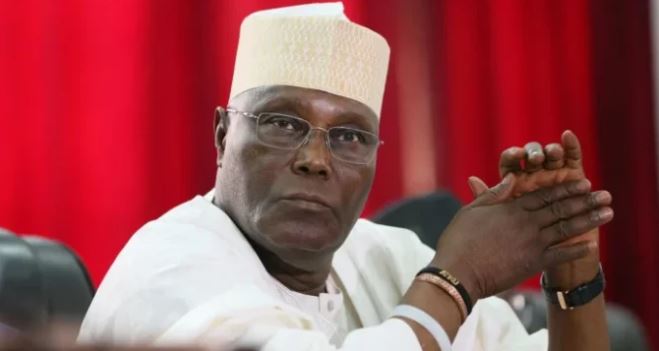
Former Vice President Atiku Abubakar has formally resigned from the Peoples Democratic Party (PDP), citing the party’s deviation from its original values as the reason for his exit. His resignation marks a dramatic turning point in Nigerian opposition politics and adds momentum to the growing realignment ahead of the 2027 general elections.
In a letter dated July 14, 2025, and addressed to the PDP Ward Chairman in Jada Local Government Area, Adamawa State, Atiku expressed deep disappointment with the party’s current direction. “I find it necessary to part ways due to the current trajectory the Party has taken, which I believe diverges from the foundational principles we stood for,” he wrote.
The letter, which he signed personally, reflects both gratitude and frustration. Atiku acknowledged the opportunities the PDP gave him — notably, serving two terms as Vice President and contesting the presidency twice under its banner. “It is with a heavy heart that I resign, recognizing the irreconcilable differences that have emerged,” he stated, calling the decision “heartbreaking” as a founding father of the party.
Atiku is now a key member of the emerging opposition coalition, which includes other political heavyweights such as former APC Chairman John Odigie-Oyegun, who recently joined the African Democratic Congress (ADC). His departure further weakens the PDP, already grappling with internal divisions, and intensifies speculation about a broader coalition being formed to challenge both the ruling APC and what many see as the faltering state of Nigeria’s traditional opposition.
Though Atiku has yet to officially declare his next political move, his alignment with the opposition coalition signals a clear intent to remain active on the national stage. His exit from the PDP – an institution he helped build – could reshape the political landscape and spark a new era of political realignment in Nigeria.