By Nchetachi Chukwuajah
The Nigeria Labour Congress (NLC) has given the Federal Government a four-week ultimatum to conclude negotiations with all tertiary institutions-based unions so as to curb persistent strike actions in the tertiary education sector.
The NLC also condemned the government’s no-work-no-pay policy introduced as a form of sanction to striking members of the Academic Staff Union of Universities (ASUU).
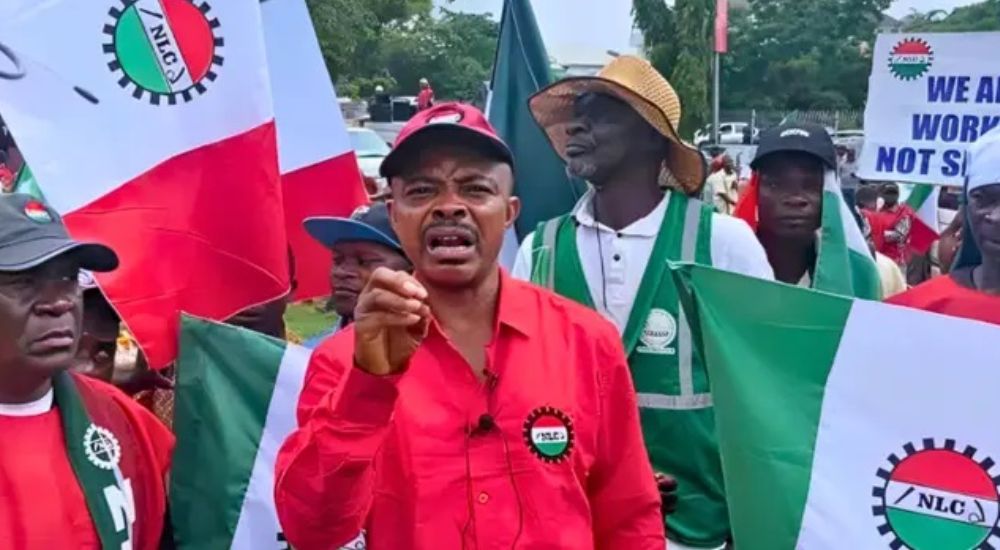
NLC president, Joe Ajaero, stated this during an interactive session with journalists, following a meeting between the NLC and leaders of tertiary institutions’ based unions at the NLC headquarters in Abuja, on Monday, October 20.
Ajaero added that if the negotiations are not concluded at the expiration of the four weeks ultimatum, the NLC will embark on a nationwide action involving all workers and unions.
He said: “We have decided to give the Federal Government four weeks to conclude all negotiations in this sector. They have started talks with ASUU but the problem in this sector goes beyond ASUU.
“That is why we are extending this to four weeks. If after four weeks this negotiation is not concluded, the organs of the NEC will meet and take a nationwide action that all workers in the country, all unions in the country will be involved so that we get to the root of all this.
“The era of signing agreements, negotiations and threatening the unions involved, that era has come to an end.
“The policy, the so-called policy of no work, no pay, will henceforth be no pay, no work. You can’t benefit from an action you instigated. We have discovered that most, 90 per cent of strike actions in this country are caused by failure to obey agreements.”
The NLC reiterated its support for ASUU and other tertiary education unions in their demand for workers rights and implementation of agreements entered into with the government, and called for participation from all union leaders.
The emergency meeting is expected to chart the next steps for industrial action and explore strategies to safeguard the welfare of university staff, as well as the quality and continuity of public tertiary education in Nigeria.
Recall that ASUU, on Monday, October 13, declared a two-week warning strike to protest government’s failure to honour agreements reached with the union, following the expiration of a 14-day ultimatum issued to the government on September 28.
Among the union’s demands are improvement in the work conditions of lecturers, the 2009 FGN-ASUU agreement, the release of withheld salaries, and sustainable funding for the revitalisation of public universities.
However, the government, through the Minister of Education, Tunji Alausa, said it had addressed all demands by ASUU, noting that the government had released N50 billion for earned academic allowances and allocated N150 billion in the 2025 budget for a needs assessment to be disbursed in three instalments, saying it was open to continued negotiation to avert the strike.
ASUU, on the other hand, insisted the government’s offers were insufficient and embarked on the two weeks warning strike. The Federal Government consequently imposed the no-work-no-pay policy on striking members of the union.