By Nchetachi Chukwuajah
From time immemorial, citizens have resorted to protests to relay their grievances to the government and the situation is no different in Nigeria.
Long before independence, Nigerians have deployed social and political protests to demand accountability in governance, justice, or reform, sometimes, defying authority.
Though these protests are often not without casualties, their weight and outcomes have left a lasting impression on Nigeria’s history.
As the renewed agitation for the release of the leader of the Indigenous People of Biafra (IPOB), Nnamdi Kanu, takes centre stage in Abuja on Monday, October 20, led by political activist, Omoyele Sowore, Impact Nigeria Newspaper highlights other historic protests in Nigeria.
1. 2020 EndSARS protests
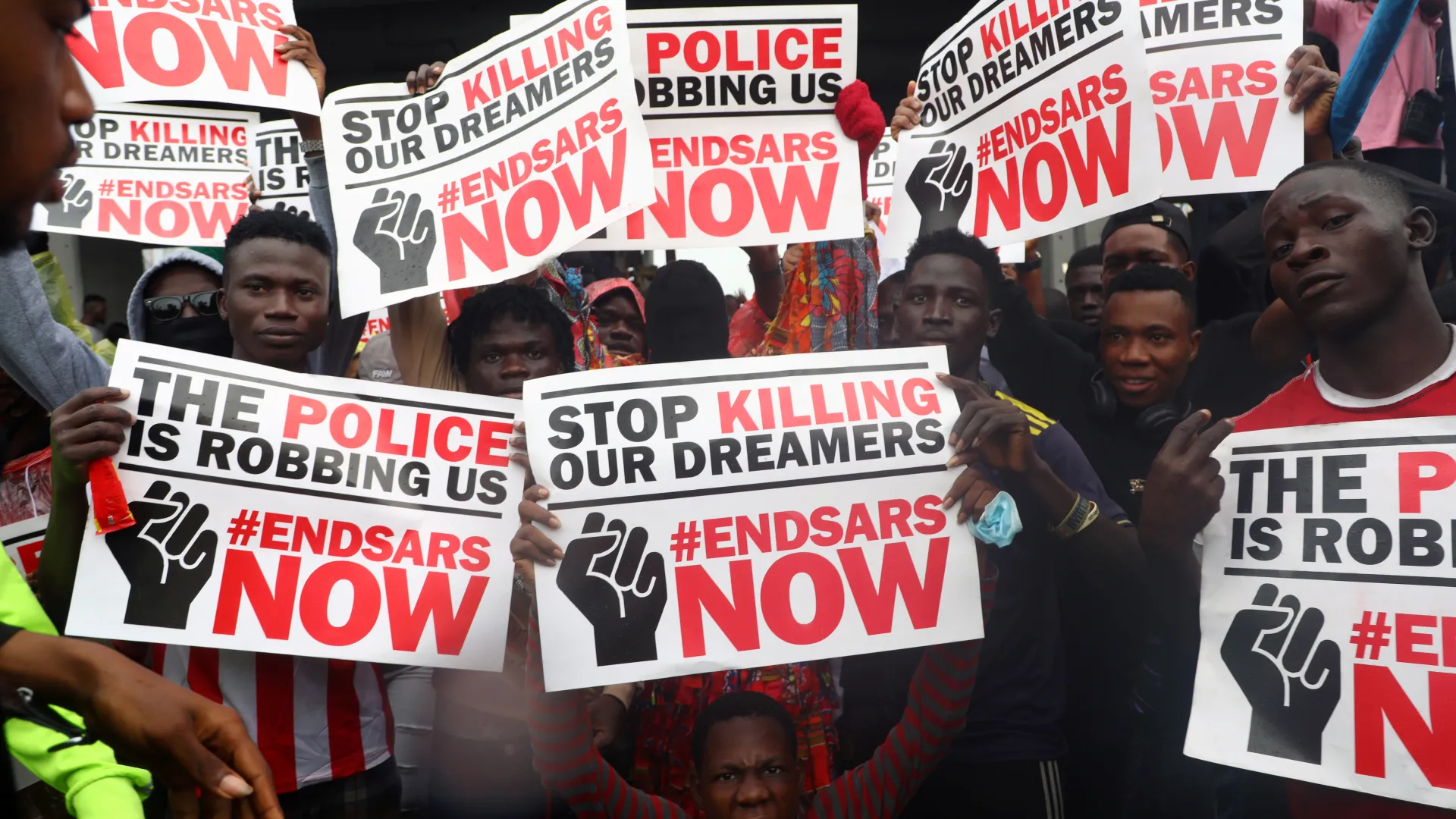
The most recent of these historic protests in Nigeria is the 2020 EndSARS protests following public outcry against the brutality, extortion, and alleged extrajudicial killings by the Nigerian Police Force’s Special Anti-Robbery Squad (SARS).
The protest, triggered by a viral video showing a man allegedly shot by SARS operatives in Ughelli, Delta State, became a nationwide showdown, drawing mass demonstrations across major cities in Nigeria including Lagos, Abuja, Port Harcourt, and Ibadan, while solidarity marches were held in London, Toronto, and Washington D.C.
The decentralised and youth-driven protest was coordinated largely through social media platforms such as X (formerly Twitter) and Instagram under the hashtag, #EndSARS.
The sporadic demonstrations, coming shortly after months of nationwide COVID-19 lockdown, was sustained through crowd funding and volunteer coordination led by civic groups like the Feminist Coalition.
The demonstrations, which began as largely peaceful, was later marred by clashes between protesters, security operatives, and suspected hired thugs, reaching a crescendo on October 20, 2020, when security forces reportedly shot at the peaceful demonstrators at the Lekki Toll Gate in Lagos.
Following pressures in the aftermath of the protest, the Federal Government announced the disbandment of SARS and promised broad police reforms.
2. 2012 Occupy Nigeria protest
Another historic protest in Nigeria is the 2012 Occupy Nigeria protest, which began on January 1, 2012, following the removal of fuel subsidy by the President Goodluck Jonathan’s administration.
The subsidy removal had caused petrol prices to soar from N65 to N141 per litre, subsequently leading to a hike in transport fares and a sharp rise in the cost of food and essential goods.
To express their disagreement with the government’s decision, labour unions and civil society groups organised strikes, rallies, and street demonstrations for nearly two weeks across major cities including Lagos, Abuja, Port Harcourt, and Enugu.
The Occupy Nigeria protest, much like the EndSARS protest, was largely mobilised using social media platforms, marking one of Nigeria’s first major internet-driven mass movements.
With the demonstrations and disruptions caused by protest, the government partially reversed the policy, reducing petrol prices to N97 per litre.
3. 1993 June 12 protests
The June 12 protests followed the annulment of the June 12, 1993 presidential election that is widely regarded as Nigeria’s freest and fairest poll, which was won by Chief Moshood Kashimawo Olawale (MKO) Abiola of the Social Democratic Party (SDP).
Following the announcement by then military ruler, General Ibrahim Babangida, on June 23, 1993, of the nullification of the results of the presidential election, Nigerians took to the streets across the country in protest.
The protests were led by civil society groups, labour unions, and pro-democracy movements such as the Campaign for Democracy and the National Democratic Coalition, demanding that the election results be upheld.
Though most intense in Lagos and other South-West states, the protests was national in outlook, resulting in violent confrontations with security forces and several casualties.
The demonstrations and consistent public pressure eroded the legitimacy of military rule and forced Babangida to “step aside” in August 1993, handing power to an interim government led by Chief Ernest Shonekan.
Until Nigeria’s eventual return to civilian rule in 1999, the June 12 agitations were a regular feature, leading to June 12 being officially recognised as Nigeria’s Democracy Day.
4. 1978 ‘Ali Must Go’ protests
Universities across Nigeria erupted in protest in 1978 following the General Olusegun Obasanjo military government’s decision to increase tuition and feeding fees by 50 Kobo from N1.50 Kobo to N2.00.
The nationwide student protest was led by the National Union of Nigerian Students (NUNS) and its president, Segun Okeowo.
The policy, an informal pact between the government and the academic community, reportedly afforded students from low- and middle-income families to sustain themselves within the university system without facing significant hardship.
The 50 Kobo price increase in the three-meals-per-day meal ticket was viewed as a huge strain on students coping with the fragile economic reality of the time, though the then Federal Military Government saw it as negligible.
The leadership of NUNS led protests against the policy, which saw campuses across the country host meetings, distribute pamphlets, and mobilise students in what became one of Nigeria’s most organised student movements.
The ‘Ali-Must-Go’ themed movement demanded the resignation of Colonel Ahmadu Ali and the students’ rejection of the government’s decision.
The protests began as a peaceful protest and quickly escalated to universities in Ibadan, Ife, Lagos, Zaria, and other cities, as students boycotted lectures, took to the streets, and occupied administrative buildings.
The historic demonstrations turned violent following clashes between security forces and students. The government was forced to review the policy and would later ban NUNS.
5. 1929 Aba Women’s Riot
Under colonial rule in 1929, thousands of Igbo women took to the streets, in what has come to be known as one of Nigeria’s historic protests, against the colonial government’s tax imposition.
The tax imposition threatened the women’s economic independence, traditional authority, and endangered the food supply in their communities.
Unhappy with the government’s policy, thousands of Igbo women gathered at Native Administration centres across southeastern Nigeria by November 1929 to protest against the warrant chiefs and the planned taxation.
The women deployed traditional forms of resistance such as “sitting on a man,” they sang, danced, and mocked corrupt officials, compelling some to step down.
The protests, which lasted for two-months saw an estimated 25,000 women taking part, grew in intensity with women attacking European shops, banks, and colonial courts, several of which were set on fire.
The colonial police opened fire on demonstrators in Calabar and Owerri, killing over 50 women and injuring many others.
The protest forced the British colonial government to cancel the proposed tax and review the Warrant Chiefs system.