


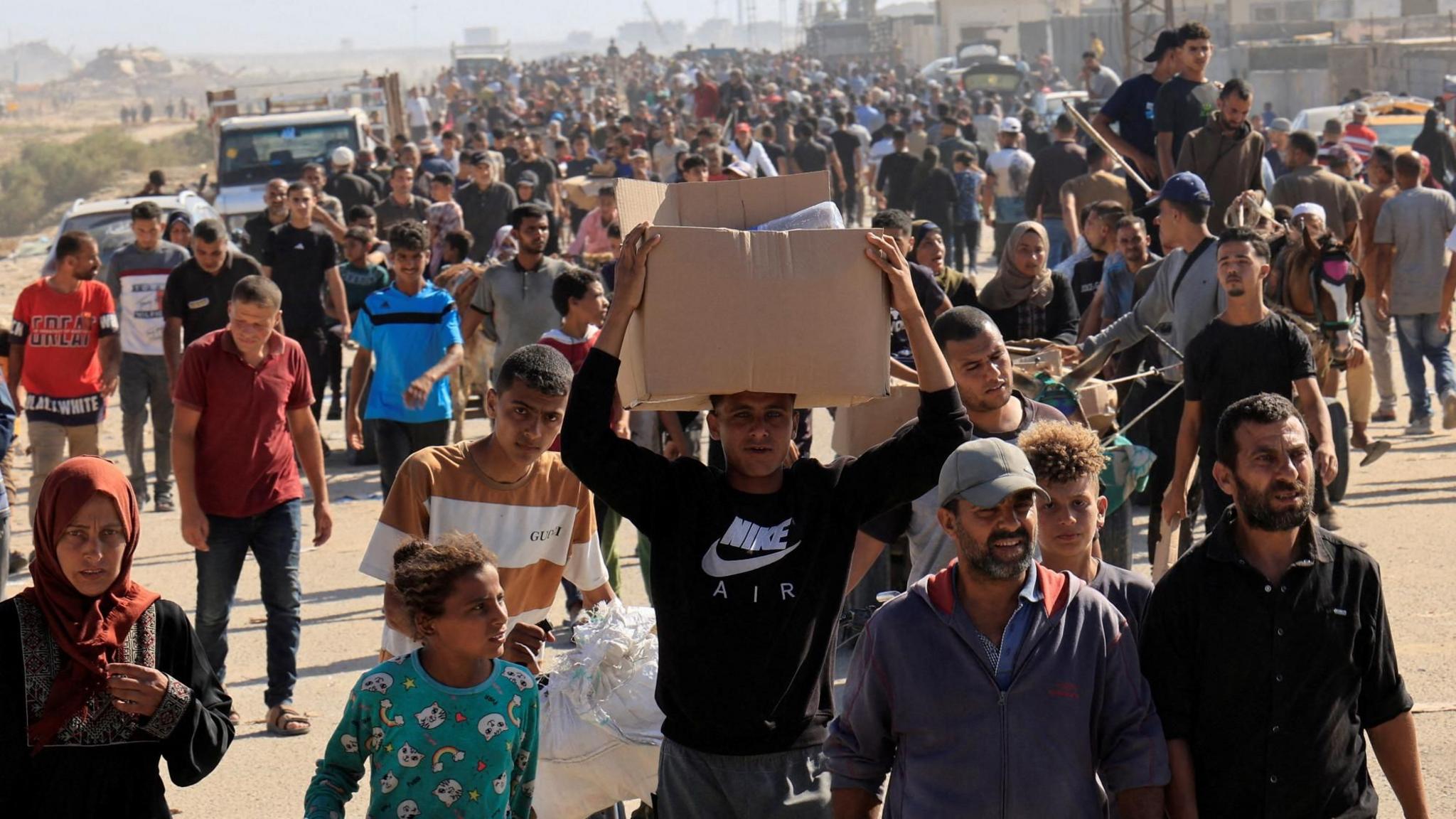
The Gaza Humanitarian Foundation (GHF) suspended food distribution operations in the Gaza Strip on Wednesday following a series of deadly incidents near its aid delivery points.
The pause came amid growing concerns about the safety of both civilians and aid workers after Israeli forces acknowledged firing near one of GHF’s sites in Rafah, a southern city now largely emptied and declared a military zone.
According to reports from the Red Cross and the United Nations, at least 27 people were killed on Tuesday in shootings near GHF distribution hubs.
The Israeli military admitted it had opened fire in the vicinity of the Rafah site but claimed the shots were directed at individuals it described as suspects who had ignored warnings. It denied intentionally targeting civilians and said it is reviewing the reports of civilian casualties.
The killings follow similar incidents on Sunday and Monday, in which an additional 80 people were reportedly killed. In each case, the Israeli military claimed to have fired warning shots to deter crowds.
The United States and Israel have backed the GHF’s distribution model, which was introduced as part of a broader effort to prevent Hamas from diverting aid for military purposes. Israeli and American officials argue the new system is necessary to ensure humanitarian assistance reaches those in need without strengthening Hamas. However, the United Nations has declined to participate in the system, saying it violates core humanitarian principles by giving Israel de facto control over who receives aid and by forcing Palestinians to travel to only three fixed distribution hubs.
UN officials have also pushed back against Israeli and U.S. claims that Hamas has been systematically diverting aid. They insist that existing mechanisms already include safeguards to prevent misuse and warn that the new system risks politicizing humanitarian relief.
Earlier this year, Israel imposed a complete blockade on food and humanitarian supplies entering Gaza for over two months. Restrictions were only eased in May, after repeated warnings from aid organizations and independent experts that the territory faced imminent famine. The recent suspension of GHF operations is expected to further exacerbate the crisis.
Since the beginning of the Israel-Hamas war in October 2023, humanitarian conditions in Gaza have sharply deteriorated. Israel launched a large-scale military offensive following a Hamas-led attack on southern Israel, which killed around 1,200 people, most of them civilians. Militants also took 251 hostages, 58 of whom remain in captivity; 20 are believed to be alive.
Israel has vowed to continue its campaign until Hamas is defeated, disarmed, or exiled, and the remaining hostages are freed. According to the Hamas-run Gaza health ministry, over 54,000 Palestinians have been killed since the war began, though these figures do not distinguish between civilians and fighters. The Israeli military says it has lost 862 soldiers in the conflict.
As GHF negotiates with the Israeli military over improved safety protocols and the possibility of resuming aid, the humanitarian crisis in Gaza continues to deepen, with growing fears that the collapse of food distribution could push the territory closer to mass starvation.