

By Opeyemi Oluwagbemileke
Along the bustling Iyana-Ipaja corridor in Lagos, Raji Rasaki Street – named after the former military governor and Brigadier General – once symbolized the energy of urban life.
Today, however, the street stands as a stark reminder of municipal neglect, buried under heaps of uncollected household waste, used diapers, and plastic debris.
During a recent visit to the area, the environmental degradation was impossible to ignore. Gutters along the stretch were clogged with refuse, sand, and stagnant water. Piles of garbage lined intersections that connect Raji Rasaki to adjoining streets like Olorunto, Idowu Rafiu, Saibu Okoya, Seidu Toriola, Awotedu, and Olaogun. The scale of decay has turned this vibrant community into a makeshift dumpsite.
At Jejeniwa junction, a large pool of murky water – fed by overflowing drains – forced cars, motorcycles, tricycles, and buses to wade through what resembled a shallow lagoon. This flooding occurred despite clear weather, underscoring the severity of blocked drainage. The air was thick with the stench of decay emanating from a nearby canal, raising alarms over the public health risks posed by prolonged exposure to such unsanitary conditions.
Residents blame the Lagos Waste Management Authority (LAWMA) for the worsening situation. According to multiple accounts, LAWMA has not serviced the area since December 2024. “We want to pay, but they don’t come anymore,” one resident said, visibly frustrated. In the agency’s absence, many households have resorted to dumping refuse into gutters during rainfall or burning it in open spaces – practices that further compound environmental hazards.
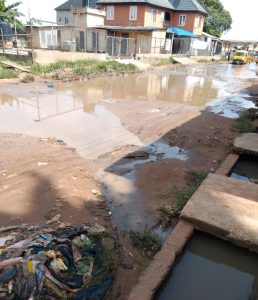
A local landlady expressed dismay over the situation, pointing fingers at both LAWMA and fellow residents who default on payment. “Many are defaulters,” she admitted, “but those of us who are willing to pay are suffering for their sins.” Along the canal’s edge, hardened clumps of waste clung to the banks – a visual reminder of trash swept in by rain and left to fester. These blockages worsen the flooding problem, creating breeding grounds for mosquitoes and increasing the risk of waterborne disease.
The neglect on Raji Rasaki Street is particularly jarring given the Lagos State government’s recent clampdown on environmental offenders. LAWMA has in recent months publicized a number of arrests and prosecutions – including a high-profile case in nearby Egbeda. Yet Raji Rasaki appears to have been forgotten. While residents acknowledge that some neighbors have failed to meet their obligations, they question a policy that seems to penalize compliant households alongside defaulters.
Just a few kilometers away, in communities such as Victor Fagbemi and Hilltop Estate in Aboru, LAWMA operations continue without interruption. Waste is collected on schedule, and streets are relatively clean. The disparity paints a picture of uneven enforcement and delivery of public services, leaving some communities to thrive while others deteriorate.
As the fumes from the blocked canal continue to envelope Raji Rasaki, so too does the threat of disease. Without immediate intervention – both from government agencies and local leadership – the community risks plunging deeper into an environmental and public health crisis.
Residents and community leaders are calling for a coordinated effort: consistent waste collection, enforcement of payment compliance, and emergency drainage clearance. For now, however, Raji Rasaki remains a neighborhood in limbo – caught between civic neglect and institutional inertia.
Whether Lagos will act to restore dignity to the street or allow its decline to continue unchecked remains to be seen.