


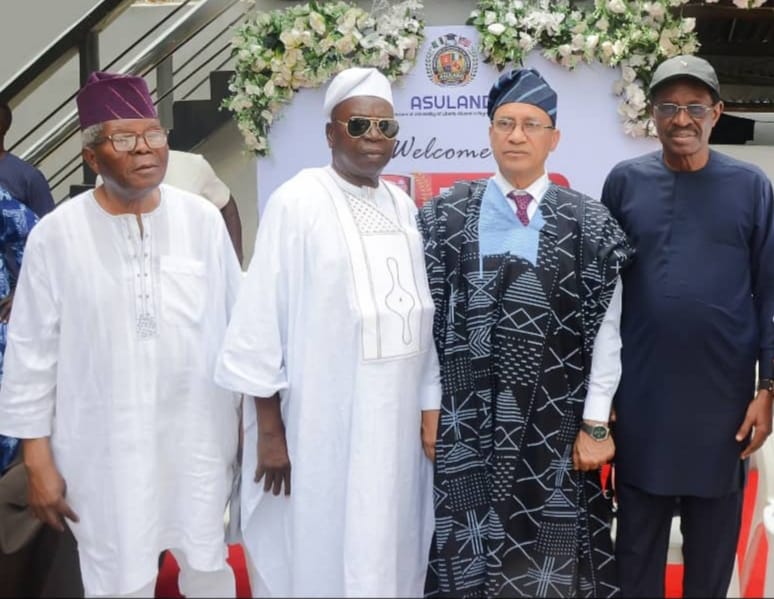
The Liberian Ambassador to Nigeria, John Ballout, has made a strong case for Nigerian investors to take advantage of emerging economic opportunities in Liberia, declaring that the West African nation is “open for business” and ready for strategic partnerships.
He stated this while delivering his keynote address at the 3rd Annual Reunion of the Association of University of Liberia Alumni in Nigeria and Abroad (ASULAND) held over the weekend in Lagos. The envoy framed Liberia’s post-conflict recovery as a foundation for a new era of economic transformation driven by foreign investment, institutional reforms, and regional collaboration.
Ballout emphasized that Liberia’s renewed stability and democratic growth present a compelling case for investment across key sectors of the economy. According to him, the country has transitioned from years of civil unrest into a phase of resilience, with stronger institutions and a more investor-friendly environment.
“Liberia today is a nation renewed. Our democracy continues to grow stronger, our institutions more resilient, and our economy more open to opportunity,” he said.
Central to his message was a deliberate appeal to Nigeria, which he described as Liberia’s most trusted historical partner. Referencing Nigeria’s pivotal role during the Liberian civil crisis, particularly through leadership of the ECOWAS Monitoring Group (ECOMOG), the ambassador said the time had come to translate that legacy of solidarity into economic cooperation.
He singled out the leadership of former Nigerian Head of State, Ibrahim Babangida, noting that Nigeria not only led peacekeeping efforts but also committed significant financial and human resources to restore peace and democracy in Liberia.
“Nigeria did not merely respond. Nigeria led. And even after the guns fell silent, Nigeria remained committed to rebuilding our armed forces and strengthening our democratic institutions,” Ballout said.
In a notable policy signal, the envoy revealed that Liberia is prioritizing Nigerian investors in its economic engagement strategy. He disclosed that he has already communicated to the Liberian government the need to give Nigeria preferential consideration in investment opportunities.
He stated, “My coming to Nigeria is clouded with a huge sense of indebtedness. We ought to present to Nigeria opportunities to invest in Liberia, giving them the first right of refusal before approaching other countries.”
The ambassador identified investment prospects spanning infrastructure, natural resources, agriculture, and human capital development, although he did not list specific projects. He, however, assured that the Liberian Embassy in Abuja is fully prepared to facilitate business entry and partnerships for Nigerian investors.
Ballout also highlighted ongoing cooperation in capacity building, noting that many Liberian military personnel and civil servants continue to benefit from Nigerian training institutions and scholarship programmes. This, he said, reflects a sustained bilateral relationship that extends beyond diplomacy into long-term development collaboration.
Beyond economics, the envoy underscored the importance of people-to-people connections, particularly through alumni networks such as ASULAND, which he described as a bridge for future business and investment linkages.
He expressed optimism that such networks could play a catalytic role in deepening commercial ties between both countries, leveraging shared educational backgrounds and cultural affinities.
Looking ahead, the envoy called for a shift from historical gratitude to forward-looking economic engagement, positioning Liberia as a strategic destination for Nigerian capital seeking regional expansion.
“The story of Liberia and Nigeria is not only of the past, it is a story of the future we must build together.”
In his remarks, President of ASULAND, Kola Abdul, said the association plans to promote investment opportunities in Liberia by organizing an economic summit before the end of the year. The summit, according to him, will bring together Nigerian investors and Liberian government officials to explore viable sectors for investment, following initial engagements with some high-profile companies.
He also revealed that the association is working on a legacy project to support their Alma Mater, University of Liberia by funding and donating a major infrastructure upgrade, with 50 percent of the cost already paid.
By Olusegun Obisanya