


By Desire Emmanuel
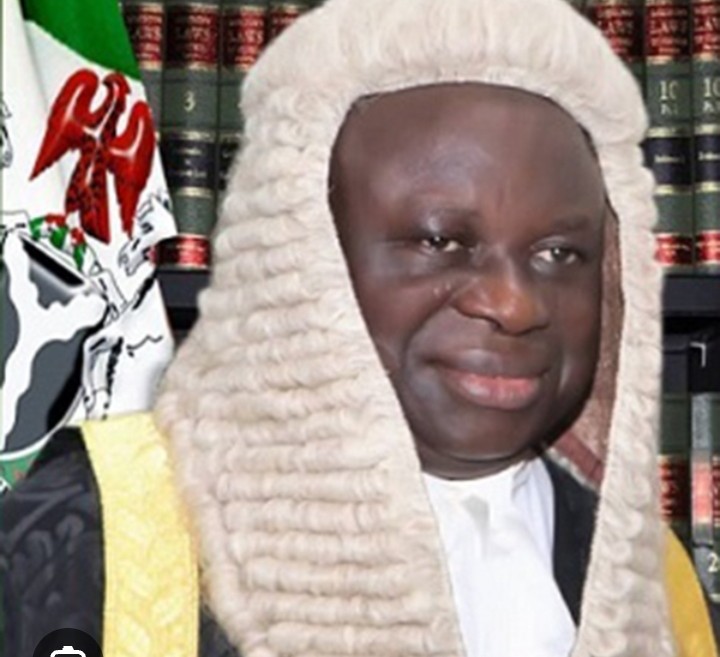
President of the National Industrial Court, Justice Benedict Kanyip, on Wednesday, December 3, said that there is no written law or statutory provision that a senior officer must retire when an officer junior to him is appointed as a Service Chief,
He therefore urged the Armed Forces of Nigeria to seek directions and interpretations as to the “wasteful tradition” of retiring senior officers prematurely.
It is very common in the military that when junior officers are appointed as service chiefs, all their seniors must retire, as it is not permitted for senior officers to take orders from their juniors. This has made many highly experienced officers to retire prematurely.
However, Justice Kanyip spoke on the issue at the Legal Training Seminar organised by the Nigerian Navy on Strategic Enforcement of Maritime and Labour Law for enhanced Naval Operations in Nigeria in Abuja.
The judge, represented by the Justice Olufunke Anuwe, delivered a paper on “Labour Law and Military Service: Implications for the Armed Forces of Nigeria,” where he explored the trend in the context of the supremacy of Nigeria’s Constitution’ over Armed Forces Act and other laws, rules, and regulations governing the service of the personnel.
He decried the situation where officers are denied the right to voluntarily resign; but experienced senior officers who are willing to continue in service are compulsorily retired following the appointment of new service chiefs. He described this as the biggest irony within the military service.
Justice Kanyip commended the National Assembly for its ongoing proposal to review the Armed Forces Act, and urged the armed forces to collaborate with the legislature in order to align its provisions with current realities and international best practices, including the constitution, which he said is supreme.
The National Industrial Court president stressed that the Armed Forces of Nigeria (AFN) cannot be separated from Nigeria, and the argument that military law jurisprudence is different from labour law jurisprudence, and that the Armed Forces Act is distinct from the 1999 Constitution was highly misconceived.
Justice Kanyip stressed that reforming the intersection of labour law and military service may involve addressing issues of personnel welfare and the need for effective military discipline.
In attendance at the programme were armed forces personnel, professors of law and members of the judiciary.