By Praise Afolabi
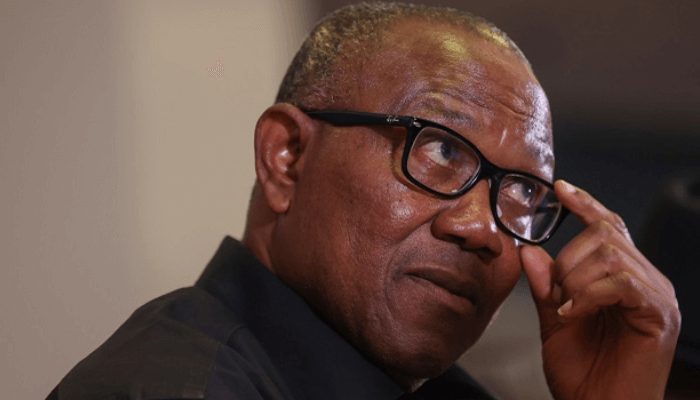
Former presidential candidate, Peter Obi, has faulted the President Bola Tinubu-led Federal Government over the recent increase in the cost of obtaining a Nigerian international passport, describing the move as “alarming” and “a burden on the populace.”
The Nigeria Immigration Service (NIS) had on Thursday announced new passport fees that take effect from September 1, 2025. Under the new structure, a 32-page passport with five-year validity will cost ₦100,000, while a 64-page booklet with 10-year validity will go for ₦200,000. The adjustment applies only to applications made within Nigeria.
According to the NIS, the review was necessary “to uphold the quality and integrity of the Nigerian Passport.” The Service, however, clarified that charges for Nigerians applying abroad remain unchanged at $150 and $230 respectively.
Obi, in a statement posted Friday on X, condemned the hike, arguing that the cost of a single passport now exceeds Nigeria’s newly approved minimum wage of ₦70,000. He described the development as unprecedented and a reflection of government’s disconnect from the realities facing citizens.
“This is the third increase in just two years. In a country where the minimum wage is ₦70,000, the cost of a passport now exceeds what an average worker earns in a month. Nigeria is probably the only country in the world to achieve this feat,” Obi said.
He accused the Tinubu administration of being “obsessed with piling burdens on Nigerians,” warning that such policies only deepen economic hardship. “Instead of making life easier, this government keeps shifting the burden onto ordinary citizens,” he added.
The Labour Party’s 2023 flag bearer argued that at a time when inflation is rising and the cost of living is biting harder, the Federal Government should be working to reduce essential costs rather than raising them.
His criticism comes amid growing public concern over the impact of the fee adjustment, which many Nigerians fear will make international travel and documentation even less affordable.
The new hike marks the latest in a series of fee increases under the Tinubu administration, a trend Obi says has become “legendary” and symbolic of government’s “disconnect with the people.”